


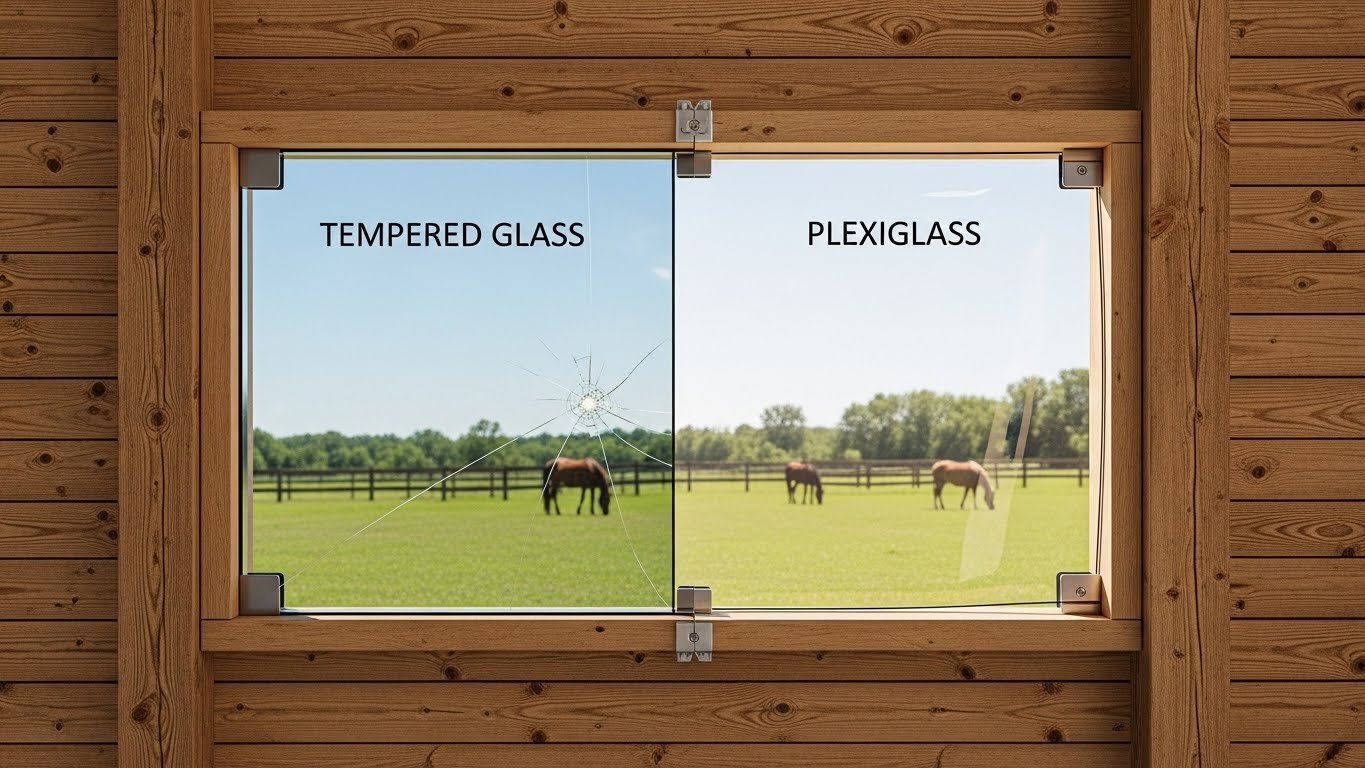
wind resistant barn windows coastal is the first checkpoint buyers should lock before they approve a supplier, budget, or production slot. Two barn windows, same rough opening, same glazing spec. One costs 30% more. The difference isn’t the glass or the frame — it’s what happens when a Category C coastal gust hits the latch at 3 AM. A $50K order can go sideways because the pre-production sample looked fine in the shop but the mass production run used a single-point latch that seized up after three months of salt air. That’s the gap between a window that survives its first storm season and one that doesn’t.
For contractors working on coastal equestrian facilities, wind resistant barn windows coastal projects demand more than just thicker frames. The real engineering is in how the locking mechanism distributes force and how the hardware resists corrosion over time. DB Stable’s V-yoke design, for instance, locks at two points instead of one — tested to hold at 150 km/h gusts under EU Directive 98/58/EC standards. That dual-point engagement changes how you anchor the window into the rough opening, and it affects your flashing strategy at the coastal zone interface.
The benchmark to write down for your next supplier call: any Dutch door hinge specified for a coastal stable should be minimum 316-grade stainless steel, not 304. The cost difference runs about 8% on the hinge line item, but it eliminates rust-related failures within three years — which is exactly when most owners start noticing pitting on standard hardware.
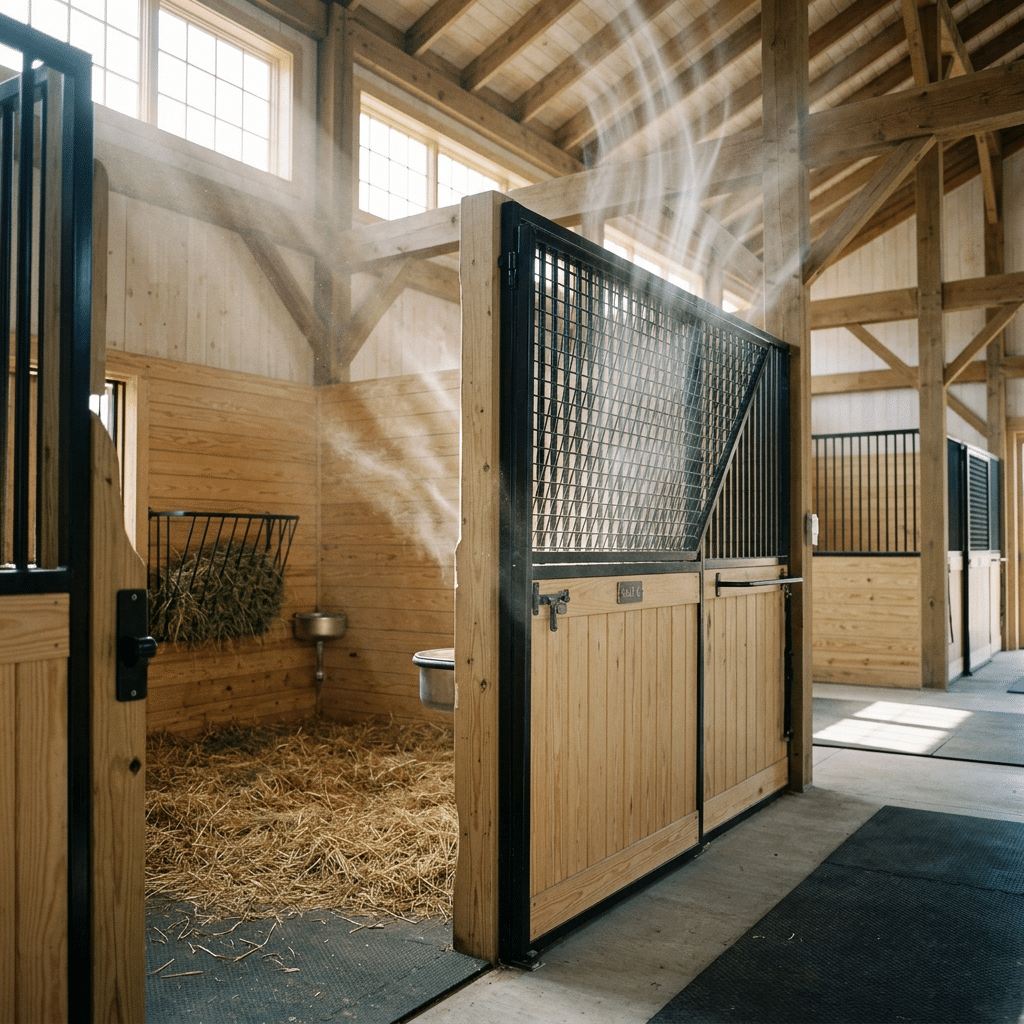
Assessing Wind Load Requirements for Coastal Zones
Local Building Codes Vary by Region (UK, Spain, USA, Germany)
A window rated for a sheltered inland barn in Kentucky will fail fast in a Category D zone on the Welsh coast. The UK follows BHS standards and EU Directive 98/58/EC, which require structural components to withstand zone-specific wind loads without deformation. In Spain, the CTE DB-SE-AE code mandates a minimum design pressure of 1.2 kN/m² for coastal Alicante. Germany’s DIN EN 1991-1-4 classifies the North Sea coast as Zone 4, where the reference wind velocity hits 30 m/s. The US uses ASCE 7-22, with Exposure D (open water) requiring a 160 km/h ultimate design wind speed for hurricane-prone regions. Installers who skip local code verification risk failing inspection and voiding insurance.
Category C or D Wind Zones – What They Mean for Your Installation
Category C (open terrain with scattered obstructions) and Category D (flat, unobstructed coastal areas) are where standard window latches become a liability. Salt corrosion combined with repeated gust loading accelerates wear on latch springs and hinge pins. DB Stable’s V-yoke lock, tested at 150 km/h, distributes wind force across two locking points rather than a single pawl. This is critical for coastal horse barn windows installation where a single-latch failure lets the door swing open, causing structural damage in seconds. For Dutch doors, upgrading to 316-grade stainless steel hinges adds roughly 8% to the hardware cost but eliminates the rust-through failures that plague standard zinc-plated hinges within 3 years of salt exposure. The added cost is negligible compared to replacing a door assembly mid-season.
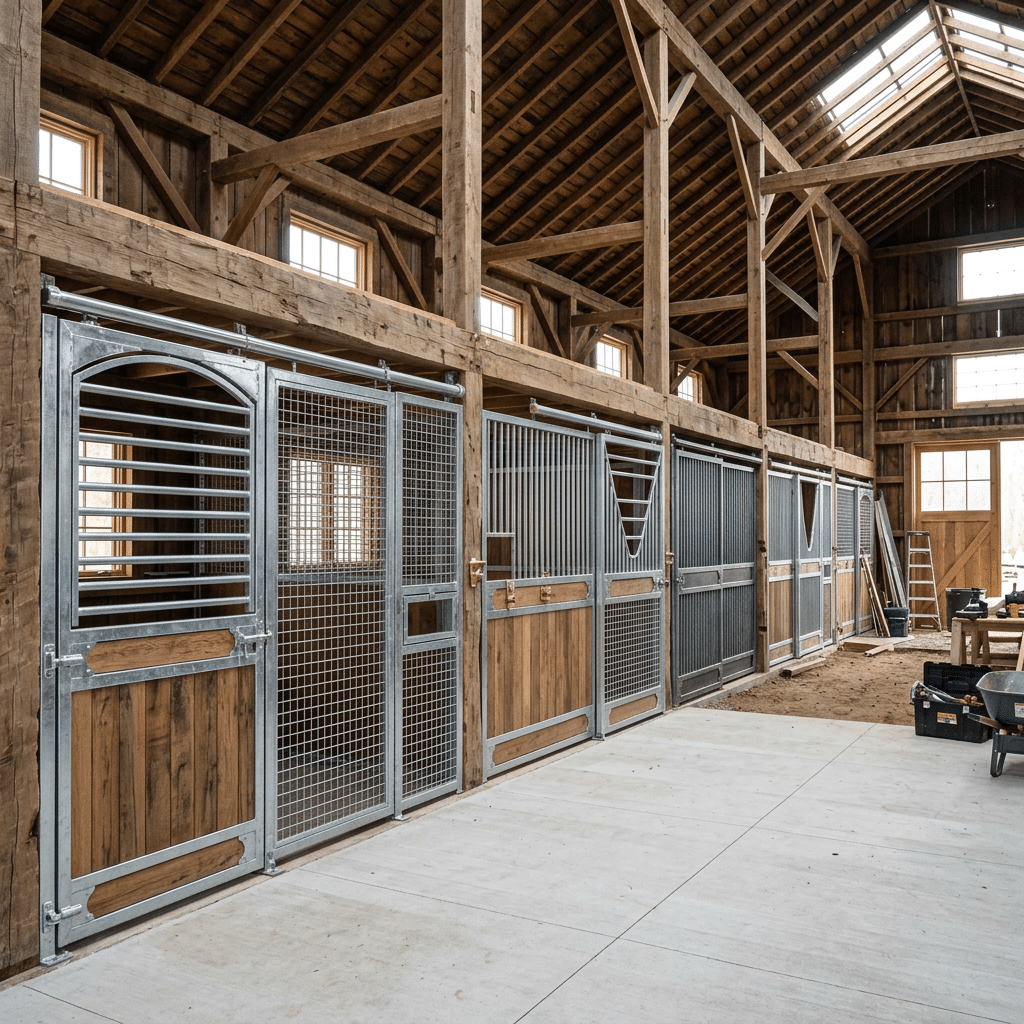
Choosing the Right Window Type
V-yoke dual-lock windows are tested to 150 km/h gusts — the only design that holds in coastal conditions.
Tempered Glass vs. Polycarbonate
For coastal barn windows, the material choice determines how long the unit stays airtight and clear. Tempered glass is the standard for impact resistance and optical clarity — it won’t yellow or warp under UV exposure. Polycarbonate is lighter and more impact-resistant, but it degrades in coastal UV conditions, discoloring within a few years and losing structural integrity at the edges. DB Stable’s windows use tempered glass that meets EU Directive 98/58/EC wind resistance standards, ensuring the pane stays intact through repeated storm cycles.
The real failure point in coastal installations isn’t the glass itself — it’s the frame and latch system. Even the best tempered glass becomes useless if the window pops open in a 100 km/h gust. That’s where the locking mechanism makes the difference between a serviceable opening and a catastrophic failure.
V-yoke Locking Mechanisms for High Winds
Standard cam latches rely on a single engagement point. In coastal areas of Spain and Australia, those latches fail within 18 months — salt corrosion seizes the moving parts, and wind pressure pries the window open. DB Stable’s V-yoke design distributes force across two locking points, tested to withstand 150 km/h gusts. The yoke engages the frame on both sides, preventing the window from bowing outward under pressure. This is not a theoretical advantage; it’s a proven geometry that keeps the seal intact during Category C wind events.
For contractors, the installation difference is minimal — the V-yoke mechanism uses the same rough opening dimensions as standard windows. The payoff is that you avoid callback repairs for blown-out windows during the first storm season. One more detail: pair these windows with 316-grade stainless steel hinges on Dutch doors. The upgrade adds roughly 8% to the hinge cost but eliminates rust-related failures within 3 years. In coastal salt air, that’s not optional — it’s the difference between a 5-year and a 15-year service life.
| Criterion | Tempered Glass (V-yoke Lock) | Polycarbonate (Standard Lock) |
|---|---|---|
| Matériau | Tempered glass (shatter-resistant, UV-coated) | Polycarbonate (impact-resistant but scratches easily) |
| Locking Mechanism | V-yoke dual-point lock – distributes force across 2 points, tested to 150 km/h gusts | Standard cam latch – prone to salt corrosion and wind failure |
| Résistance au vent | Meets EU Directive 98/58/EC wind load standards for Category C/D zones | No certified wind resistance ; fails in coastal gusts
< tr >
< td style = “padding :12 px 15 px ;border :1 px solid # eo eo eo ;color :#333 ;” > Résistance à la corrosion
< td style = “padding :12 px 15 px ;border :1 px solid # eo eo eo ;color :#333 ;” > Hot – dip galvanized frame +316 – grade stainless steel hardware(optional)
< td style = “padding :12 px 15 px ;border :1 px solid # eo eo eo ;color :#333 ;” > Zinc – plated hardware – rusts within3 years in salt air
< tr >
< td style = “padding :12 px 15 px ;border :1 px solid # eo eo eo ;color :#333 ;” > Compliance
< td style = “padding :12 px 15 px ;border :1 px solid # eo eo eo ;color :#333 ;” > ISO9001 , CE , BHS(UK), ASPCA(USA) compliant
< td style = “padding :12 px 15 px ;border :1 px solid # eo eo eo ;color :#333 ;” > Typically no international equestrian certification 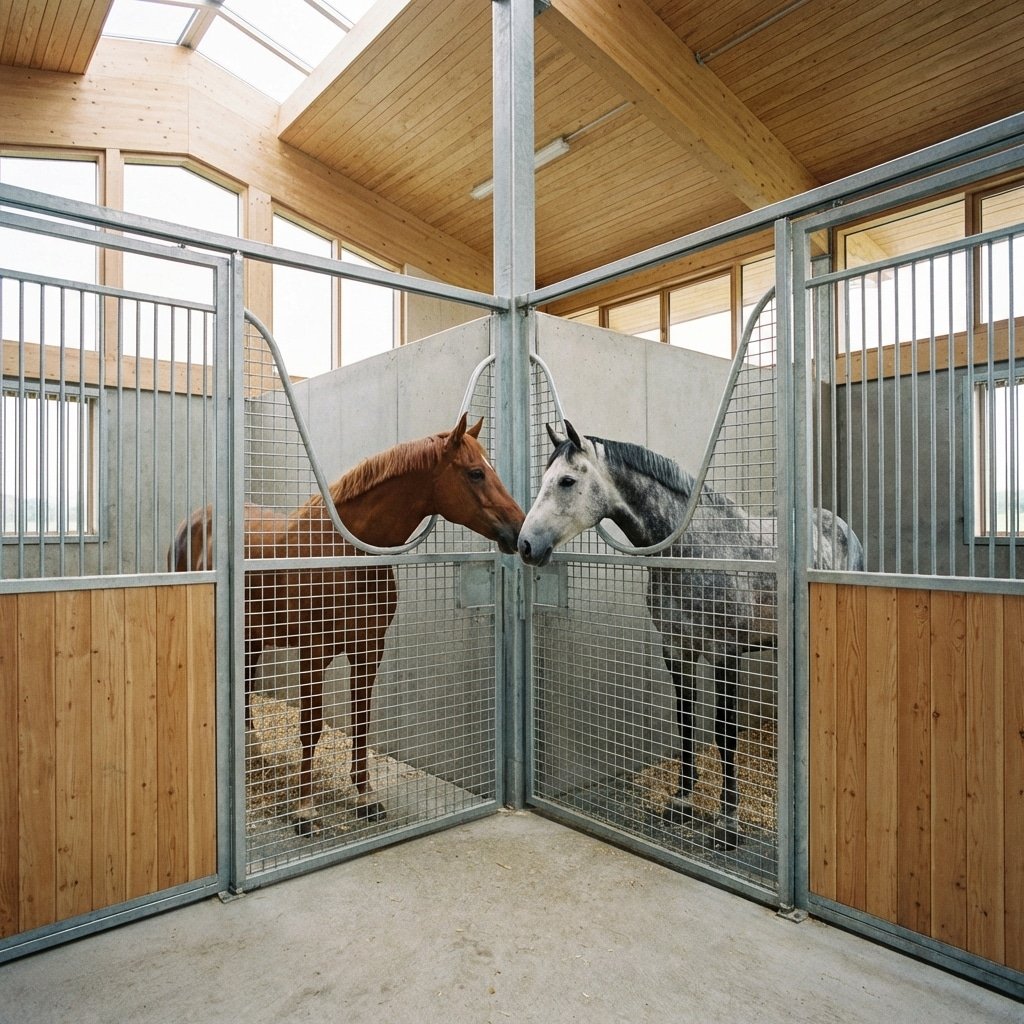 Step-by-Step Installation of DB Stable Barn Windows
Start with the rough opening. For coastal horse barn windows installation, the framing must be squared within 3 mm tolerance and sized to leave a 10 mm gap around the window frame. Any twist in the stud bay will transfer stress to the glass when the wind loads up. Use treated lumber for the header and sill — pressure-treated pine or engineered LVL — and install a continuous sill pan flashing that extends 50 mm past the jambs on each side. This is the first line of defense against salt-laden rain driving into the wall cavity. Flashing Sequence for Coastal ZonesLayer the flashing from bottom up. Begin with a self-adhered membrane over the sill, then a galvanized drip edge that kicks water away from the frame. The side jambs get a peel-and-stick membrane that overlaps the sill flashing by 25 mm. At the top, install a head flashing with end dams — standard flat head flashing without end dams lets wind-driven rain enter through the corners. Every seam must be staggered; otherwise, capillary action pulls saltwater into the assembly. Anchoring with Galvanized BracketsDB Stable’s windows ship with galvanisé à chaud steel brackets — the same material that gives 20-year rust resistance on their stabling systems. Bolt the brackets into the window frame at the factory-marked locations, then fasten them to the rough opening using 316-grade stainless steel screws. Never use electro-galvanized screws here; the thin coating dissolves in coastal salt spray within 18 months. The brackets should be spaced no more than 300 mm from each corner, with additional brackets at mid-span for windows wider than 1200 mm. The V-yoke lock mechanism on these windows engages two locking points per side, engineered to withstand 150 km/h gusts. Anchoring the brackets correctly is what keeps that force channeled into the building structure instead of the glass. If the substrate is concrete or CMU, use wedge anchors with a minimum embedment of 35 mm. For wood framing, lag screws into solid lumber — not into OSB sheathing alone. Sealing Against Saltwater Corrosion
Let the sealant cure for 72 hours before conducting a water test. Spray the window perimeter with a hose at 30 psi while a second person checks for interior moisture. If any leak appears, it’s almost always at the sill corners — reapply sealant and tool it smooth. This step is non-negotiable for saltwater corrosion resistant barn windows; once salt crystallizes inside the cavity, it never fully dries and accelerates corrosion of the frame. 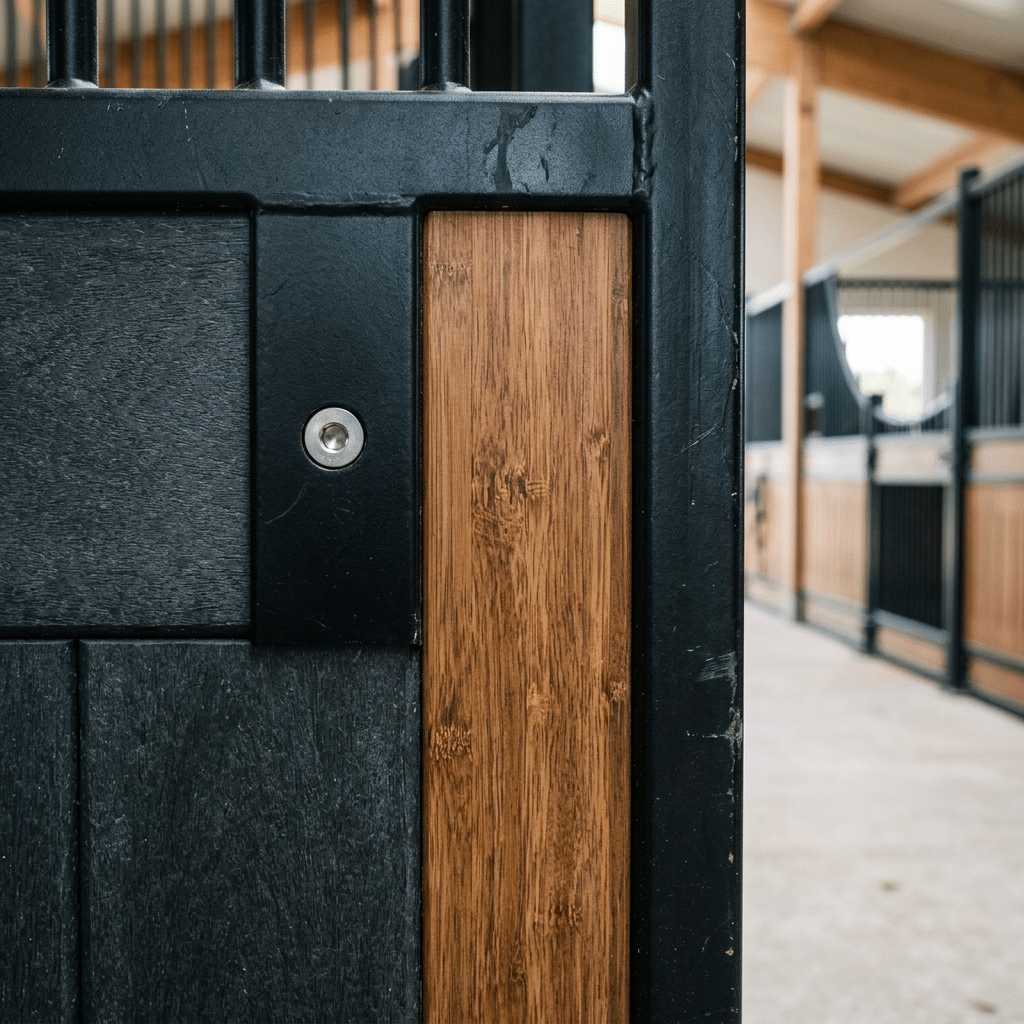 Installing Dutch Doors for Wind Resistance
Hinge Placement and Reinforcing PlatesStandard butt hinges on a Dutch door carry the full load of the top half when it swings open, plus the wind load when closed. In coastal Category C or D wind zones, that combination pulls the screws out of the jamb within two seasons. The fix is three-fold: use 316-grade stainless steel hinges (adds about 8% to hardware cost but eliminates rust-driven failure inside three years), place the top hinge within 4 inches of the upper edge, and install a continuous reinforcing plate behind each hinge leaf. The reinforcing plate — a 3mm hot-dip galvanized steel strip running the full height of the door section — distributes pull-out force across multiple fasteners instead of concentrating it on two screws. DB Stable uses this plate as standard on their Portes hollandaises, with CNC-drilled pilot holes spaced at 150mm centers. Without it, a 130 km/h gust can lever a single screw out of softwood jambs in under a second. Adjustable Drop Pins for Gale-Force GustsThe top half of a Dutch door acts like a sail when left open. A sudden cross-gust catches the panel and slams it past the stop, shearing the latch pin. Adjustable drop pins solve this by locking into a floor-mounted receiver or a side-jamb bracket before the door is fully closed.
Explore Our Product Collection. Browse this product, solution, or service page to explore relevant offerings. 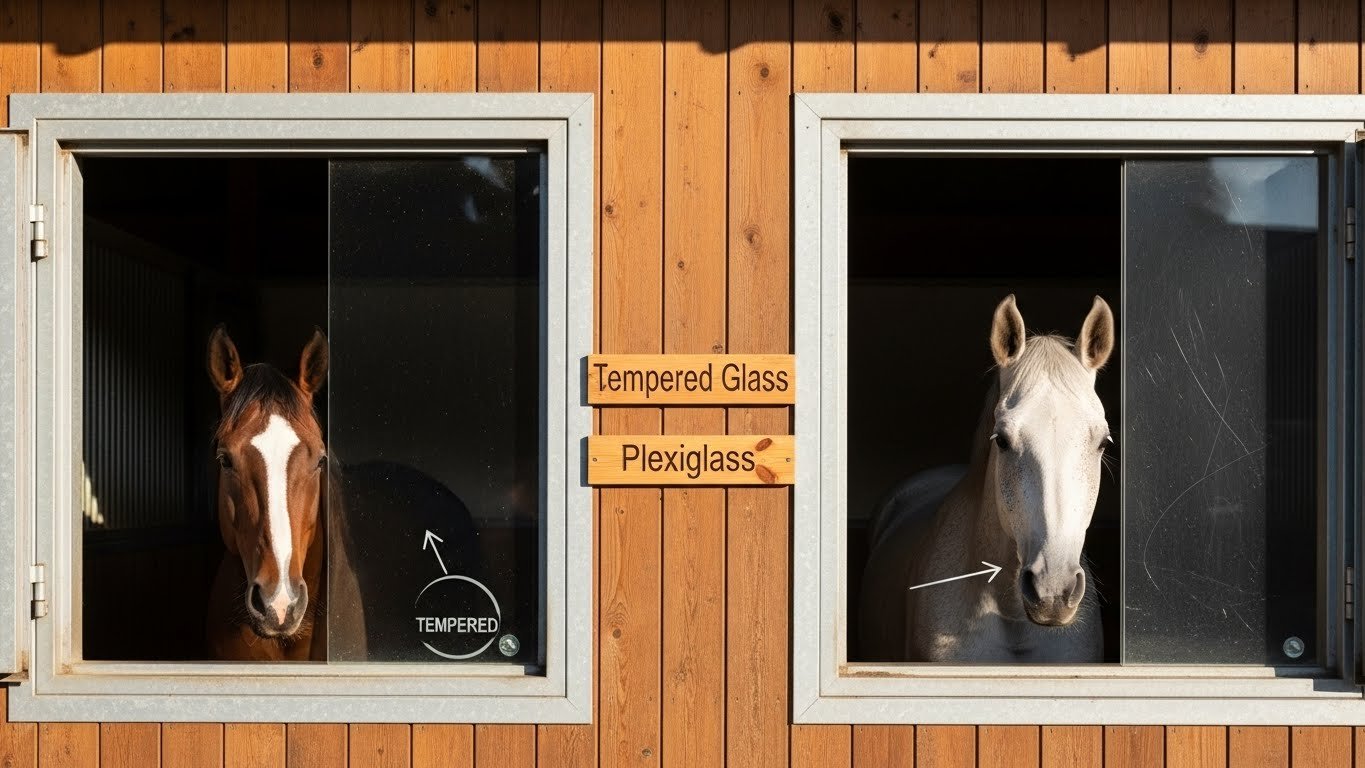  Post-Installation Inspection Checklist
The day after installation is when most coastal barn windows face their first real test — not from a hurricane, but from a steady onshore breeze carrying salt-laden air at 60 km/h. A missed sealant bead or an improperly seated gasket won’t show up in the morning calm. It shows up three weeks later when the interior wallboard starts staining, or worse, when the frame corrosion begins inside the wall cavity where you can’t see it. Water Test Protocol for Coastal Barn WindowsUse a garden hose with a spray nozzle set to a fan pattern, not a jet. Stand 300mm from the window and spray horizontally across every joint — top rail, bottom sill, and both vertical jambs. Run the water for two full minutes per seam. Walk inside and check for any moisture tracking along the interior frame or dripping from the V-yoke lock mechanism. DB Stable’s tempered glass units use a compression gasket system that seats tighter under wind pressure, but only if the frame screws are torqued to spec during coastal horse barn windows installation. Air Infiltration Checks That Catch Failures EarlyA simple smoke pencil or incense stick test reveals gaps no visual inspection catches. Close the window fully. Have someone hold the smoke source against each corner of the seal while you watch from outside for air pulling through. Any deflection means the gasket isn’t seating evenly — common on rough openings cut more than 6mm out of square. For Dutch doors, run the same test along the center meeting rail where both leaves join. Pay attention to how quickly air passes through versus how much it moves around corners — that tells you whether it’s a compression issue or an alignment problem. Hardware Function Under Load Maintenance Tips for Coastal Environments
Why Standard Lubricants Fail in Coastal BarnsStandard WD-40 or household grease washes off within weeks in a salt-spray environment. The chloride ions break down the oil film, and what remains turns into a gritty paste that accelerates wear on the hinge pin. Within one season, you hear the squeak. Within two, the galvanized coating on the barrel starts flaking. By year three on a Dutch door installed facing the ocean in Spain or Australia, the hinge fails entirely. That timeline matches exactly what is seen in warranty returns from clients who skipped the spec. What Marine-Grade Lubricant Actually MeansMarine-grade lubricants carry specific additives — typically aluminum complex thickeners or molybdenum disulfide — that resist water washout and form a persistent boundary layer on metal surfaces. The key spec to look for is NLGI Grade 2 with a minimum dropping point of 190°C and corrosion inhibition tested per ASTM B117 salt spray. If the label doesn’t reference salt spray resistance, it’s not marine-grade regardless of what the can says. ConclusionProper installation of wind-resistant barn windows and Dutch doors in coastal zones is not just about hardware—it’s about matching the right locking mechanism, material grade, and sealing technique to the specific wind load category. The V-yoke lock design and 316 stainless steel hinges are cost-effective choices that prevent failure in salt-laden, high-wind environments.
For your next coastal stable project, review the product specifications for V-yoke windows and Dutch door hardware to ensure they meet your local wind load requirements. Compare the cost difference of 316 stainless steel hinges against standard hardware—it’s a small upfront investment that eliminates warranty claims down the line. Browse the full range of barn components at DB Stable to see the available configurations. Questions fréquemment poséesWhat glass is best for coastal barn windows?Tempered glass is the standard for coastal barn windows due to its impact resistance and thermal stress tolerance. Polycarbonate may be considered for extreme impact zones but typically scratches easier and degrades. Specify tempered glass for salt spray and high wind zones. How do V-yoke locks help in wind resistance?V-yoke dual-lock mechanisms secure the window at multiple points, tested to withstand gusts up to 150 km/h. This design prevents the sash from rattling loose under repeated coastal wind loads. Specify V-yoke locks for any coastal installation. What are the key installation steps for coastal barn windows?Start with proper rough opening preparation and flashing to prevent water intrusion, then anchor the frame using galvanized brackets. Seal all joints with marine-grade sealant to resist saltwater corrosion. Confirm flashing and bracket specs before ordering windows. How do Dutch doors perform in gale-force winds?Dutch doors require reinforced hinge plates and adjustable drop pins to lock the top and bottom halves together against gusts. Without these upgrades, the door halves can separate and fail under. Always specify reinforced hinges and drop pins for coastal Dutch doors. What maintenance do coastal barn windows need?Apply marine-grade lubricant to all hinges and locking mechanisms every three months to prevent saltwater corrosion. Inspect seals and gaskets annually for cracking from UV and salt exposure. Schedule quarterly lubrication and annual seal checks. |

 French
  English
  Spanish
  Arabic
  German
0 commentaires