


Specifying Drop-Down Feed Doors drives operational efficiency by separating feeding workflows from direct animal handling. While standard stall fronts reduce initial manufacturing costs, they force staff to open main doors for every feeding cycle, significantly increasing labor hours and safety liability exposure for commercial facilities.
This analysis benchmarks the utility of feed doors against V-Drop socialization windows using our Q345B structural steel standards. We examine how to integrate both features without compromising rigidity, utilizing hot-dip galvanization after fabrication and 304 stainless steel hardware to prevent the corrosion failures common in lower-grade systems.

The Purpose of the Small Drop-Down Feed Door
This specialized opening separates feeding workflows from horse handling, preventing bolting risks and cutting daily labor time in half for large commercial barns.
Minimizing Risk During Feeding Routines
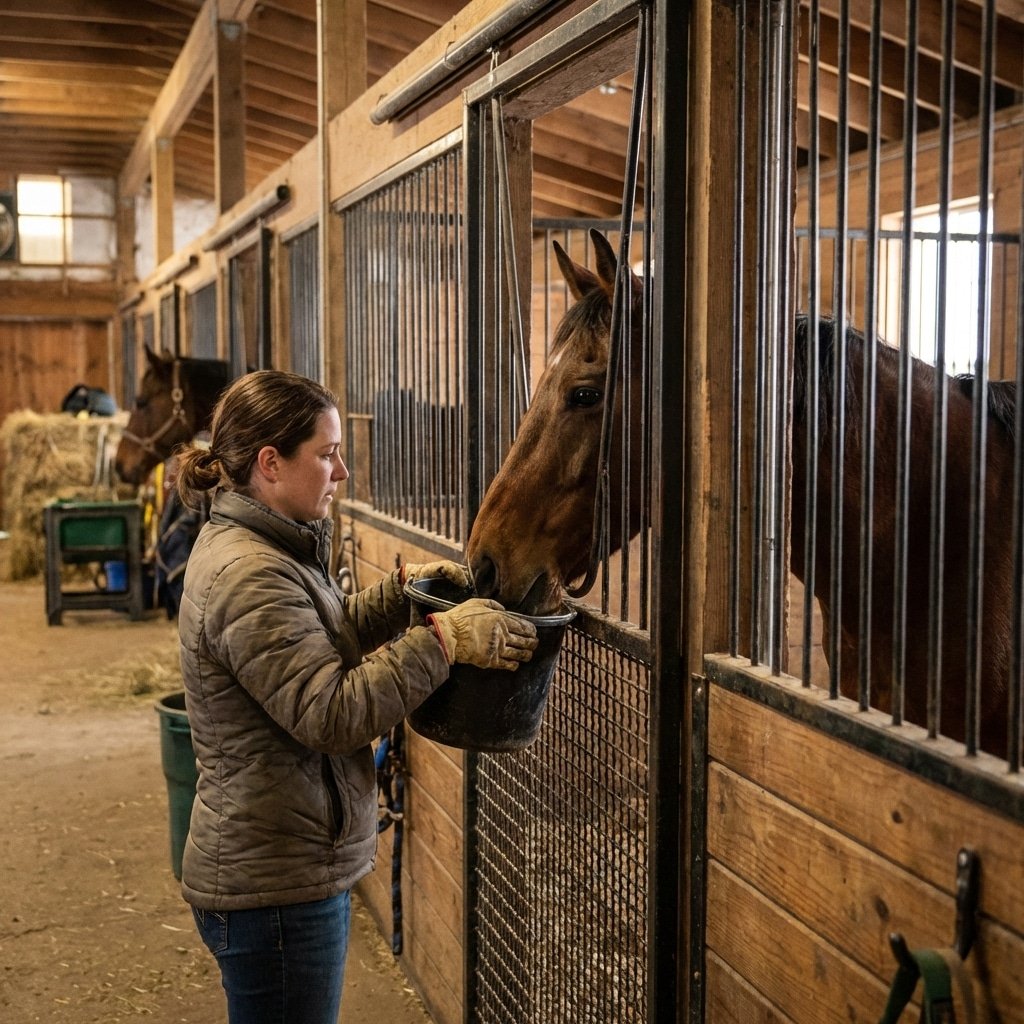
Feeding time creates high energy in any stable. Horses often crowd the door in anticipation, which turns opening the main sliding door into a safety hazard. The drop-down feed door solves this by maintaining a physical steel barrier between the handler and the animal during grain and hay delivery. This seemingly small feature fundamentally changes the operational workflow of a facility.
- Aucune entrée n'est nécessaire : Staff can deposit feed without unlocking the main sliding door, eliminating the risk of a horse bolting into the aisle.
- Crowd Control: Prevents excited horses from pushing against the handler, reducing injury risks during peak activity times.
- Efficiency Gains: Removing the step of opening and closing the main door at every stall significantly reduces the time required to feed an entire barn.
- Secure Access: Keeps the aisle clear and secure, allowing junior staff to handle feeding duties safely.
Intégration de pièces en acier inoxydable 304
Feed doors face the harshest localized environment in the stable. They are subjected to constant moisture from horse saliva, water buckets, and wet feed. Standard powder-coated steel latches will seize and rust within months under these conditions. DB Stable engineers these touchpoints strictly using 304 Stainless Steel to ensure longevity and consistent operation.
- Résistance à la corrosion : 304 Stainless Steel latches and connectors resist the acidic nature of saliva and constant moisture exposure.
- Intégration structurelle : The door frame itself uses our standard Q235B structural steel, hot-dip galvanized après fabrication to seal all weld points against rust.
- Smooth Mechanics: High-quality stainless hardware prevents the “seizing” common in cheaper, galvanized-over-paint alternatives, ensuring smooth daily cycling.
- Eliminating Weak Points: Unlike welded pre-galvanized options that rust at the joints, our integration method ensures the hardware attachment points do not become the first point of failure.

The Purpose of the Large V-Drop Socialization Window
Point de vue des dirigeants : Unlike standard utility feed doors, the Large V-Drop is engineered for equine mental health, allowing horses to satisfy herd instincts and reducing isolation-induced vices like weaving.
Mitigating Stall Vices Through Social Contact
High-end stabling isn’t just about aesthetics; it is about protecting the asset inside the stall. Horses are herd animals by nature, and standard fully enclosed fronts or high-barred grills often trigger isolation stress. The V-Drop window solves this by allowing the horse to extend its head fully into the aisle. This simple mechanical feature mimics herd dynamics by enabling visual and tactile communication with neighbors, which is essential for keeping high-value horses calm.
From a facility management perspective, this design is a preventative measure against “stereotypies”—behavioral vices like weaving, box walking, and cribbing that develop from boredom and confinement. A bored horse destroys stall components; a socialized horse does not. Furthermore, the open V-design significantly improves air quality at the horse’s nose level, flushing out ammonia and dust that settle near the floor in enclosed designs.
Structural Requirements for Drop-Panel Durability
A common engineering failure in cheaper stable systems is underestimating the load on the V-drop yoke. When a 1,200 lb warmblood leans its chest on the open window, the hinges and tubing frame take a massive static load. If the steel is too thin, the frame warps, and the latches misalign permanently. To prevent this, strict material specifications are non-negotiable for professional facilities.
- Steel Grade Requirement: The V-drop frame must use Q235B or Q345B structural steel to support the full weight of a horse leaning on the yoke without deflection.
- Épaisseur de calibre 14 : We strictly use 2.0mm to 2.5mm wall thickness for all drop panel tubing. Thinner 1.5mm tubing used by budget competitors will buckle under pressure.
- Résistance à la corrosion : This specific area is constantly exposed to horse breath and saliva, which are highly corrosive. Hot-Dip Galvanization (BS EN ISO 1461) after fabrication is critical here; paint or pre-galv finishes will fail rapidly in this zone.
Engineered For Durability: Global Compliant Horse Stables
Can You Have Both on One Sliding Stall Door?
Yes. We engineer customized sliding doors with both lower feed doors and upper V-drop windows, using heavy-duty Q345B steel to ensure structural rigidity.
Integrating Feed Doors with Socialization Windows
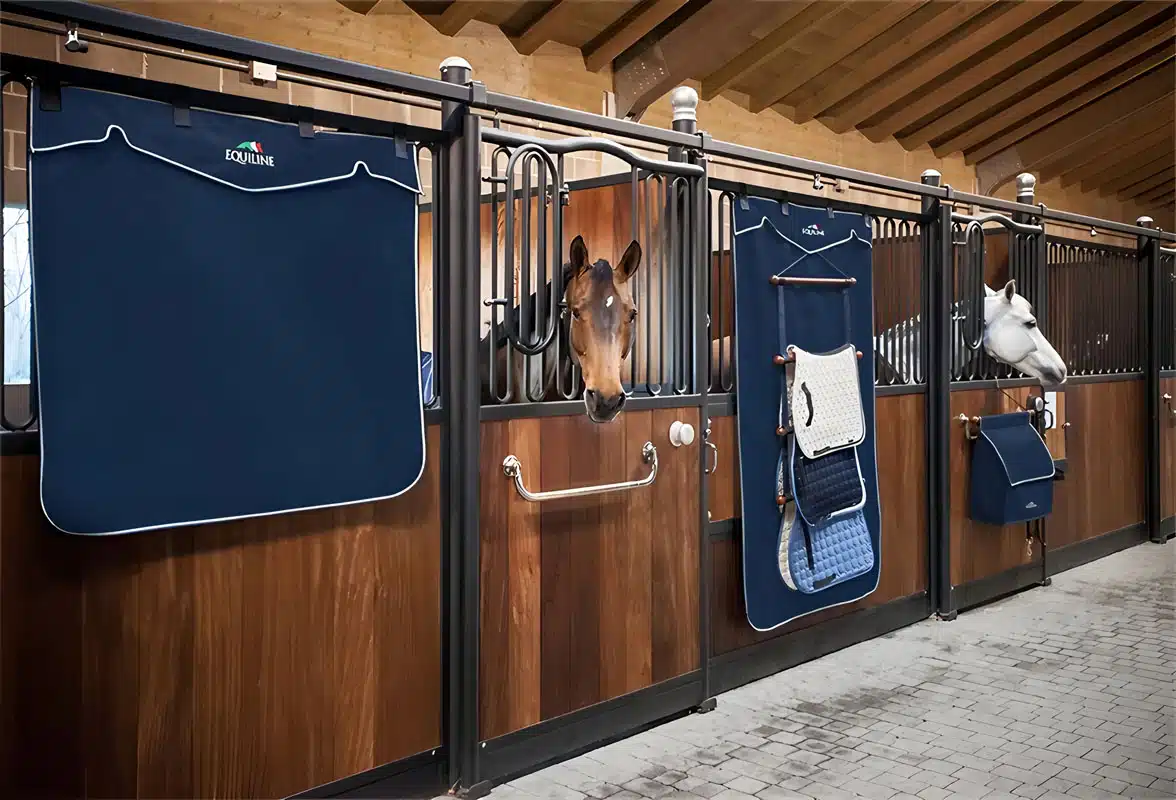
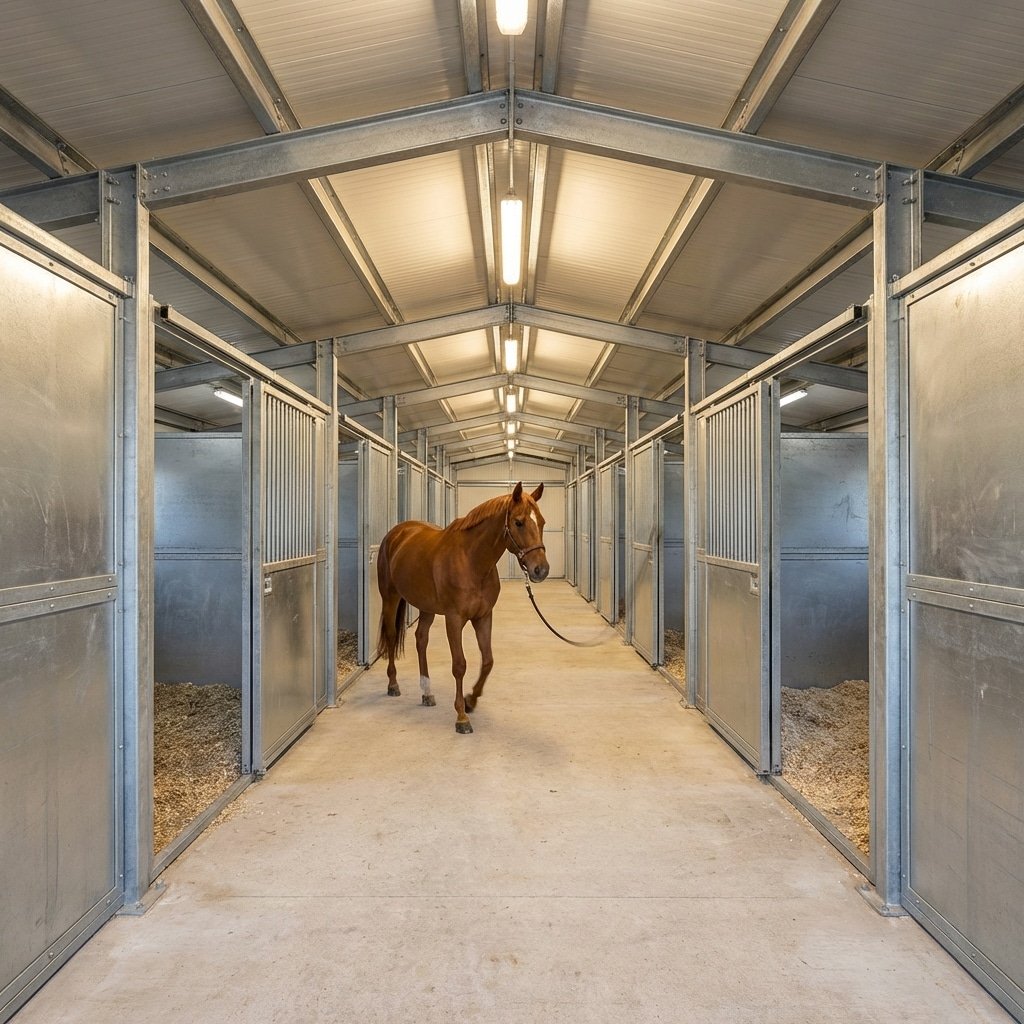
Many facility managers assume they must choose between a socialization window and a feed door. That is incorrect. Through OEM manufacturing, we stack these features to maximize utility without expanding the door’s footprint. The layout places the V-Drop window at the top for head access and socialization, while the feed door sits lower for efficient grain or hay delivery.
These components operate independently. Your staff can drop the lower feed door to deliver rations without opening the top window, keeping the horse contained during feeding times. Conversely, the top V-Drop can be opened for ventilation and socialization while the feed door remains latched. This dual-function design is ideal for narrow aisles where swinging doors are impractical. We also build these frames to be fully reversible, allowing you to change the opening direction left or right during installation.
| Composant | Standard Door Spec | Dual-Function Door Spec |
|---|---|---|
| Qualité de l'acier | Q235B (Standard) | Q345B High Strength |
| Frame Profile | 40mm x 40mm | 50mm x 50mm RHS |
| Épaisseur de la paroi | 1.5mm – 2.0mm | 2.5mm (Heavy Duty) |
Structural Integrity: The Q345B Steel Framework
Engineering a door with multiple cutouts presents a structural challenge. Removing steel to create openings for both the V-Drop and the feed door naturally reduces the frame’s rigidity. If you attempt this with standard lightweight steel, the door will flex, warp, and eventually jam on the track.
To maintain our Kick-Proof Guarantee on these complex designs, we upgrade the material specification to Acier Q345B faiblement allié à haute résistance mécanique. We utilize a 50mm x 50mm RHS (Square Hollow Section) profile with a 2.5mm wall thickness. This heavier gauge ensures the frame remains rigid enough to support the independent movement of both the window and the feed door without sagging over time.
- Full Welding Protocol: We weld every joint completely before galvanization, ensuring no weak points exist around the cutouts.
- Hot-Dip After Fabrication: Unlike competitors who weld pre-galvanized tubes (leaving rusty seams), we dip the entire finished frame in molten zinc (ISO 1461), coating the welds with over 85 microns of protection.
- Résistance aux chocs : The Q345B framework absorbs kinetic energy from kicks, protecting the functionality of the latches and hinges.
Safety Check: Heavy-Duty Hinges for Dropped Panels
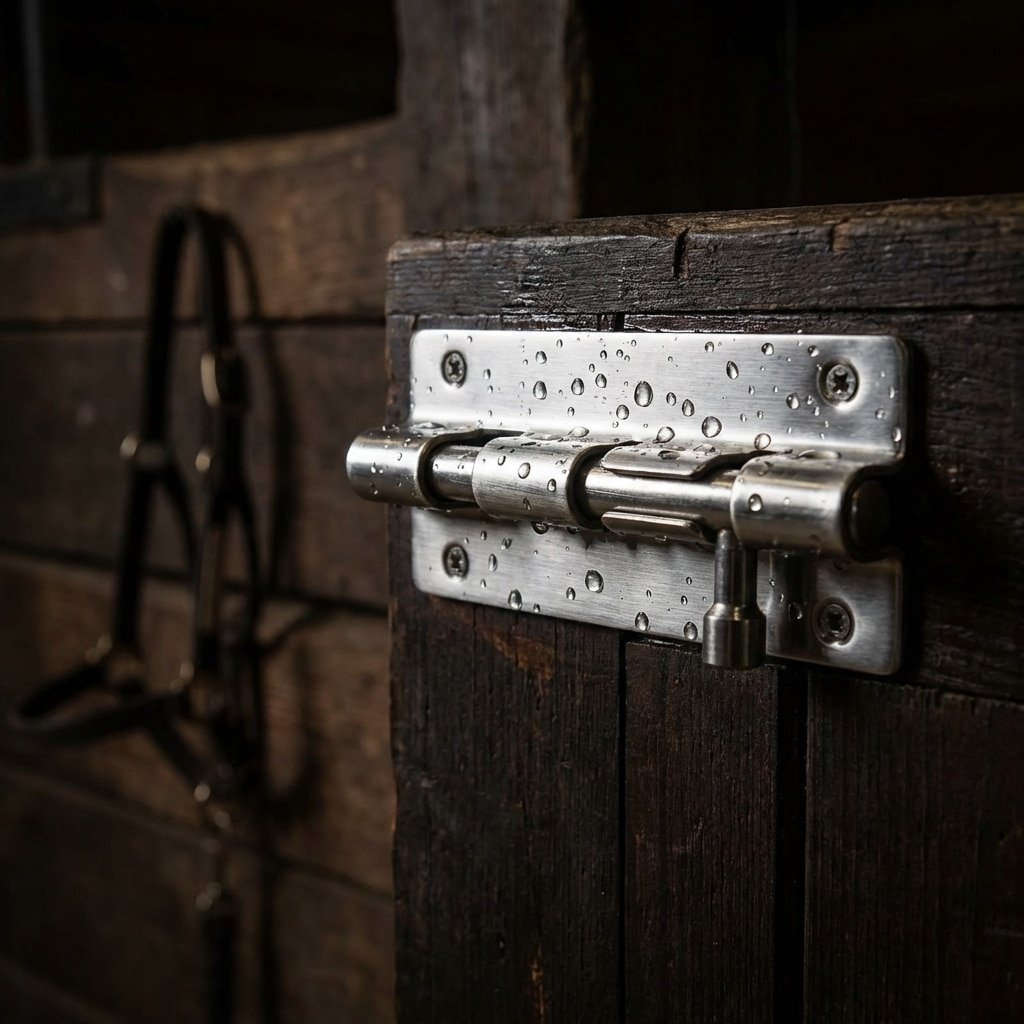
Drop-down feed doors require industrial-grade hardware to support heavy infill materials. We utilize 304 Stainless Steel to prevent the sagging and corrosion typical of standard zinc-plated hinges.
Structural Integrity: Handling Dynamic Loads and Daily Cycles
Drop-down doors are not lightweight access flaps; they are heavy structural components loaded with High-Density Bamboo or solid HDPE planks. When these doors swing open to a 90-degree position, the gravitational torque places immense stress on the hinge knuckles. Standard residential-grade hinges cannot sustain this load, leading to immediate deformation.
- Sagging Risks: Undersized hinges stretch quickly, causing the door to droop. This creates dangerous gaps where a horse can trap a hoof or lip.
- Latch Failure: Sagging destroys alignment. If the bolt does not line up perfectly with the receiver, staff will force it, eventually breaking the latch mechanism.
- High-Cycle Durability: A feed door opens 25+ times a day for feeding and socialization. Hinges must be rated for this repetitive industrial use.
Material Defense: The Necessity of 304 Stainless Steel
Mechanical strength means nothing if the metal rots. Stables are high-ammonia environments that act as accelerants for corrosion. Standard zinc-plated or black powder-coated steel hinges will rust, causing the pin to expand and seize inside the barrel. When a handler forces a seized hinge, it snaps.
- Résistance à la corrosion : DB Stable specifies a 304 Stainless Steel Hardware Kit to resist ammonia and moisture attack.
- Winter Reliability: Stainless steel pins maintain shear strength in freezing temperatures, preventing brittle fractures common in lower-grade carbon steel.
- System Longevity: This specification ensures the moving parts last as long as our hot-dip galvanized frames, preventing premature maintenance costs.
Questions fréquemment posées
What is the primary benefit of a drop-down feed door?
A drop-down feed door (or swing-out feeder) allows caretakers to deliver hay and grain from the barn aisle without entering the stall. This significantly improves safety by reducing direct contact with the horse during feeding times and increases operational efficiency. When left open, it also promotes ventilation and socialization.
Can a drop-down feed door be installed on a sliding stall front?
Yes, drop-down feed doors are frequently integrated into sliding stall fronts. This configuration offers the best of both worlds: the space-saving functionality of a sliding door for the aisle, combined with the convenient access of a feed opening. Manufacturers engineer these systems to ensure the sliding mechanism remains smooth even with the added weight of the feed door.
What is the difference between Pre-Galvanized and Hot-Dip Galvanized After Fabrication?
Pre-galvanized tubing is zinc-coated before being cut and welded, leaving the weld joints exposed to rust. Hot-Dip Galvanization After Fabrication (ISO 1461) involves immersing the entire finished door frame into molten zinc, coating every weld and internal surface with over 70 microns of protection. This ensures a true lifetime defense against corrosion.
Is HDPE or Bamboo better for stable infill?
It depends on the facility’s needs. HDPE (High-Density Polyethylene) is a ‘zero maintenance’ option that is UV-stabilized, impact-absorbing, and easy to clean, making it ideal for busy farms or rental stables. High-Density Bamboo offers a premium hardwood aesthetic with extreme hardness (Janka > 3000 lbf), resisting kicks and rot better than traditional oak.
Do sliding doors require a floor track that can trap dirt?
No. Professional sliding door systems utilize a heavy-duty overhead track with sealed bearings to carry the door’s weight. The bottom is typically secured by a wall-mounted guide or a small floor guide, eliminating full-length floor tracks that can become tripping hazards or collect bedding debris.
Réflexions finales
Sourcing lightweight stall fronts with under-spec hinges invites warranty claims that destroy your margins. By standardizing on our Q345B Hot-Dip Galvanized frames, you deliver a “Kick-Proof” asset that withstands the high-cycle abuse of commercial barns. Your reputation depends on supplying hardware that survives the environment, not just the installation.
Stop guessing on structural integrity and verify our engineering firsthand. Request our Professional Series catalog or schedule a consultation to engineer a private-label solution for your market. We are ready to configure a trial container that balances high-spec features with logistics efficiency.

 French
  English
  Spanish
  Arabic
  German
0 commentaires