


La rouille de la plaque de base est le « tueur silencieux » de l’intégrité structurelle des boxes et la principale cause de coûts de remplacement prématurés. Alors que l’acier standard revêtu par poudrage semble impeccable le jour de l’installation, les six pouces inférieurs sont soumis à une attaque chimique constante due à l’urine des chevaux et à l’ammoniac. Cet environnement acide crée un effet de cataplasme humide qui dissout rapidement les revêtements de qualité inférieure, transformant en quelques mois un élément de sécurité en un risque.
Pour éviter cette défaillance, il faut aller au-delà de la simple peinture décorative et opter pour une protection métallurgique. Cette analyse explique en détail pourquoi la galvanisation à chaud après fabrication, conforme à la norme BS EN ISO 1461, est indispensable pour garantir la durabilité. Nous examinons comment un revêtement de zinc supérieur à 85 microns et Acier inoxydable de nuance 304 Les ancrages constituent la seule protection contre la corrosion ammoniacale au niveau du sol.

La composition chimique de l'urine équine et de la litière acide
Urine de cheval crée un “ cataplasme humide ” à base d'ammoniac qui détruit l'acier standard. Seule une galvanisation à chaud d'une épaisseur supérieure à 85 microns offre la barrière sacrificielle nécessaire contre cette attaque chimique.
L'interaction corrosive entre l'urée et les surfaces en acier
L'urine de cheval n'est pas simplement de l'eau ; c'est une arme chimique contre les composants en acier doux. Le processus commence par l'urée, un composé principal présent dans les déchets équins. Lorsque l'urée entre en contact avec le sol de l'écurie, elle rencontre des bactéries productrices d'uréase naturellement présentes dans le fumier et la litière souillée. Cette réaction biologique hydrolyse l'urée, la décomposant en ammoniac et en dioxyde de carbone.
Les véritables dégâts structurels surviennent lorsque cet ammoniac se dissout dans l’humidité emprisonnée dans la litière. Cette réaction forme de l’hydroxyde d’ammonium, créant ainsi un environnement hautement alcalin et corrosif. Les matériaux de litière absorbants, tels que les copeaux de bois ou la paille, agissent comme une éponge. Ils retiennent ce mélange chimique directement contre la plaque de base, créant ainsi un effet de “ cataplasme humide ”.
Contrairement à la rouille atmosphérique, qui dépend de l'humidité, ce cataplasme soumet l'acier à un cycle d'oxydation constant, 24 heures sur 24. Il élimine les revêtements protecteurs peu résistants, tels que la peinture standard ou la fine couche de pré-galvanisation, entraînant une défaillance structurelle rapide au niveau du sol.
Protection de la zone d'éclaboussures grâce à une galvanisation à chaud de 85 microns
Les tubes pré-galvanisés standard, souvent utilisés par les fabricants à bas prix, présentent généralement une couche de zinc d'une épaisseur inférieure à 20 microns. Au contact des composés ammoniacaux présents dans les écuries, cette fine couche se dissout rapidement. Revêtement en poudre Il forme une barrière, mais dès que le revêtement s'écaille ou présente des microperforations, l'humidité reste emprisonnée en dessous, ce qui accélère la formation de rouille de l'intérieur vers l'extérieur.
Pour y remédier, DB Stable a recours à la galvanisation à chaud après fabrication, en respectant scrupuleusement les BS EN ISO 1461 standard. Nous soudons d'abord les cadres en acier noir, puis nous plongeons l'ensemble dans du zinc fondu. Ce procédé garantit que le zinc se lie métallurgiquement à l'acier, au lieu de simplement se déposer à sa surface.
- Épaisseur structurelle : Nos plaques de base et nos pièces structurelles présentent une épaisseur moyenne de revêtement supérieure à 85 microns.
- Protection sacrificielle : Le zinc fait office d'anode sacrificielle. Lorsqu'il est exposé à l'ammoniac, c'est le zinc qui se corrode à la place de l'acier, ce qui permet de préserver l'intégrité structurelle du poteau.
- Couverture complète : Le trempage après fabrication garantit que les soudures, les angles et les surfaces internes — des zones généralement non atteintes par les pistolets de pulvérisation — sont entièrement recouvertes et protégées de l'humidité.
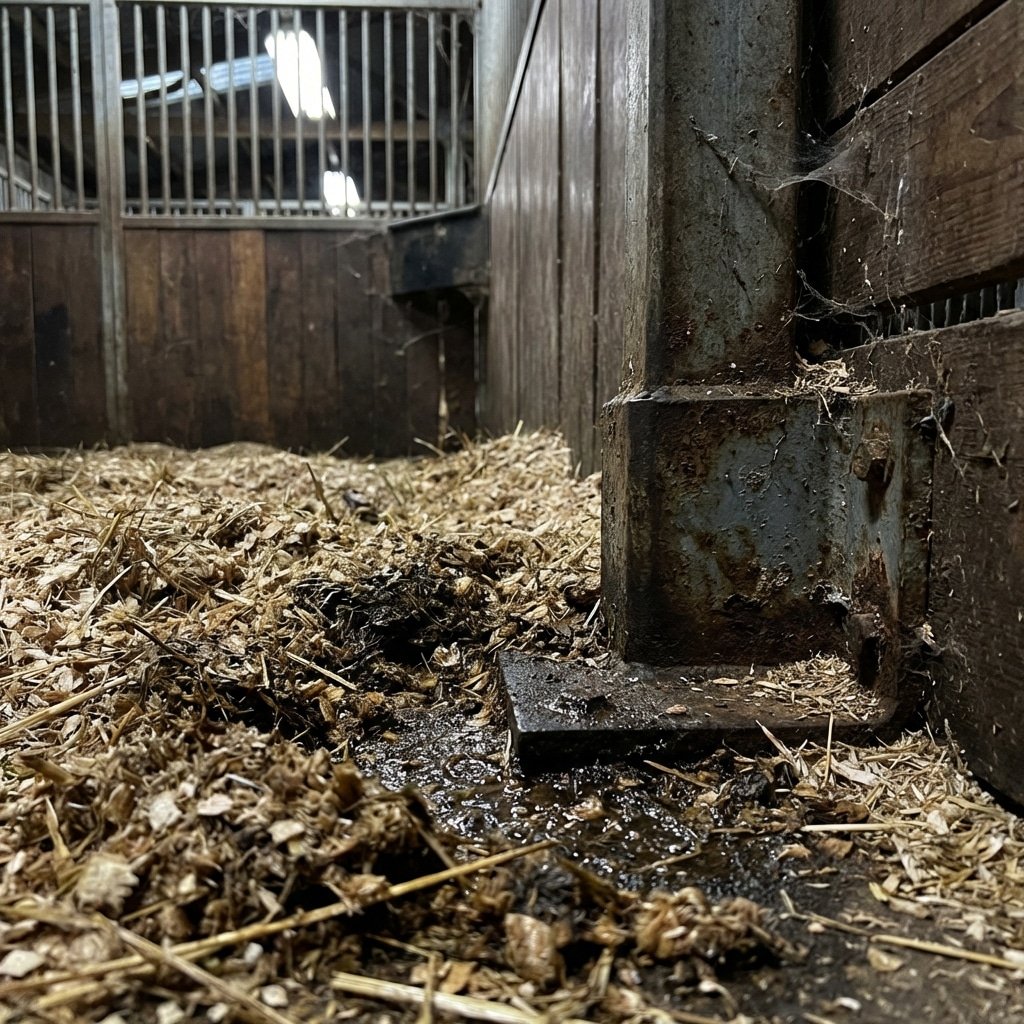
Pourquoi les poteaux thermolaqués pourrissent-ils au niveau du sol ?
Le revêtement en poudre appliqué sur du métal nu retient l'humidité contre l'acier. En l'absence d'une couche de zinc sacrificielle, l'ammoniac pénètre par les microperforations, provoquant la pourriture structurelle du poteau de l'intérieur vers l'extérieur.
Rétention d'humidité et corrosion acide
Dans un environnement équestre, les six pouces inférieurs d’un poteau d’écurie sont soumis à des agressions chimiques intenses. La litière retient l’urine contre l’acier, créant ainsi une zone d’exposition constante à l’ammoniac et à l’humidité. Lorsque les fabricants appliquent un revêtement en poudre directement sur le métal nu (souvent pour réduire les coûts), ils créent un produit d’étanchéité plutôt qu’un revêtement protecteur. Le revêtement présente inévitablement des interstices microscopiques, appelés “ défauts ” dans le secteur, ou développe des microfissures dues à la dilatation thermique.
Dès que des liquides acides pénètrent dans ces interstices, le revêtement agit comme un piège. L'humidité ne pouvant s'évaporer, il se forme une cellule corrosive localisée qui ronge le substrat en acier situé sous la peinture. Il en résulte l'effet de “ cloquage ” bien connu, où la peinture s'écaille pour révéler une corrosion avancée. Lorsque ces dommages deviennent visibles, l'intégrité structurelle du poteau est souvent déjà compromise.
Le rôle protecteur de la galvanisation selon la norme BS EN ISO 1461
Pour éliminer ce point de défaillance, nous refusons d’appliquer un revêtement en poudre sur du métal nu. DB Stable impose la “ galvanisation à chaud après fabrication ” comme couche de base incontournable pour toutes ses écuries colorées. Nous soudons d’abord l’acier noir, puis nous plongeons l’ensemble de la structure dans du zinc fondu. Ce procédé crée une liaison métallurgique qui isole l’acier de l’environnement, quel que soit l’état de la peinture.
- Conformité aux normes : Tous les messages sont soumis à un traitement visant à BS EN ISO 1461 normes.
- Zinc Épaisseur : Nous obtenons une épaisseur moyenne de revêtement de > 70 microns sur les tuyaux et > 85 microns sur les éléments structurels.
- Protection sacrificielle : Si le revêtement esthétique en poudre est rayé, la couche de zinc s'oxyde de manière sacrificielle pour protéger l'acier, empêchant ainsi la rouille de se propager.
Écuries modulaires sans rouille, garantie 20 ans

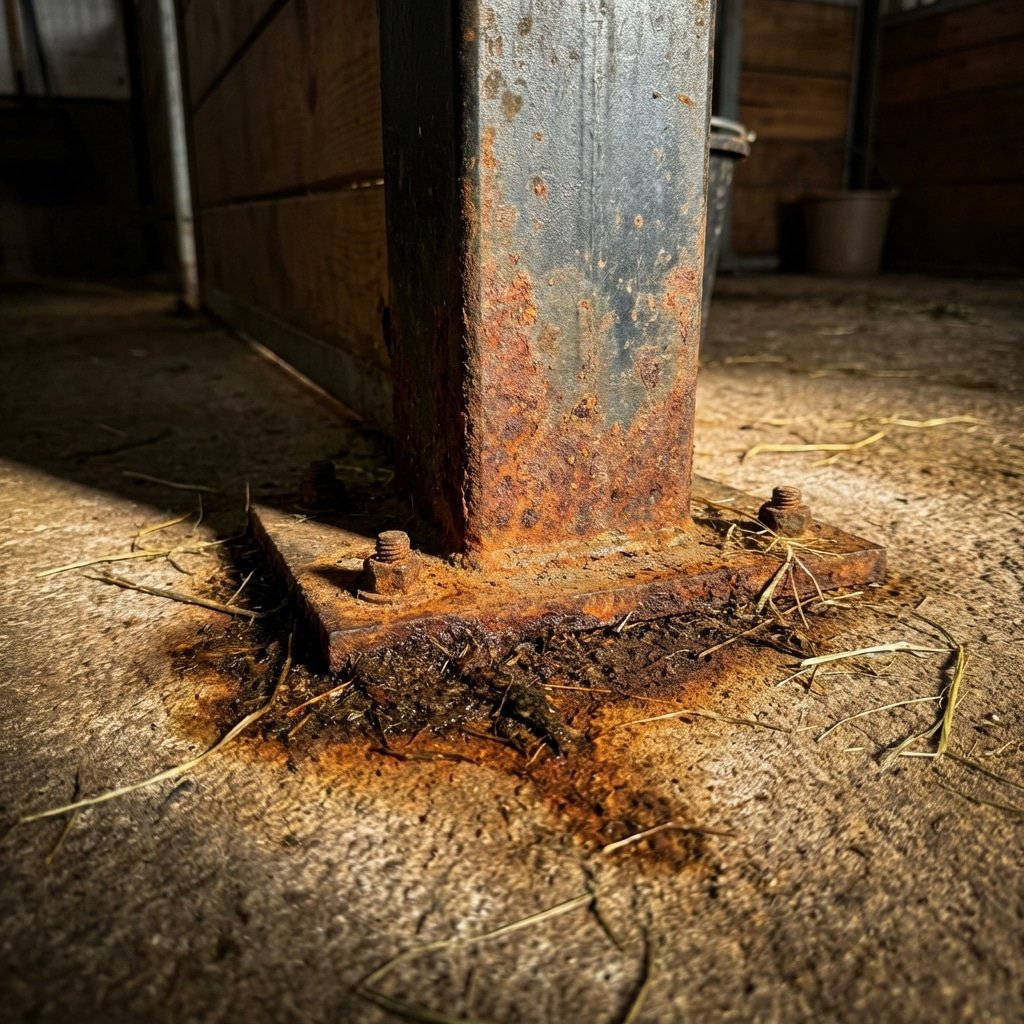
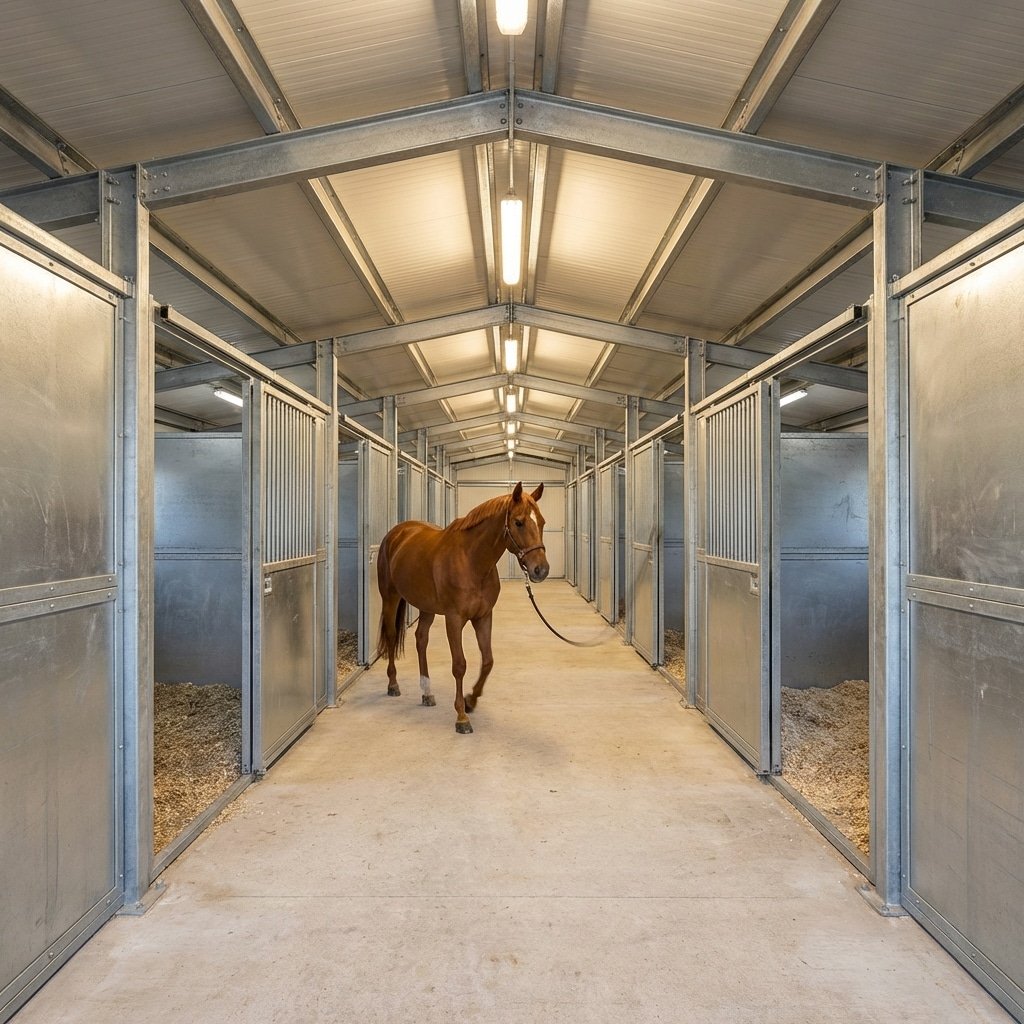
La défense : plaques de base en acier galvanisé à chaud (HDG) pour les boxes à chevaux
Le soudage élimine le zinc présent sur les tôles standard. Nous recourons à un “ galvanisage à chaud après fabrication ”, qui consiste à appliquer une couche de zinc de plus de 85 microns sur l'acier afin de protéger la soudure contre l'ammoniac.
| Fonctionnalité | Pré-galvanisé (standard) | Trempe à chaud après fabrication (DB stable) |
|---|---|---|
| État de la soudure | Zinc évaporé sous l'effet de la chaleur | Entièrement revêtu après soudage |
| Épaisseur du revêtement | 15 à 20 microns (peinture en bombe) | > 85 microns (Liaison métallurgique) |
| Protection de l'intérieur | Aucun (acier brut à l'intérieur) | Couverture interne complète en zinc |
| Résistance à l'ammoniac | Il tombe rapidement au niveau du sol | Des décennies de protection |
Défaillance critique des soudures pré-galvanisées
La plupart des fabricants prennent un raccourci à ce stade. Ils achètent des tubes pré-galvanisés et soudent une plaque d'acier à leur extrémité inférieure. La chaleur intense de l'arc de soudage (environ 1 600 °C) vaporise instantanément le revêtement de zinc autour du joint. Cela crée une “ zone affectée thermiquement ” d'acier brut et non protégé, précisément là où la protection est la plus importante : au niveau du sol.
L'urine et l'ammoniac s'accumulent au fond de la stalle. Ces agents corrosifs attaquent immédiatement la soudure exposée. Pour masquer les dégâts, les usines appliquent une “ peinture à froid ” (peinture argentée) sur la soudure noire. Cette couche esthétique n’offre aucune protection structurelle. Elle s’écaille en quelques mois, laissant la rouille ronger la fixation de la plaque de base et compromettre l’ensemble de la façade de la stalle.
Atteindre 85 microns : la norme ISO 1461 relative à la galvanisation
Nous remédions à ce point faible en recourant au procédé de “ galvanisation à chaud après fabrication ”. Notre équipe commence par souder l'ensemble de la façade du box à l'aide d'acier noir brut. Ce n'est qu'une fois toutes les opérations de soudure et de fabrication terminées que nous plongeons l'ensemble de l'assemblage dans un bain de zinc fondu à 450 °C.
Ce procédé garantit que le zinc liquide recouvre chaque soudure, pénètre dans chaque interstice et circule à l'intérieur des tubes. Selon Normes ISO 1461, l'épaisseur de l'acier détermine le taux d'absorption du zinc. Étant donné que nos plaques de base utilisent acier de construction lourd (> 6 mm), ils permettent d'obtenir un revêtement nettement plus épais que le tube lui-même :
- Plaques de base structurelles : Épaisseur moyenne du revêtement > 85 microns.
- Parois des tubes : Épaisseur moyenne du revêtement > 70 microns.
- Type d'obligation : Liaison métallurgique par alliage (plus dure que l'acier de base), et non pas simplement une couche superficielle.
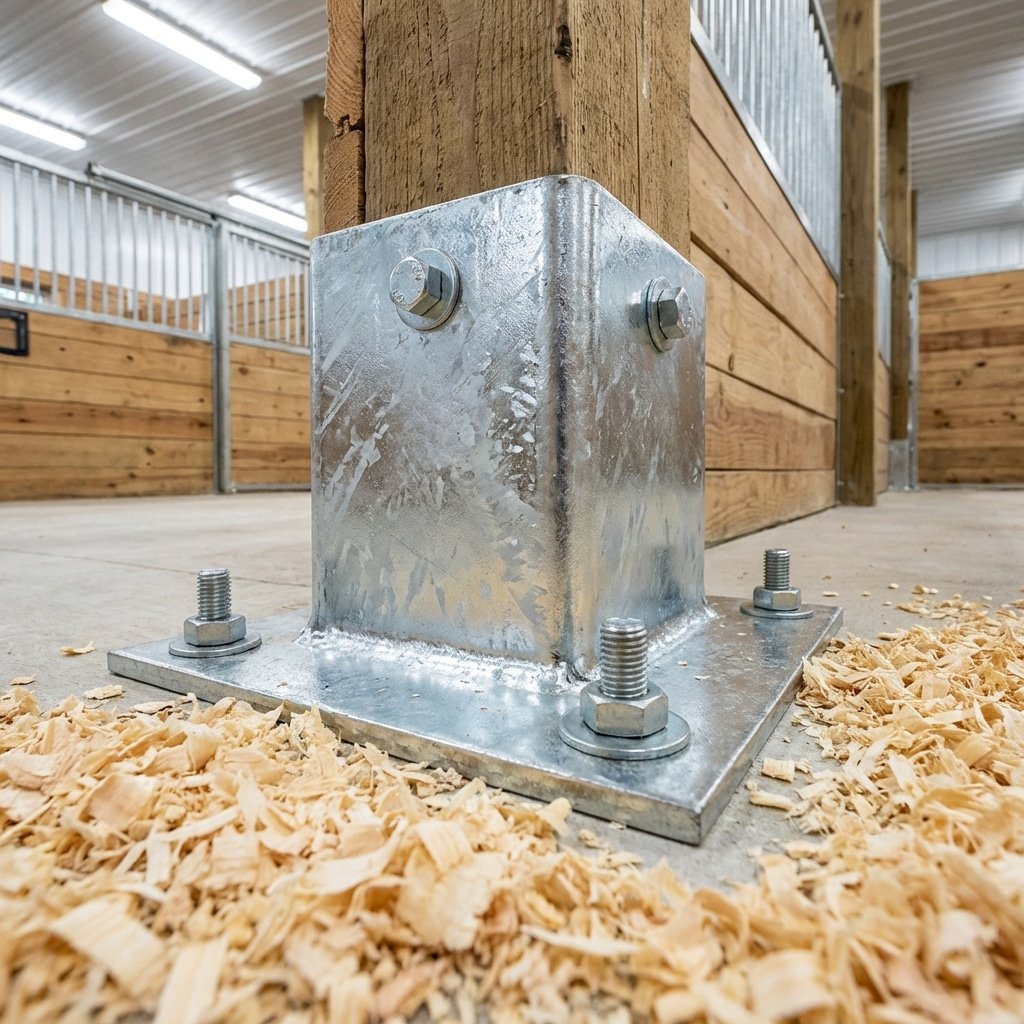
Utilisation de boulons d'ancrage pour béton en acier inoxydable 304
Nous utilisons systématiquement des ancrages à coin en acier inoxydable 304 afin d'empêcher la dilatation due à la rouille de fissurer le béton, garantissant ainsi la stabilité structurelle face à l'ammoniac et à l'humidité.
Résistance à la corrosion dans les environnements riches en ammoniac
Les ancrages standard en acier au carbone constituent un risque dans les installations équestres professionnelles. L’urine des chevaux libère de l’ammoniac, un gaz qui accélère la corrosion bien plus rapidement que l’air salin des zones côtières. Lorsqu’un ancrage en acier au carbone rouille à l’intérieur de la dalle, il subit un phénomène appelé “ soulèvement par oxydation ”. La rouille ainsi formée prend un volume pouvant atteindre dix fois celui de l’acier d’origine, exerçant une pression interne considérable qui provoque la fissuration de la fondation en béton de l'intérieur vers l'extérieur.
Nous utilisons exclusivement de l'acier inoxydable de nuance 304 afin d'éliminer ce point de défaillance. Contrairement à l'acier plaqué, l'acier inoxydable massif ne repose pas sur un revêtement de surface susceptible d'être rayé lors de l'installation. Il empêche également la corrosion galvanique entre la fixation et nos plaques de base galvanisées à chaud, préservant ainsi l'intégrité structurelle même dans zones de lavage là où l'eau et le fumier s'accumulent.
Caractéristiques techniques : l'ancrage en coin en acier inoxydable 304
Nous ne considérons pas les équipements de sécurité comme un argument de vente supplémentaire. Chaque DB Stable Kit d'installation comprend des ancrages en forme de coin en acier inoxydable de nuance 304 comme norme de base. Ces éléments de fixation sont conçus pour résister aux charges dynamiques propres aux écuries, en particulier à la force de cisaillement latérale générée lorsqu'un cheval de 1 200 lb donne un coup de sabot dans une cloison.
- Mécanisme d'extension : Conception en forme de coin avec deux rainures en contre-dépouille pour une adhérence renforcée par expansion secondaire.
- Capacité de cisaillement : Haute résistance aux chocs latéraux (charges dues aux coups de pied).
- Couple de serrage : 55 à 65 ft./lbs (pour des ancrages standard de 1/2″ de diamètre).
- Éléments fournis : Pré-assemblé avec des écrous et des rondelles assortis en acier inoxydable 304.
Réflexions finales
Le recours à de fines soudures pré-galvanisées constitue un risque qui entraîne inévitablement des réclamations au titre de la garantie et porte atteinte à la réputation du revendeur. En adoptant systématiquement la galvanisation à chaud après fabrication, conformément à la norme ISO 1461, vous garantissez que chaque plaque de base résistera à une exposition agressive à l’ammoniac pendant des décennies. Opter pour une barrière de zinc de plus de 85 microns n’est pas une vente incitative ; c’est le seul moyen de garantir la sécurité structurelle dans un environnement équin.
Ne prenez pas de risques avec votre stock en vous fiant à des spécifications génériques ; vérifiez par vous-même nos normes techniques. Demandez un échantillon de profilé d'angle afin d'examiner l'adhérence métallurgique de notre revêtement en zinc et de tester l'ajustement de nos ancrages en acier inoxydable 304. Contactez notre équipe dès aujourd'hui pour discuter d'une personnalisation OEM ou pour réserver un créneau de production pour votre prochain conteneur.

 French
  English
  Spanish
  Arabic
  German
0 commentaires