


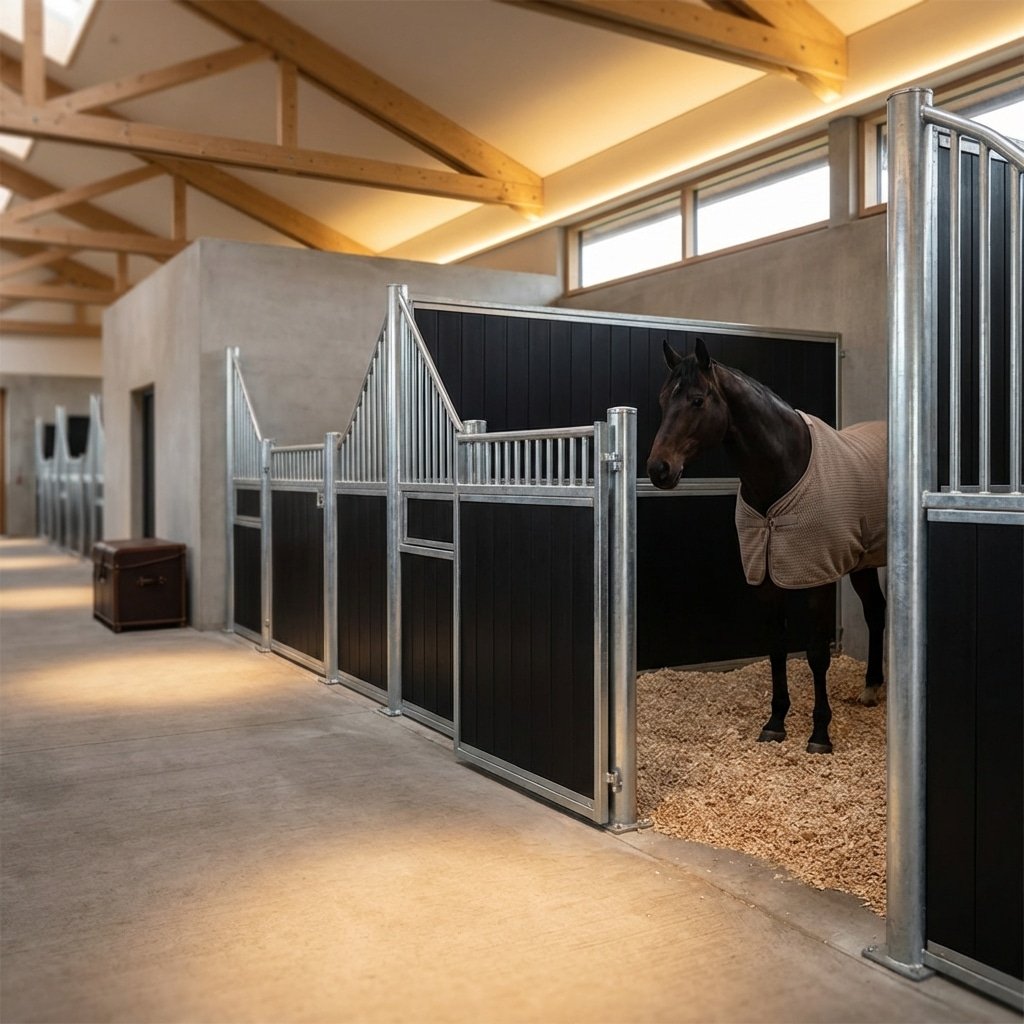
Aggressive horses are a facility liability that transforms standard stall partitions into sources of costly veterinary claims. When boarding barns rely on open-bar designs, they invite fence-line battles that damage infrastructure and erode profit margins through constant repairs.
This analysis benchmarks solid divider solutions against the Q345B High Strength Steel standard required for safety. We evaluate impact resistance using 28mm HDPE infill and Hot-Dip Galvanized specifications to help you secure infrastructure that withstands the 1,200lb force of a direct kick without splintering.
The Danger of Fence-Line Aggression in Barns
Resource guarding turns standard partitions into safety hazards. We engineer out entrapment and splintering risks using high-tensile steel and impact-absorbing synthetics.
Fence-line aggression is rarely random. It stems from deep-seated resource guarding instincts where horses fight over food, mates, or territory across a barrier. When you place high-strung animals side-by-side, this dominance display often escalates into kicking battles. The real danger isn’t just the behavior itself, but how the facility infrastructure reacts to that force.
- Resource Guarding: Feeding horses close to shared lines triggers defensive kicking and biting.
- Entrapment Risks: Wire or thin-barred separators can trap a striking leg, leading to panic and catastrophic tendon injuries.
- Splintering Wood: Standard soft lumber shatters under impact, creating sharp projectiles that puncture legs and hooves.
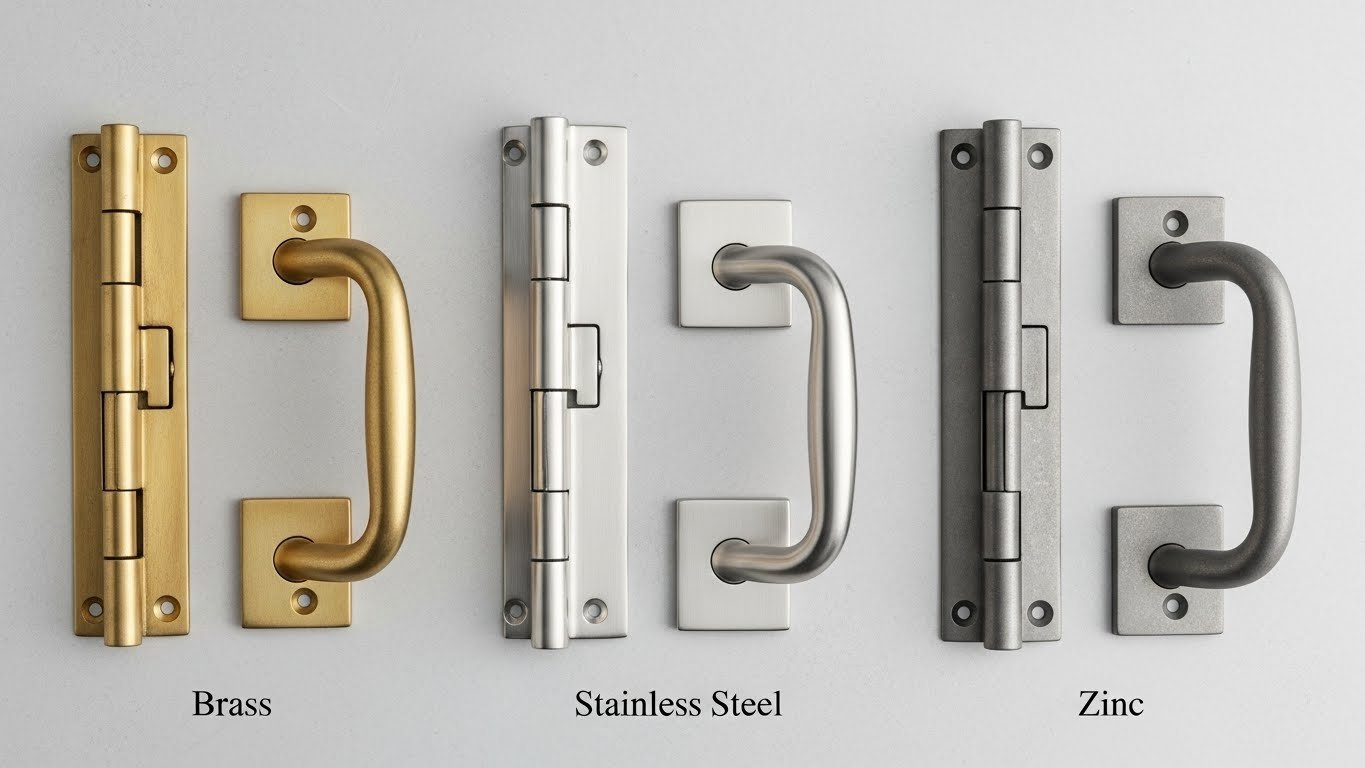
Structural Resilience: The Kick-Proof Guarantee
Most standard barn equipment fails because it is built for containment, not impact. At DB Stable, we treat stall fronts and partitions as safety shields. We move beyond standard construction steel to ensure the barrier survives the aggression without becoming a hazard itself.
- Acier à haute résistance Q345B : We use low-alloy high-strength steel (equivalent to ASTM Grade 50) specifically for its superior impact toughness and resistance to brittle fractures in climats froids.
- Calibre 14 (2.5mm) Thickness: While competitors drop to 1.5mm to save cost, we maintain a strict 2.5mm standard on structural tubes to prevent bending under direct kicks.
- HDPE Infill: Replacing splinter-prone wood with 28mm-32mm UV-stabilized HDPE planks absorbs shock energy and eliminates the risk of sharp fractures.
Solid Horse Stall Dividers: Creating Visual Barriers
Solid dividers eliminate visual triggers between stalls, effectively stopping neighbor-to-neighbor aggression and reducing anxiety in high-strung horses through heavy-duty physical separation.
| Composant | DB Stable Specification | Performance Benefit |
|---|---|---|
| Steel Channel | Calibre 14 (2,0 mm - 2,5 mm) | Resists warping under heavy kick impact. |
| Bamboo Infill | 28mm-38mm High Density | Janka Hardness > 3000 lbf (3x harder than Oak). |
| HDPE Infill | 28mm-32mm UV Stabilized | Zero maintenance; absorbs shock without splintering. |
| Galvanization | Trempage à chaud après fabrication | BS EN ISO 1461 Standard (>70 microns). |
Minimizing Stress and Aggression
Managing a barn full of high-value animals requires more than just containment; it requires psychology. Horses are prey animals that react instantly to visual stimuli. When you place two incompatible horses next to each other with open bars, you invite dominance challenges, food aggression, and constant stress. Solid dividers cut this line of sight completely.
Visual blocking does the heavy lifting for behavioral management. High-strung stallions or anxious mares often settle down immediately once they cannot see their neighbor. This separation prevents the “fence-line” fighting that leads to costly veterinary bills from kicks or bites. For facilities handling quarantine or isolation, solid walls are non-negotiable. They eliminate nose-to-nose contact, which is the primary vector for respiratory disease transmission.
Kick-Proof Infill Standards: Bamboo and HDPE
A visual barrier is useless if a horse can kick through it. We see too many “economy” dividers on the market using thin plywood or 1.5mm steel channels that buckle under pressure. At DB Stable, we engineer our solid partitions to withstand direct impact from 1,200lb animals. We use strictly 14-gauge (2.0mm+) steel channels hot-dip galvanized after fabrication to hold the infill securely.
- High Density Bamboo (28mm-38mm): We use strand-woven bamboo with a Janka Hardness rating over 3000 lbf. This material is three times harder than oak and does not rot or mold, providing a rigid, luxury finish that resists chewing.
- UV Stabilized HDPE (28mm-32mm): For facilities prioritizing hygiene and durability, we recommend High-Density Polyethylene. These planks offer a “Kick-Proof Guarantee” due to their slight flex, which absorbs shock rather than shattering. They require zero maintenance and can be power-washed daily.
- Secure Channeling: The infill boards sit deep within our custom U-channels, preventing them from popping out during a heavy impact event.
Premium Modular Stables Built for Extreme Durability

38mm Bamboo: Absorbing the Impact of Kickers
Quick Answer: We use 38mm High-Density Strand Woven Bamboo with a Janka Hardness >3000 lbf—three times harder than Oak—to absorb high-velocity impact without splintering.
Strand Woven vs. Traditional Timber: The Density Difference
Softwood is a liability in a professional stable. When a 500kg horse kicks a standard pine board, the wood often shatters rather than breaks cleanly. This creates jagged, spear-like splinters that can cause catastrophic leg injuries. Traditional timber also contains natural defects like knots, which act as built-in failure points under stress.
Strand woven bamboo eliminates these risks through engineering. Instead of cutting a plank from a tree trunk, we strip bamboo into fibers and compress them under extreme heat and pressure. This process fuses the fibers into a dense, solid block. The result is a material structure that eliminates natural weak points and prevents the board from splitting along a grain line, offering consistent strength across the entire panel.
We do not rely on visual estimates for safety. Our infills are tested against the Janka Hardness Scale, the global standard for measuring resistance to denting and wear. While standard Red Oak rates around 1,290 lbf, our High-Density Strand Woven Bamboo achieves a rating over 3000 lbf.
- 3x Harder than Oak: This rating signifies maximum resistance against direct hoof impact, ensuring the board absorbs the blow without fracturing.
- Mass Dampening: The 38mm thickness adds significant mass to the partition, which deadens the sound and vibration of kicks that typically agitate neighboring horses.
- Intégrité structurelle : The density prevents the material from compressing or warping under the repetitive force of a habitual kicker.
The Hybrid Stall: Solid Bottom, Mesh Top
A hybrid configuration uses solid lower panels to block leg-level aggression while upper mesh grills ensure essential airflow and visual contact, balancing safety with respiratory health.
Mitigating Aggression Through Partial Isolation
Facility managers often over-correct with aggressive horses by using fully solid walls, which creates isolation stress and poor air quality. The hybrid approach targets the specific “kill zones” where injuries happen while keeping the environment healthy. By keeping the bottom solid, you physically cut off the line of sight and contact at the leg and flank level, preventing “under-wall” biting or kicking wars.
- Stops Physical Engagement: The solid lower section acts as a shield against kicks directed at neighbors, protecting legs from impact injuries.
- Maintains Visual Connectivity: The top mesh allows horses to see their herd, significantly reducing the anxiety behaviors associated with solitary confinement.
- Enables Stack Effect Ventilation: Heat rises. The open top allows warm, ammonia-heavy air to escape upward, which is critical for respiratory health in professional barns.
Material Specs: Impact-Absorbing HDPE and Galvanized Mesh
Standard plywood often splinters under the force of an aggressive kicker, creating immediate maintenance tickets and safety hazards. We engineer the solid zone using high-density polyethylene (HDPE) infill. This material absorbs impact energy rather than shattering, providing a “Kick-Proof Guarantee” and eliminating the need for constant board replacement.
- Remplissage en PEHD de 28 mm à 32 mm : UV-stabilized and impact-absorbing material for the lower solid section that requires zero maintenance.
- Rust Protection (>70 Microns): Upper steel grills face constant exposure to breath condensation. We use Hot-Dip Galvanization after fabrication to exceed BS EN ISO 1461 standards.
- Structure en acier Q345B : For cold climates, we use Low Alloy High Strength Steel frames to prevent brittle fractures when horses kick frozen metal.
Questions fréquemment posées
How do I stop a horse from kicking stall walls?
Address the root cause first—usually anxiety, ulcers, or lack of turnout. From an engineering standpoint, you must mitigate the damage to both the animal and the facility. We strictly recommend installing 28mm-32mm HDPE infill for known kickers. Unlike wood which splinters and requires replacement, HDPE absorbs the impact shock and deadens the noise that often reinforces the behavior. Ensure your stall frames use Q345B steel rather than standard Q235, as the higher impact toughness prevents brittle fractures during cold weather kicking bouts.
Should I choose solid or mesh partitions for my barn?
This depends entirely on your facility’s function. Mesh partitions maximize “Stack Effect Ventilation” and allow socialization, making them the standard choice for riding schools and general boarding. However, solid partitions are non-negotiable for stud farms, quarantine units, or high-turnover barns where visual privacy reduces stress. For most B2B commercial projects, we specify a hybrid Professional Series design: solid High-Density Bamboo on the bottom to prevent leg injuries, with a mesh top to maintain airflow.
What is the best stall design for aggressive horses?
Isolation and durability are your priorities here. You need full privacy partitions to block visual triggers that escalate territorial aggression. Spec the infill with 38mm High-Density Bamboo—it has a Janka hardness over 3000 lbf (3x harder than Oak) and withstands heavy abuse without breaking. Structurally, verify the steel is 14-gauge (2.0mm minimum) and Hot-Dip Galvanized After Fabrication. Pre-galvanized welds often crack and rust under the repetitive vibration caused by an aggressive horse, compromising containment safety.
Réflexions finales
Compromising on partition strength to save upfront costs creates a liability nightmare when housing aggressive horses. We engineer our dividers with Q345B High Strength Steel and Hot-Dip Galvanization After Fabrication to ensure they survive direct impact without failing. For dealers and facility managers, investing in this “Kick-Proof” standard is the only way to mitigate injury risk and eliminate costly warranty claims.
Stop guessing on safety and start validating your infrastructure. We encourage you to request a material sample kit to test the density of our 38mm bamboo and 32mm HDPE against your current stock. Reach out to our engineering team today to discuss custom dimensions or volume pricing for your upcoming project.

 French
  English
  Spanish
  Arabic
  German
0 commentaires