


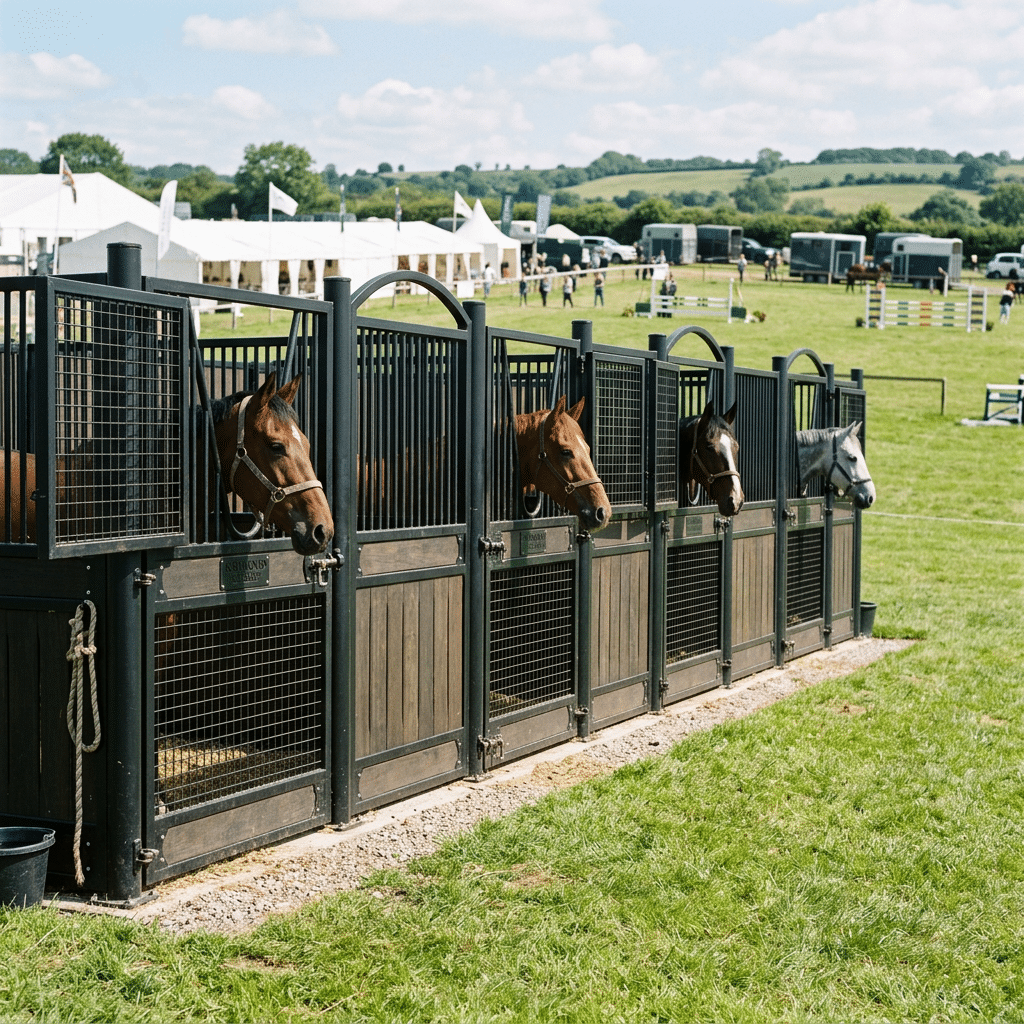
Designing compliant Hippotherapy Centers is a capital-intensive challenge where failing ADA or safety audits creates immediate liability. Standard equestrian structures often lack the zero-threshold access and impact resistance required for adaptive riding programs, leading to costly retrofits and increased insurance premiums.
We analyze infrastructure solutions that align with Q345B safety standards and ISO 1461 hot-dip galvanization protocols. This report evaluates kick-proof high-density bamboo and zero-threshold track systems to ensure your facility satisfies rigorous therapy requirements while reducing long-term maintenance overhead.
L'essor des critères ESG (environnementaux, sociaux et de gouvernance) dans le secteur de la construction
In 2026, ESG mandates drive construction towards decarbonization. Projects now require whole-life carbon assessments, pushing developers to select high-durability materials like hot-dip galvanized steel to minimize embodied carbon.
Strict Environmental Mandates and Carbon Accountability
The regulatory landscape for 2026 has shifted from voluntary guidelines to strict enforcement. Clients now demand explicit carbon budgets that account for every phase of construction. Focusing solely on operational energy (heating and lighting) is no longer sufficient; the industry now measures whole-life carbon to determine a project’s true environmental cost.
- Scope 3 Credibility: Regulators require accurate Scope 3 measurement, forcing immediate transparency in material sourcing and supply chains.
- Investor Priorities: Capital flows predominantly to projects utilizing material innovations that drastically reduce embodied carbon.
- Budgeting Carbon: Construction bids must now present a carbon strategy alongside the financial proposal to remain competitive.
Reducing Life-Cycle Carbon with Durable Galvanized Systems
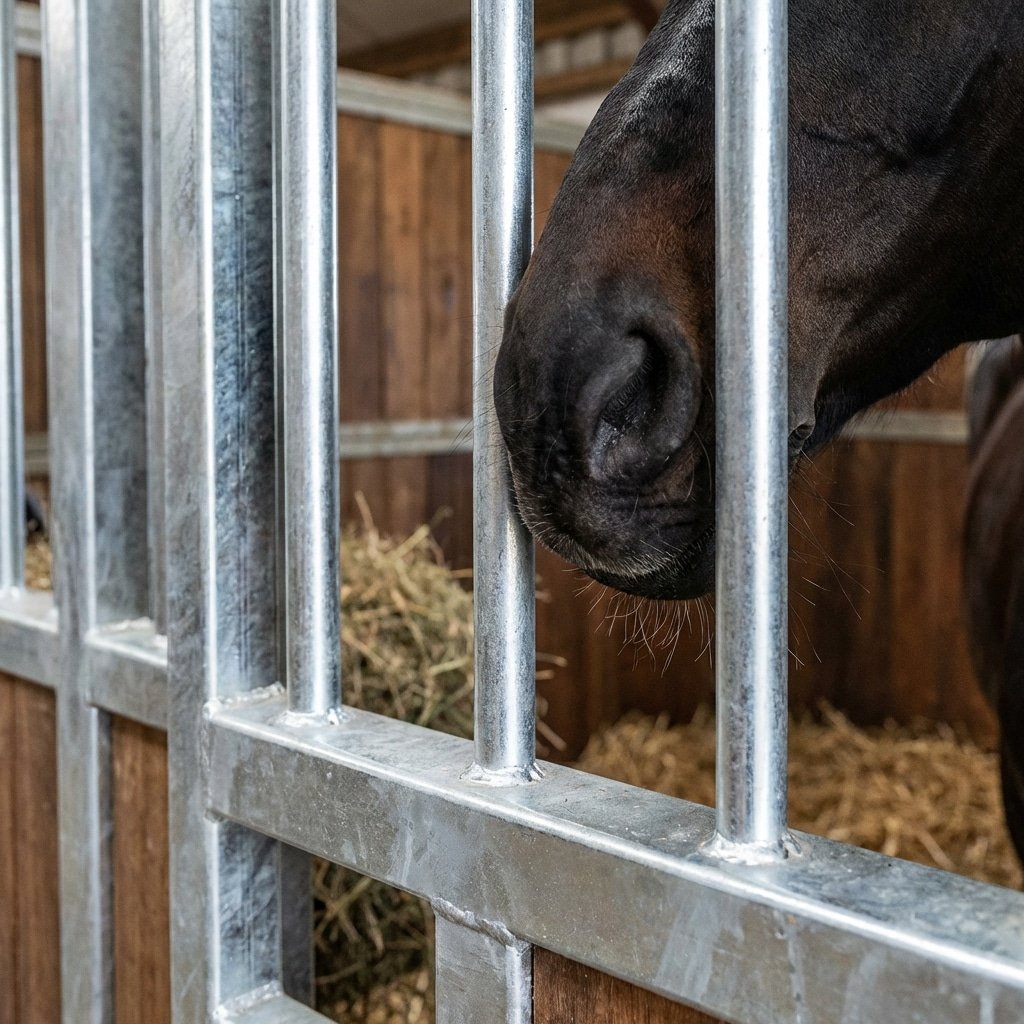
Meeting these ESG goals requires materials that last longer and transport more efficiently. At DB Stable, we align production specifically with these decarbonization targets. Our reliance on Galvanisation à chaud (conforming to BS EN ISO 1461) extends the product lifespan significantly. This durability prevents the carbon-heavy cycle of replacing rusted steel every few years.
- Efficacité logistique : Notre modular flat-pack design fits 30-45 sets per 40HQ container, compared to 12-15 sets for welded alternatives, cutting shipping emissions by over 60%.
- Sustainable Materials: We utilize renewable Bambou haute densité infill and 100% recyclable Q235B/Q345B steel to meet strict sourcing demands.
- Waste Reduction: Precision manufacturing and the “Hot-Dip After Fabrication” process eliminate the need for on-site repairs or premature disposal.
Questions fréquemment posées
Comment créer un centre équestre conforme aux critères ESG ?
Building an ESG-compliant facility requires a structured approach across three pillars: Environmental sustainability, Social responsibility, and Governance. Industry leaders use the following framework to ensure compliance and operational efficiency.
- Environmental (E): Prioritize renewable energy. Leading centers generate up to 80% of their electricity via on-site solar. Water independence is achieved through rainwater harvesting. Biodiversity is enhanced by converting unused land into pollinator-friendly meadows.
- Social (S): Focus on safety and welfare. Implement strict safety protocols for handling horses and machinery. Promote workforce diversity and provide mental health support, acknowledging the high-pressure nature of the equine industry.
- Governance (G): Enforce ethical business practices. Adopt a strict Code of Conduct prohibiting bribery. Ensure GDPR compliance for data protection and engage in transparent ESG reporting using frameworks like SASB within 2-3 years of operation.
Le bambou est-il un matériau de construction durable ?
Yes, bamboo is a superior sustainable alternative to traditional timber. It reaches maturity in 3-5 years compared to decades for hardwoods, allowing for rapid regeneration without deforestation. Bamboo absorbs up to four times more CO₂ than many tree species, often resulting in a negative carbon footprint.
Technically, strand-woven bamboo offers exceptional density and strength, often exceeding steel in specific tensile metrics. It requires no pesticides to grow and its harvesting leaves the root system intact, preventing soil erosion. For construction, this means a material that is durable, renewable, and environmentally net-positive.
Quel est l'impact environnemental des granges en acier par rapport à celles en bois ?
The comparison relies on the timeline. Wood framing produces significantly lower embodied carbon during the manufacturing phase (up to 84% less than steel) because trees naturally sequester carbon. However, wood structures often require deforestation and have shorter lifespans due to rot and pest vulnerability.
Steel, particularly grades like Q235B, involves higher initial energy to produce but offers 100% recyclability and indefinite reuse without quality loss. Over a 50+ year lifecycle, steel’s durability and lack of replacement needs often offset the initial carbon cost, making it the preferred choice for long-term infrastructure and circular economy models.
Des certifications écologiques pour les écuries ?
Standard certifications like LEED are often designed for urban commercial buildings and can be difficult to apply to agricultural structures. However, larger equestrian facilities can pursue LEED credits by classifying as commercial entities.
More specific alternatives include the Code CalGreen, which mandates green standards for agricultural buildings in California, covering water conservation and waste reduction. Facility owners can also pursue sustainable agriculture recognitions or conduct independent energy audits to validate their environmental claims for marketing or compliance purposes.
Des fabricants d'écuries respectueux de l'environnement ?
Several manufacturers have integrated sustainability into their production lines. MD Barnmaster et Coffman Barns focus on modular, pre-engineered systems that reduce construction waste. DC Structures specializes in mass timber kits using sustainably managed wood.
For steel options, WYO Custom Builders and global OEMs emphasize the recyclability of metal barns. These manufacturers increasingly use materials like Cross-Laminated Timber (CLT) or high-grade recyclable steel to balance durability with environmental responsibility.
Abandonner les peuplements de vieux bois (chêne/pin)
The equestrian industry is shifting from rot-prone Oak and Pine to High-Density Bamboo (>3000 lbf) and HDPE, eliminating maintenance costs and significantly extending stable lifespans.
The Vulnerabilities of Traditional Softwood and Hardwood
For decades, Oak and Pine were the default choices for stable infills, but their dominance is fading due to inherent functional failures in humid environments. Traditional timber acts like a sponge in a stable setting. Constant exposure to ammonia, water, and humi
dity causes Softwood and standard Hardwood to swell, warp, and eventually rot. This creates a breeding ground for bacteria and compromises the structural integrity of the stall front.
Safety remains the primary concern for professional facilities. Standard timber lacks the necessary impact resistance to withstand the force of a kicking horse. When traditional wood fails, it splinters, creating sharp jagged edges that can cause catastrophic injuries to the animal. Beyond safety, the economics of old-growth timber no longer add up. Harvesting trees that require 50 to 100 years to mature is environmentally unsustainable and drives costs higher without delivering a corresponding increase in performance.
High-Density Bamboo and HDPE: The Engineered Alternatives
We engineered our stable systems to solve the maintenance and safety deficits of natural wood. By utilizing High-Density Strand Woven Bamboo and UV-stabilized HDPE, we provide distributors and facility managers with materials designed specifically for the abuse of an active equestrian center.
- Résistance aux chocs : Our Strand Woven Bamboo boasts a Janka Hardness rating > 3000 lbf. This makes it three times harder than Oak, effectively eliminating the risk of splintering under impact.
- Zero-Maintenance HDPE: Our 28mm-32mm Remplissage en PEHD requires no staining, painting, or sealing. It is UV stabilized to prevent brittleness and engineered to absorb shock rather than shatter.
- Cribbing Resistance: Unlike soft timber which invites chewing (cribbing), the density of our bamboo and the composition of our HDPE make them impervious to dental damage, preserving the aesthetic of the barn for years.
Des écuries conçues avec précision et garantissant une durée de vie de 20 ans

Les principales usines qui adoptent des matériaux durables
Leading manufacturers prioritize sustainability by integrating renewable High-Density Bamboo (3x harder than oak) and recycled UV-stabilized HDPE infills. Adopting Hot-Dip Galvanization (ISO 1461) extends product lifecycles significantly, reducing long-term steel waste.
| Fonctionnalité | Traditional Timber Stables | Sustainable Engineered Stables |
|---|---|---|
| Resource Regeneration | 50-100 Years (Oak/Pine) | 3-5 Years (Bamboo) |
| Chemical Maintenance | Requires Toxic Paints/Varnishes | Zero Maintenance (UV Stabilized) |
| Résistance aux chocs | Prone to Splintering | Kick-Proof (>3000 lbf Hardness) |
| Steel Lifecycle | 5-7 Years (Powder Coat Only) | 20+ Years (ISO 1461 Galvanized) |
Prioritizing Renewable Bamboo Resources
Most manufacturers relying on traditional hardwoods like oak contribute to resource depletion due to slow maturation cycles. We have shifted production to High Density Strand Woven Bamboo, which offers a denser, more consistent alternative without the ecological cost of old-growth deforestation. This material meets rigorous B2B durability standards while maintaining a renewable supply chain.
- Superior Density: We strictly use bamboo with a Janka Hardness rating > 3000 lbf, making it 3x harder than oak and impervious to most equine impact.
- Rapid Regeneration: Bamboo reaches maturity in 3-5 years, offering a sustainable harvest cycle that reduces environmental strain compared to the decades required for hardwood.
- Natural Resilience: The strand woven manufacturing process creates a dense, non-porous board naturally resistant to mold and rot, extending the lifespan of partitions in damp stable environments.
The Sustainability of Zero-Maintenance HDPE
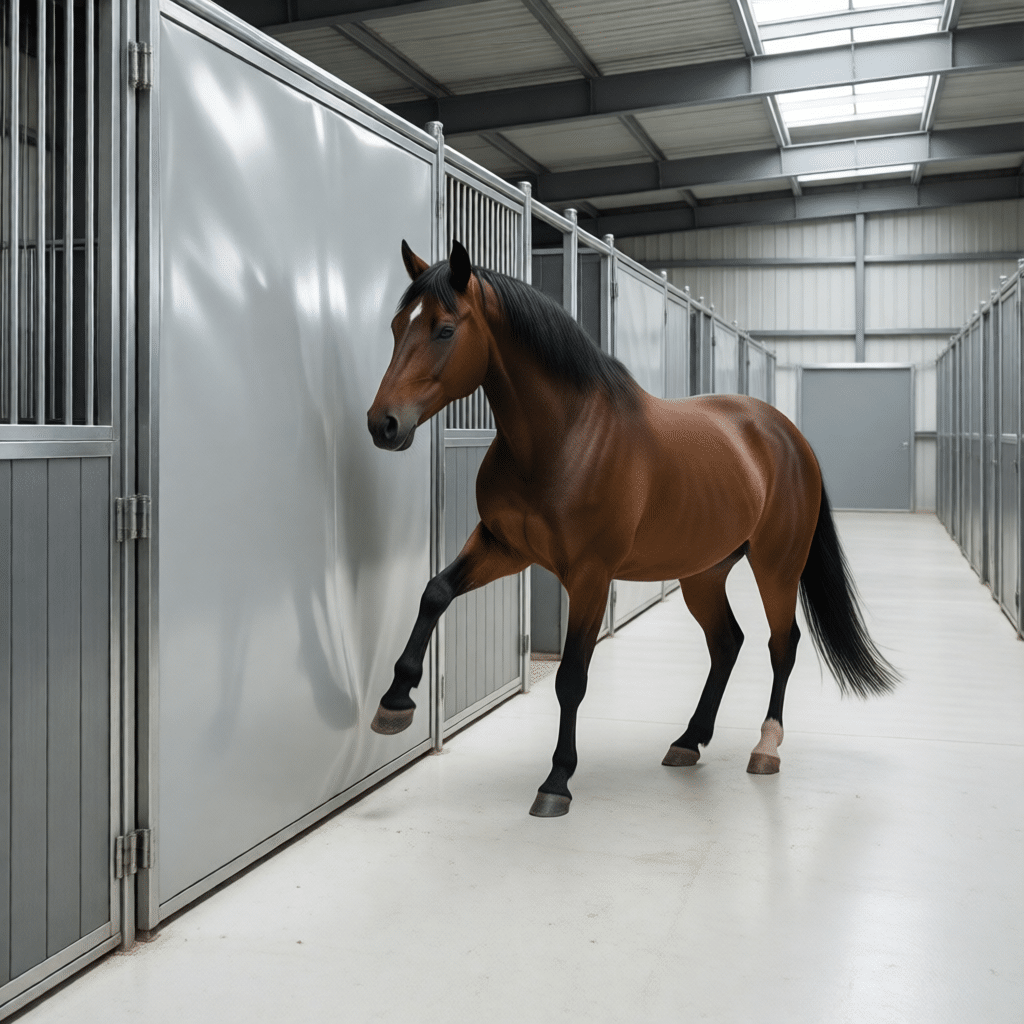
For facilities prioritizing hygiene and operational efficiency, recycled UV-stabilized HDPE (High-Density Polyethylene) is the industry standard. Unlike wood that demands annual chemical treatments to prevent decay, HDPE creates a closed-loop system of durability. This significantly lowers the chemical load on the environment by eliminating the need for ongoing maintenance.
- Chemical Elimination: UV Stabilization prevents material degradation, completely removing the need for toxic varnishes, stains, or paints.
- Absorption des chocs : The material is engineered to absorb kinetic energy, reducing injury risks to horses while maintaining structural integrity.
- Aucun entretien : HDPE requires only water for cleaning, drastically lowering long-term labor costs and chemical runoff in stable management.
- Garantie « anti-coups de pied » : Panels are designed to resist fracture under heavy impact, ensuring they do not end up in landfills due to breakage or splintering.
Le bambou tressé : un puits de carbone à haut rendement
Strand-woven bamboo absorbs up to 17,000 kg of CO₂ annually, locking carbon into high-density planks that outlast oak and resist rot in demanding stable environments.
Rapid Biomass Accumulation and CO₂ Absorption
Bamboo operates differently from traditional timber. While an oak tree takes decades to mature, bamboo acts as a rapid-cycle carbon vacuum. A bamboo forest sequesters between 12,000 and 17,000 kilograms of CO₂ per hectare annually. This biomass accumulation occurs approximately 10 times faster than standard hardwood forests, allowing for frequent harvest cycles that maximize carbon drawdown.
The harvesting method itself supports this efficiency. We do not clear-cut. Selective harvesting leaves the underground rhizome system intact, which prevents the soil erosion and carbon release typically associated with logging. The forest remains an active, living sink even during extraction.
High-Density Compression: Locking Carbon into Heavy-Duty Planks
Raw bamboo is a grass, but strand-woven bamboo is an engineered structural material. The manufacturing process shreds the fiber and compresses it under extreme pressure, effectively fossilizing the absorbed carbon into a dense, rot-resistant board. This process yields a materia
l with a tensile strength of 28,000 kgf/in², significantly exceeding standard structural steel.
- Dureté Janka : > 3000 lbf (3x harder than Oak).
- DB Stable Specs: 28mm-38mm thick solid planks.
- Longévité : High density prevents kick damage and rot, extending the product’s lifespan.
By utilizing these heavy-duty planks in our stable walls, we turn the structure itself into a long-term carbon storage unit. The durability of the strand-woven method ensures the carbon remains locked in the facility walls for decades, rather than returning to the atmosphere through decay or early replacement.
Acier Q235B : le cadre recyclable 100%
Q235B steel matches ASTM A36 structural standards while offering a 100% recyclable, non-toxic lifecycle through hot-dip galvanization, eliminating the environmental hazards of treated lumber.
Structural Integrity and ASTM A36 Equivalence
Western engineers frequently ask if imported steel meets local safety codes. The answer is simple: Q235B is not a “budget” alternative. It is the direct chemical and mechanical equivalent of the industry-standard structural steel used in US and European infrastructure. We rely on this grade because it balances tensile strength with ductility, ensuring the framework absorbs impact rather than snapping under pressure.
- Standard Equivalence: Q235B directly mirrors ASTM A36 (USA) and S235JR (Europe), ensuring full compliance with global engineering codes.
- Yield Strength: Features a minimum yield strength of 235 MPa. This resilience is critical for withstanding kicks and impact from horses without brittle fracture.
- 14-Gauge Profile: We strictly utilize 2.0mm – 2.5mm wall thickness tubing. While many competitors reduce costs by using 1.5mm profiles, we adhere to a heavy-duty specification that significantly exceeds standard residential fencing materials.
Sustainability Through Hot-Dip Galvanization
True sustainability in construction is defined by the product’s lifecycle. We protect our steel using the ISO 1461 Hot-Dip Galvanization process, where the framework is dipped into molten zinc après fabrication. This creates a metallurgical bond rather than a superficial surface layer, preventing the material degradation that forces early replacement.
- Extended Lifecycle: The zinc coating (averaging >70 microns on tubing) bonds to the steel, preventing rust for decades and negating the carbon footprint associated with manufacturing replacement parts.
- Non-Toxic Recycling: Unlike pressure-treated wood, which often contains chemicals like arsenic or copper and ends up in landfills, galvanized steel is 100% recyclable at the end of its utility.
- Aucun entretien : The finish eliminates the need for ongoing applications of toxic paints or varnishes, maintaining healthy air quality for sensory-sensitive therapy environments.
Questions fréquemment posées
Can the stable doors be customized for ADA wheelchair access?
Yes. For equine-assisted therapy centers, we widen door openings beyond the standard 1.2m to comfortably accommodate wheelchairs. We also utilize a top-hung “Zero-Threshold” sliding track system. This eliminates floor guides entirely, removing tripping hazards for clients with mobility aids while ensuring the door operates smoothly with minimal force.
What features ensure safety for sensory-sensitive or reactive horses?
Safety is the priority in therapy settings. Our Professional Series utilizes Q345B Low Alloy High Strength Steel (ASTM Grade 50 equivalent). This material withstands heavy kicks without suffering brittle fractures, which is a common risk with standard steel in cold climates. We also engineer a “Cast-Proof Design” by strictly limiting the bottom gap to approximately 50mm. This prevents a rolling horse from getting a hoof or leg trapped under the partition.
Is the HDPE infill suitable for facilities requiring frequent sterilization?
Absolutely. Our 28mm-32mm UV-stabilized HDPE planks are non-porous and impervious to moisture, bacteria, and odors. Unlike wood, they do not rot or splinter. You can power-wash them daily with heavy disinfectants without degrading the material. This makes HDPE the standard choice for quarantine units and high-traffic therapy barns where hygiene is critical.
How does Hot-Dip Galvanization differ from standard pre-galvanized tubes?
The difference lies in the weld protection. Standard pre-galvanized tubes leave the weld seams exposed, leading to rust within a year. We use “Hot-Dip Galvanization After Fabrication” (ISO 1461). We build the door from black steel first, then dip the entire unit into molten zinc. This seals every joint and seam—inside and out—with a zinc coating exceeding 70 microns, offering decades of protection even in humid or coastal environments.
Can I choose bamboo infill to meet ESG or green building standards?
Yes. Our High-Density Strand Woven Bamboo is a rapidly renewable resource that matures in 5 years, compared to 30-50 years for traditional hardwoods like Oak. It acts as a significant carbon sink. Physically, it boasts a Janka hardness over 3000 lbf (3x harder than Oak) and resists mold and rot better than timber. This offers a sustainable, carbon-sequestering alternative that meets green building durability standards without sacrificing aesthetic warmth.
Réflexions finales
Ignoring 2026 ESG mandates puts your facility at immediate risk of regulatory obsolescence and expensive retrofits. While traditional timber offers lower initial costs, only Hot-Dip Galvanized Q235B steel and High-Density Bamboo deliver the durability needed to meet strict carbon budgets. Choosing these verified, low-carbon materials protects your operational margins while ensuring absolute safety for therapy programs.
Secure your supply chain by validating our modular flat-pack system, engineered to cut shipping emissions by over 60%. We recommend requesting a 14-gauge profile sample to personally test our “Hot-Dip After Fabrication” finish against standard pre-galvanized alternatives. Contact our engineering team today to align your architectural prints with our ADA-compliant manufacturing capabilities.

 French
  English
  Spanish
  Arabic
  German
0 commentaires