


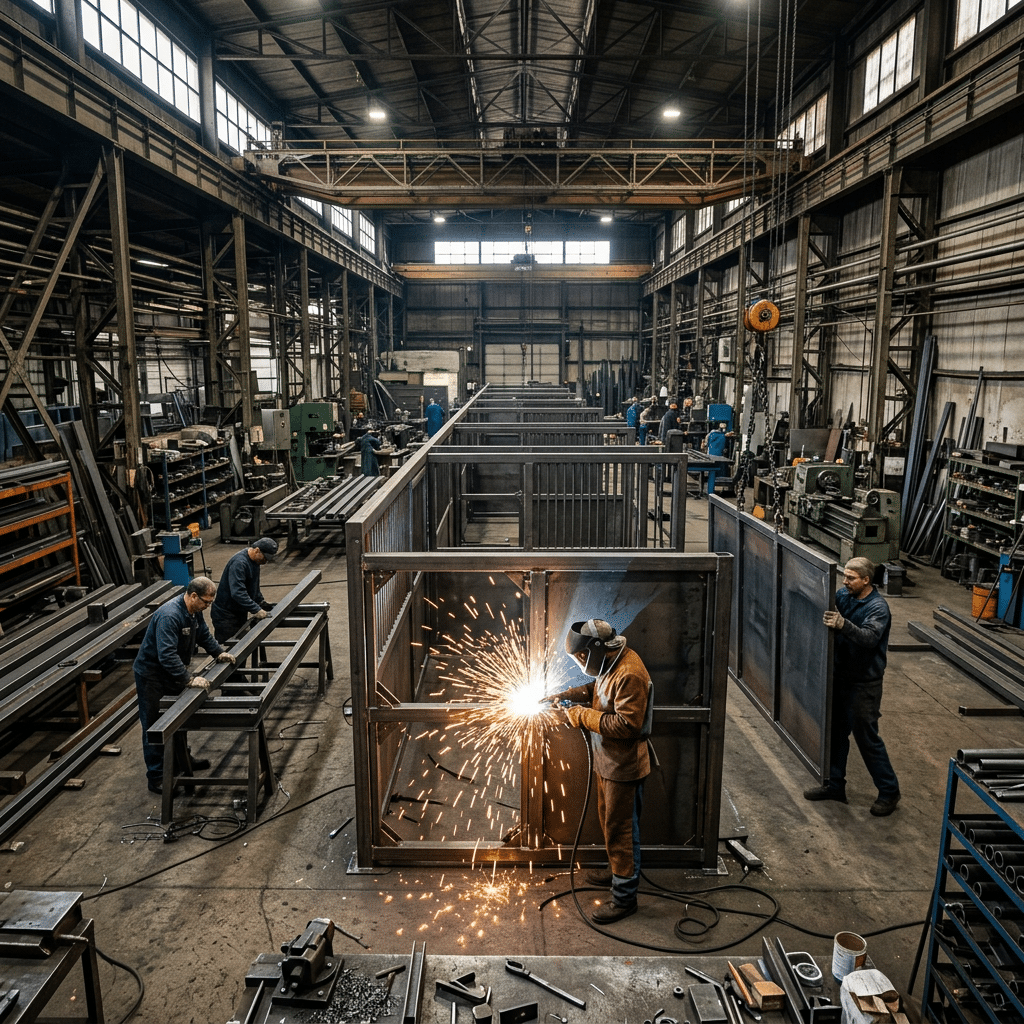
Heat stress management in Spain determines the operational viability of any equestrian facility during the intense summer months. Relying on enclosed masonry or poorly ventilated wood structures creates a physiological furnace that jeopardizes high-value horses and spikes veterinary liability.
This analysis focuses on engineering passive cooling through the Stack Effect using fully grilled portable stable kits. We examine the impact of 50mm cast-proof spacing, reflective steel roofing, and hot-dip galvanized Q235B frames to maintain safe internal temperatures without the cost of permanent concrete foundations.
Gérer le stress thermique des équidés pendant l'été espagnol
Spanish summers demand strict heat management. Monitor the Temperature-Humidity Index (THI) and install open-grill stable fronts to maximize the “Stack Effect” for passive ventilation and cooling.
Identifying Heat Risks in High-Temperature Spanish Regions
Summer temperatures in Spain routinely break 30°C. This creates a physiological furnace for stabled horses, especially when humidity spikes. We look at the combined Temperature-Humidity Index (THI) rather than just the thermometer. Veterinary standards flag a THI above 150 as a caution zone, while anything over 180 demands immediate preventive measures and stopped work.
The real danger in these conditions is stagnant air. In an enclosed space, a horse’s body heat raises the ambient temperature rapidly. If the stable lacks passive ventilation, the animal loses the ability to thermoregulate, effectively turning the stall into a heat trap. Without air exchange, even resting horses face heat stress risks.
Optimizing Airflow with Ventilation par effet de cheminée
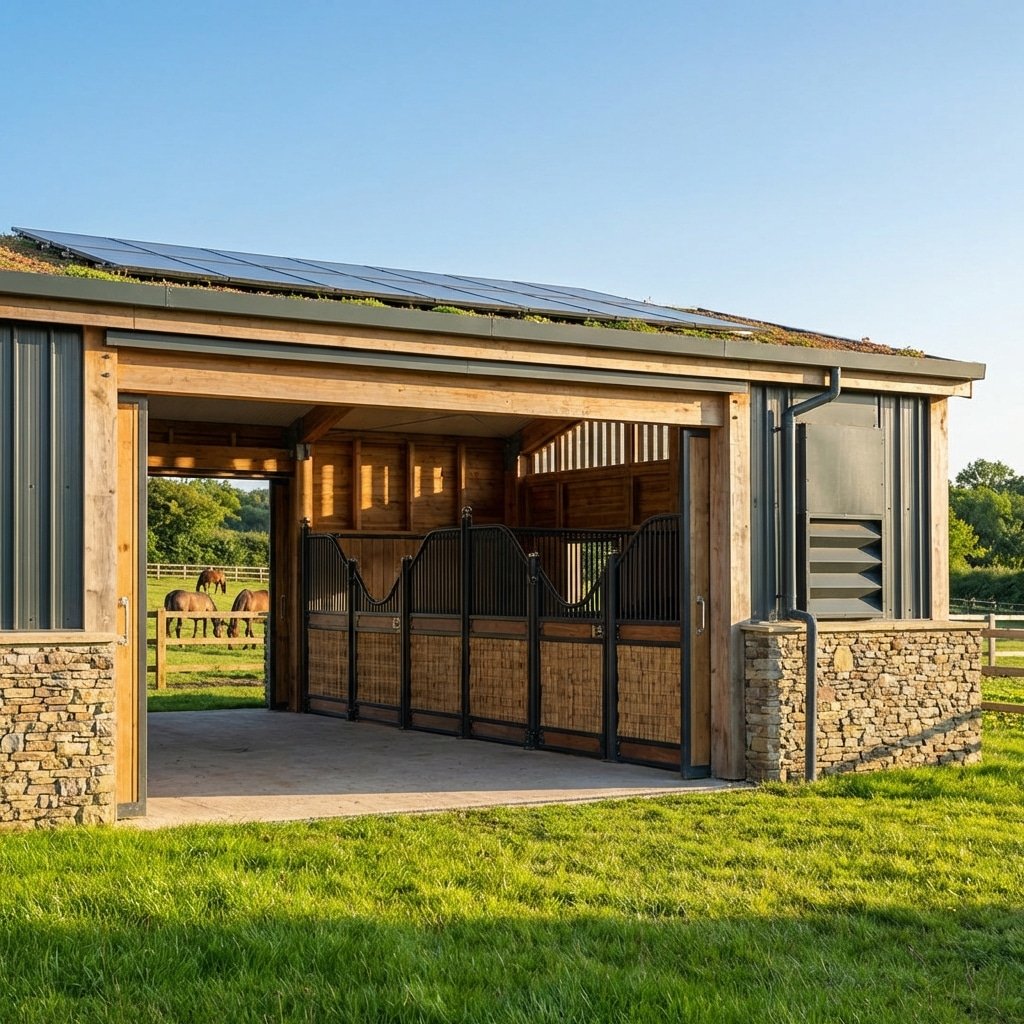
Mechanical fans fail if the building design fights them. We engineer our Professional Series stables to leverage “Stack Effect Ventilation.” Extensive open top grills allow rising hot air to escape naturally rather than pooling at the ceiling and radiating back down onto the horse.
- Top Ventilation: Open-grill fronts facilitate the escape of warm, moist air generated by the horse.
- Floor Intake: Our standard 50mm “Cast-Proof” bottom gap draws cooler air into the stall, assisting horses that are lying down.
- Résistance à l'humidité : Cooling horses involves frequent misting and wash-downs. This moisture destroys standard paint. We use Hot-Dip Galvanized steel (Q235B or Q345B) frames processed après fabrication to withstand the wet conditions required for cooling.
Écuries autoportantes : L'ombre instantanée n'importe où
Free-standing units utilize hot-dip galvanized frames and UV-stabilized HDPE to provide immediate, portable shelter without the cost or permanence of concrete foundations.
| Composant | Spécifications | Operational Benefit |
|---|---|---|
| Steel Frame | Q235B, Hot-Dip Galvanized (>70μm) | Rust-proof longevity without footings. |
| Wall Infill | 28mm-32mm UV-Stabilized HDPE | Zero maintenance; kick-proof. |
| Toiture | 0.4mm – 0.8mm Steel Board | High solar reflectance. |
| Fondation | Pin Connectors (No Concrete) | Rapid assembly and relocation. |
Portable Design Without Permanent Foundations
Traditional stable construction often stalls at the groundwork phase due to permitting delays and the high cost of concrete slabs. Modular free-standing systems bypass this bottleneck entirely. By utilizing a rigid Q235B structural steel frame, these units maintain structural integrity on simple leveled ground, eliminating the need for excavation or permanent footings. This “pop-up” capability allows facilities to deploy shelter immediately where heat stress is highest.
For commercial operations and rental properties, portability protects the asset. Pin connectors replace permanent welds, allowing crews to disassemble and relocate the entire structure rapidly. This supports rotational grazing strategies, where shelter must move with the herd to prevent pasture degradation, or allows tenants to take their infrastructure investment with them when moving properties.
- Foundation-Free Assembly: Relies on pin connectors and heavy-duty ground anchors rather than concrete slabs.
- Operational Flexibility: Supports rapid relocation for rotational grazing or lease-end asset recovery.
- Versatile Configurations: Modular panels enable back-to-back, L-shaped, or linear layouts to fit specific paddock geometries.
Integrated Steel Roofing and UV-Resistant HDPE
In high-heat environments like Southern Spain or Australia, shelter materials determine the internal temperature. We utilize 0.4mm to 0.8mm steel board roofing specifically to reflect solar radiation. Unlike dark asphalt or uninsulated wood which absorb heat, steel roofing significantly lowers the ambient temperature beneath the structure, providing a genuine cooling effect for the animals.
Material durability under UV exposure is the second critical factor. Standard wood infills warp, crack, and require annual treatment when exposed to intense sun. Our system employs 28mm-32mm UV-stabilized HDPE (High-Density Polyethylene) planks. These synthetic infills are impact-absorbing and impervious to sun damage, rot, or splintering.
- Solar Reflectance: Steel roofing reflects radiation to reduce internal heat buildup.
- Zero-Maintenance Infill: UV-stabilized HDPE planks resist cracking and warping, eliminating painting or staining costs.
- Défense contre la corrosion : Frames undergo hot-dip galvanization après fabrication (minimum 70 microns zinc coating) to seal welds against rust.
Premium Stables Engineered for 20-Year Durability
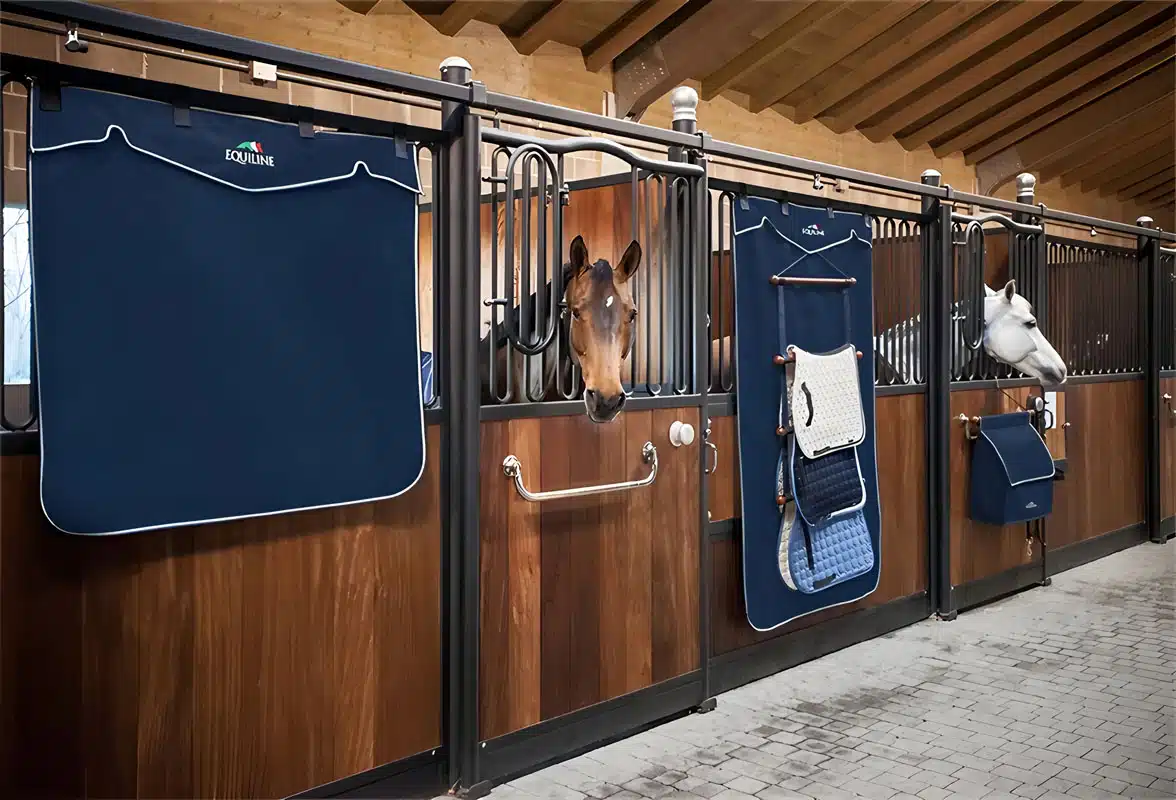
Maximiser la circulation de l'air : Panneaux de box entièrement grillés
Fully grilled fronts maximize cross-ventilation to strip ammonia and heat. We engineer these open designs using 14-gauge Q345B steel to ensure kick-proof safety without compromising airflow.
Promoting Respiratory Health via Stack Effect Ventilation
In professional stable design, airflow is a veterinary requirement, not a luxury. Solid stall fronts often create “dead zones” near the floor where ammonia—which is heavier than air—accumulates directly at the horse’s breathing level during sleep. Fully grilled panels eliminate this trap by facilitating continuous air exchange. This design leverages Ventilation par effet de cheminée, allowing fresh air to enter low and push warm, stagnant air upward and out through ridge vents.
Beyond respiratory mechanics, open grillwork significantly reduces heat stress in hot climates like Spain or Australia. By removing the solid barrier, cross-breezes reach the horse’s body rather than just passing over their heads. Socially, these panels improve herd dynamics. Horses are prey animals that rely on visual contact with the herd for security; enabling them to see their neighbors reduces stall weaving, cribbing, and general anxiety.
Engineering Safety: Q345B Steel and Cast-Proof Spacing
Open bars present a higher risk of leg injury if the material specifications are weak. We reject standard structural steel for these high-stress components. Instead, DB Stable utilizes Acier à haute résistance Q345B. This low-alloy steel offers superior impact toughness, particularly in freezing temperatures where standard carbon steel becomes brittle and prone to snapping under the force of a kick.
- 14-Gauge Thickness (2.0mm+): We mandate a minimum wall thickness of 2.0mm for all grill bars. Thinner 1.5mm tubing used by budget competitors often bends or kinks upon impact, creating sharp entrapment hazards.
- Conception résistante aux chocs : The bottom spacing is strictly limited to 50mm. This prevents a rolling horse from getting a hoof caught between the bars and the floor.
- Hot-Dip After Fabrication: We weld the raw black steel first, then dip the entire panel. This seals every weld joint against rust, ensuring the structural integrity of the bars lasts for decades.
Matériaux de toiture réfléchissant la chaleur pour les stalles extérieures
Heat-reflective roofing significantly lowers internal stable temperatures by bouncing solar radiation away from the structure. While white thermoplastic membranes (TPO/PVC) offer maximum reflectance (up to 80%), powder-coated steel boards provide a balance of durability and structural integrity.
High-Reflectivity Membranes and Coatings
For stables in high-exposure regions like Southern Spain or Australia, the primary defense against heat stress is the Solar Reflectance Index (SRI) of the roof. The goal is simple: reject solar energy before it penetrates the building envelope. White thermoplastic membranes, specifically TPO (Thermoplastic Polyolefin) and PVC, are currently the industry leaders for passive cooling. These materials do not just block light; they actively repel heat accumulation.
- Reflectance Performance: High-quality white TPO and PVC membranes achieve reflectance rates exceeding 80%, compared to 6–26% for standard asphalt or dark metal.
- Thermal Emittance: These materials possess high thermal emittance, meaning they quickly release any heat they do absorb rather than radiating it down into the stall.
While membranes offer superior thermal data, they require specific installation substrates. They are best applied over rigid insulation boards or plywood decking, which acts as a secondary thermal break. This layering is essential for preventing condensation buildup, which can compromise the steel trusses below.
Powder-Coated Steel Roof Panels
While membranes win on pure temperature data, steel wins on longevity and structural integration. For permanent outdoor stalls, particularly those housing high-value thoroughbreds, we utilize powder-coated steel profiles. This approach aligns with our Royal Series specification, where aesthetic finish meets industrial resilience. Unlike soft membranes that can tear under storm debris impact, steel provides a physical shield.
- Material Thickness: We recommend 0.8mm steel board profiles for roofing applications to resist wind uplift, though 0.4mm options exist for economy shelters.
- Dual Protection: The powder coating serves as a thermal barrier and a secondary corrosion layer over the galvanized base, essential for meeting coastal salt-spray requirements.
- Framework Compatibility: These heavy panels require a robust skeleton. We mount them exclusively on Hot-Dip Galvanized Q235B or Q345B structural steel frames (ISO 1461 standard) to ensure the load-bearing structure outlasts the cladding.
Steel roofs can still achieve respectable cooling performance when finished in light colors (White or Light Grey). While they may not hit the 80% reflectance of TPO, the trade-off creates a roof that withstands kicks, hail, and high winds without requiring maintenance or patching.
Mangeoires pivotantes pour un arrosage et un nourrissage en toute sécurité
Swivel feeders allow staff to feed and water horses from the aisle without entering the stall, reducing injury risks while our aluminum design eliminates rust and heavy hinge stress.
Enhancing Handler Safety with Aisle-Side Access
The most dangerous moment in a stable workflow often occurs during feeding time. Horses can become food-aggressive or overly excited, creating a high-risk environment for staff entering the stall. The 360-degree rotating swivel system in our Série professionnelle eliminates this interaction entirely. Handlers simply rotate the feeder out into the aisle, fill it, and spin it back in.
This mechanism also solves the issue of containment. Traditional feeding methods require opening the main door, which gives opportunistic horses a chance to bolt. By keeping the stall secure during the feeding process, facilities prevent escapes and maintain a calm barn environment. For large commercial operations, this small change compounds into significant time savings, streamlining the workflow across dozens of stalls.
Hygiene and Durability of Aluminum Construction
Many competitors still use cast iron or galvanized steel for their feeder systems. While durable, these materials are heavy and prone to surface degradation over time. We engineer our mangeoires pivotantes using high-grade aluminum. This material choice directly impacts the longevity of your stable front.
- Rust-Proof Performance: Unlike steel, aluminum does not corrode when exposed to wet feed or water, ensuring the feeder remains safe for the horse to eat from indefinitely.
- Reduced Hinge Stress: Aluminum is significantly lighter than cast iron. This reduces the mechanical load on the swivel hinges, preventing the sagging and misalignment common in heavier steel units.
- Sanitation Control: The non-porous, smooth surface of aluminum allows for quick sanitization. It prevents the bacterial growth that often occurs in the pitted surfaces of older cast iron feeders.
Réflexions finales
In Spain’s aggressive climate, standard enclosed stables turn into heat traps, whereas our open-grill Q235B designs actively lower internal THI levels. Investing in ISO 1461 Hot-Dip Galvanized steel and UV-stabilized HDPE eliminates the annual maintenance costs that drain farm profitability. This infrastructure protects high-value equine stock while securing long-term asset value for your operation.
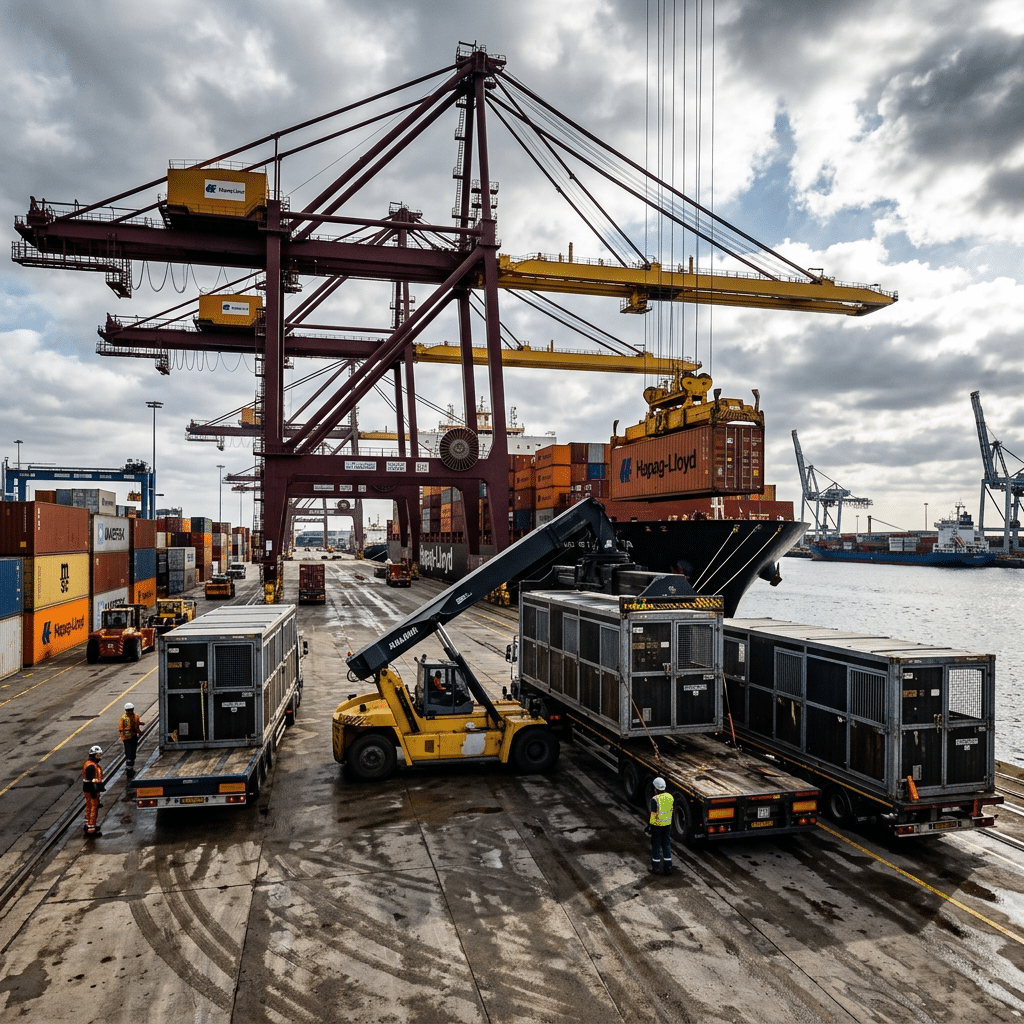
Stop guessing on structural integrity and verify our heavy-duty build quality with a specific trial order. Our optimized flat-pack system maximizes container yield, allowing you to import 30-45 sets per 40HQ to protect your logistics margins. Contact our engineering team today to configure a custom ventilation solution for your region.

 French
  English
  Spanish
  Arabic
  German
0 commentaires