


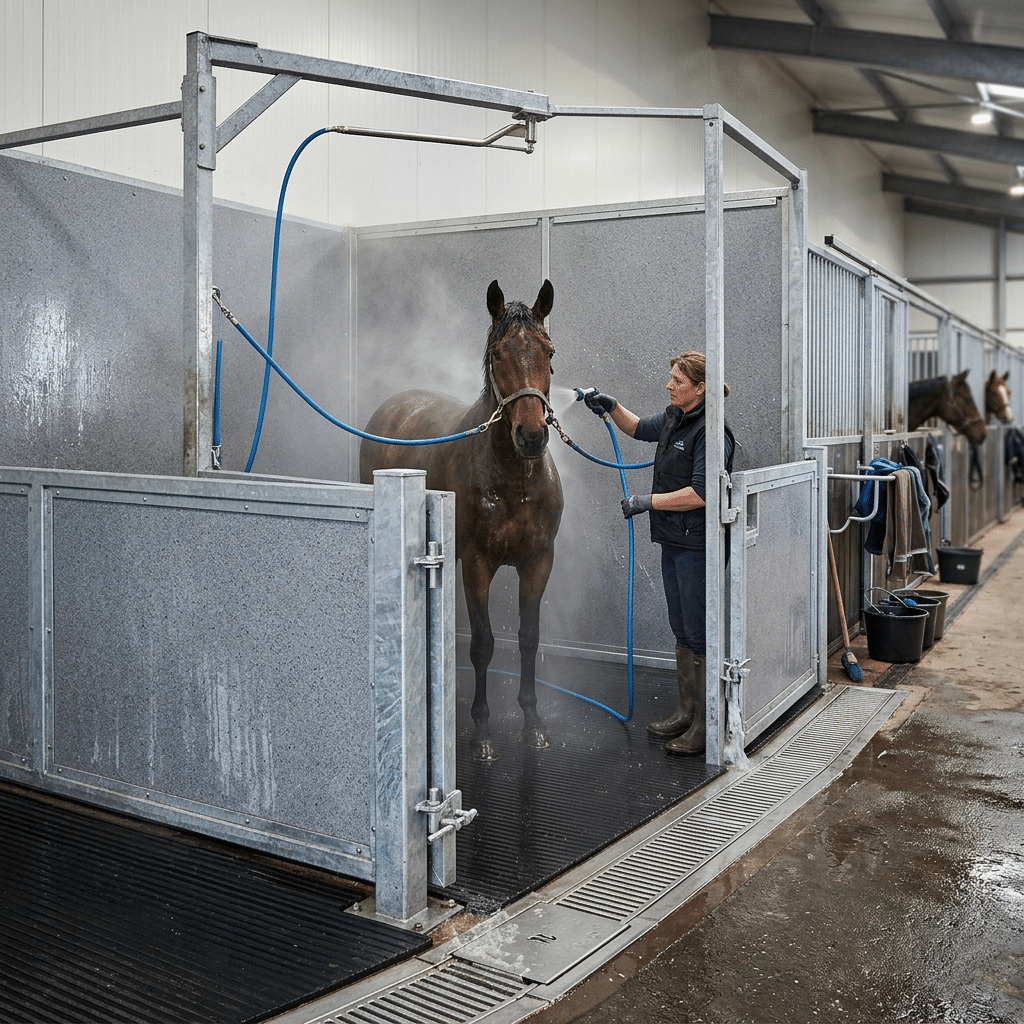
Equine Transport Hubs face a unique infrastructure challenge where material failure halts global logistics chains. Specifying standard agricultural grade steel for these high-traffic zones creates an immediate liability, as rapid corrosion and physical damage force costly facility closures.
We engineer solutions that withstand this abuse by utilizing Q235B structural steel protected by ISO 1461 hot-dip galvanization. By replacing rotting timber with high-density strand woven bamboo or antimicrobial HDPE, we eliminate the maintenance cycle and extend asset lifecycles for decades.
L'essor des critères ESG (environnementaux, sociaux et de gouvernance) dans le secteur de la construction
By 2026, ESG compliance determines access to project capital. For transport hubs, choosing durable ISO 1461 galvanized steel lowers embodied carbon by extending asset lifecycles and eliminating replacement waste.
The Shift to Mandatory Carbon Reporting and Green Financing
The construction industry has moved past the era of voluntary sustainability pledges. By 2026, ESG compliance is
a non-negotiable regulatory framework acting as a gatekeeper for project funding. Investors and institutional clients now require quantified carbon budgets before releasing capital for large infrastructure projects.
This shift impacts procurement directly. Developers must account for Scope 3 emissions—the indirect emissions within their supply chain. For transport hubs and large-scale equestrian facilities, this means every material specified must justify its carbon footprint. A cheap, short-lifespan product is no longer a cost-saving measure; it is a liability that can disqualify a project from green financing or government grants.

Reducing Embodied Carbon with ISO 1461 Hot-Dip Galvanized Steel
Asset durability is the most effective way to lower embodied carbon. Replacing a rusted steel structure every seven years creates a massive, recurring carbon debt from manufacturing, transport, and installation. We engineer our stables to break this cycle through strict adherence to ISO 1461 : Galvanisation à chaud normes.
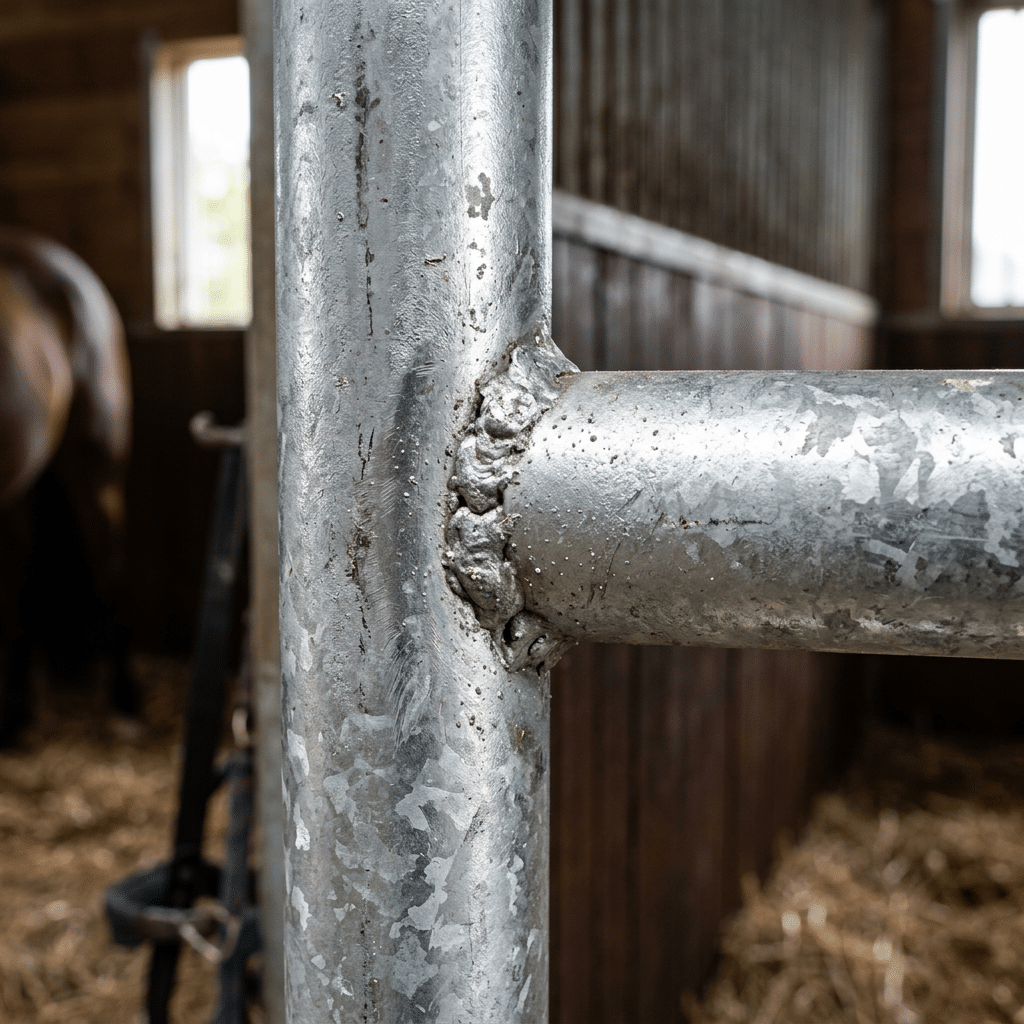
Unlike competitors who use pre-galvanized tubing with thin coatings, our process involves dipping the steel après fabrication. This bonds the zinc to the steel at a molecular level, ensuring long-term resilience against ammonia and moisture.
- Heavy Coating Thickness: We achieve an average coating of > 85 microns on structural parts, significantly exceeding the industry average for standard durability.
- Intégrité structurelle : Using Q235B and Q345B structural steel ensures the frame withstands physical stress without deformation, further extending the facility’s usable life.
- Waste Elimination: By preventing premature corrosion, we eliminate the need for replacement materials and the associated maintenance waste common with painted or powder-coated alternatives.
Specifying ISO 1461 galvanized steel aligns technical performance with ESG goals. It proves to auditors and investors that the facility is built for decades of operation, not short-term disposability.
Abandonner les peuplements de vieux bois (chêne/pin)
Traditional timber acts as a moisture sponge and fails under heavy impact. We replace it with High-Density Strand Woven Bamboo, which is three times harder than oak and engineered to resist stall rot.
The Vulnerability of Traditional Softwood and Hardwood
For decades, stable construction relied on availability rather than performance. Pine and oak were the defaults simply because they were accessible. In a high-traffic commercial stable, these materials present immediate functional liabilities. Traditional pine lacks the density required to withstand the force of a horse’s kick, leading to fractured boards and potential leg injuries. Cribbing (chewing) exacerbates this, as softwoods splinter easily, creating sharp edges and necessitating frequent replacement.
Moisture management is the second failure point. Natural timber is porous. In a stable environment, it acts as a sponge for urine and ammonia. Unless you commit to a rigorous, costly regimen of constant resealing, the wood will rot from the inside out. This creates a bacterial harbor that compromises air quality and structural integrity. Furthermore, sourcing quality old-growth hardwood is becoming volatile due to sustainability restrictions, driving up costs for a material that requires high maintenance.
Strand Woven Bamboo: The 3,000 lbf Janka Standard
We moved to High-Density Strand Woven Bamboo to solve the density and durability gap found in natural timber. This is not the hollow bamboo used in garden furniture; it is an engineered board created by compressing bamboo fibers with resin under extreme pressure. We strictly utilize 28mm to 38mm thickness to ensure absolute structural rigidity in our stalls.
- Janka Hardness > 3,000 lbf: This rating is approximately three times harder than traditional Oak. It creates a “kick-proof” barrier that withstands heavy impact without shattering.
- Engineered Density: The compression process eliminates the grain separation found in wood, preventing splintering even if a horse attempts to crib.
- Inherent Mold Resistance: The high density and resin content prevent moisture absorption, making the boards resistant to rot and ammonia exposure without constant chemical treatments.
Questions fréquemment posées
Comment créer un centre équestre conforme aux critères ESG ?
Building an ESG-compliant facility requires a structured approach across environmental, social, and governance pillars. For energy, prioritize renewable sources; top facilities now generate up to 80% of their electricity via solar panels. Water management should focus on closed-loop systems, capturing rainwater for wash bays and irrigation to achieve near self-sufficiency. Social responsibility involves safe working conditions and fair labor practices, while governance requires documenting these policies and tracking data—such as waste diversion rates and energy usage—to prove year-over-year reduction.
Le bambou est-il un matériau de construction durable ?
Yes, but the engineering matters. Bamboo is highly sustainable due to its rapid growth cycle—harvestable in 3-5 years versus 30-50 years for hardwood—and its ability to self-regenerate without replanting. It sequesters significantly more carbon than standard timber. However, natural bamboo decays quickly. For construction, it must be “strand woven” or treated. This processing turns a fast-growing grass into a dense, durable material that rivals steel in tensile strength while maintaining a carbon-negative profile.
Quel est l'impact environnemental des granges en acier par rapport à celles en bois ?
It comes down to production versus lifecycle. Wood has lower embodied carbon during the manufacturing stage. However, steel (specifically Q235B/Q345B) is 100% recyclable and offers infinite recyclability without strength loss. In a stable environment, wood eventually rots and requires replacement, increasing its long-term footprint. Steel resists decay, warping, and pests, offering a 30-50 year lifespan with proper galvanization. If you prioritize immediate production emissions, wood wins; if you prioritize circular economy and longevity, steel is the superior choice.
Des certifications écologiques pour les écuries ?
There is no specific global certification solely for horse stables. Instead, facilities adapt broader standards. LEED (Leadership in Energy & Environmental Design) principles are commonly applied to the clubhouses and arenas of large facilities. In regions like California, the CalGreen Code mandates water and energy efficiency for agricultural structures. Most “green” stables achieve this status not through a plaque, but through site planning: stormwater management (bioswales), graywater reuse, and passive ventilation designs.
Des fabricants d'écuries respectueux de l'environnement ?
The market is splitting into two sustainable paths: timber traditionalists and steel modernists. Companies like DC Structures focus on responsibly sourced heavy timber from managed forests. On the other side, manufacturers utilizing prefabricated steel (like MD Barnmaster or our own DB Stable systems) prioritize reduction of waste. Prefabrication allows for precise material usage and logistique des colis plats, which significantly cuts transportation emissions compared to hauling raw lumber. The “eco-friendly” choice depends on whether you value the material source (timber) or the operational longevity (steel).
Engineered for Durability: Premium Global Stable Solutions
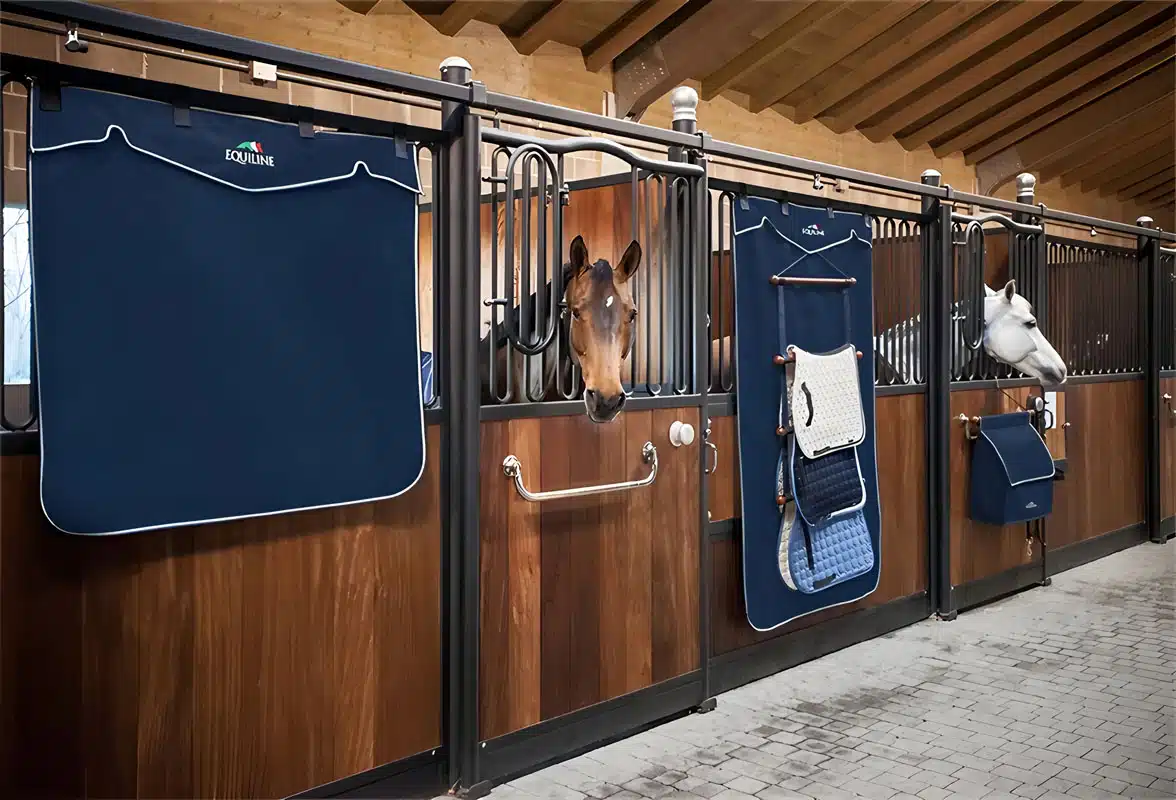
Les principales usines qui adoptent des matériaux durables
Résumé : As the $150 billion eco-materials market matures, elite manufacturers are shifting to closed-loop systems. We align with this by integrating renewable bamboo and fully recyclable HDPE to minimize long-term industrial waste.
Global Trends in Sustainable Manufacturing
The global eco-materials market is projected to hit $150 billion by 2026. This is not just a regulatory compliance box to check; it is a fundamental shift in industrial economics. Top-tier factories are moving away from linear “make-use-dispose” models toward closed-loop production systems. The goal is simple: treat waste as a design flaw rather than an inevitable byproduct.
We see three distinct trends defining the leaders in this space:
- Regenerative Materials: Shifting from slow-growth hardwoods (Oak/Pine) to rapid-renewable alternatives like Bamboo and Hemp that mature in months or years, not decades.
- Composite Industrialization: Replacing traditional single-use plastics with bio-based polymers and fully recyclable composites.
- Lifecycle Durability: Extending product lifespans through advanced treatments to reduce the carbon footprint associated with frequent replacement.
Sustainable Specifications: Bamboo & HDPE
At DB Stable, we do not use sustainability as a vague marketing term. We treat it as a material specification found directly in our engineering requirements. The most sustainable product is the one you do not have to replace every five years. We achieve this through specific material choices that balance environmental impact with industrial durability.
| Material Category | Traditional Industry Standard | Environmental Impact | |
|---|---|---|---|
| Wood Infill | Oak / Pine (Slow Growth) | High-Density Bamboo (>3000 lbf Janka) | Renewable in 3-5 years vs. 30+ years for hardwood. |
| Synthetic Infill | Non-Recyclable PVC | UV-Stabilized HDPE (28mm-32mm) | 100% Recyclable; Zero chemical runoff from maintenance. |
| Protection de l'acier | Paint / Pre-Galv (Short Life) | Hot-Dip Galv ISO 1461 (>70μm) | Extends lifespan 3x, reducing replacement waste. |
Bamboo: The Renewable Powerhouse
We utilize Bambou tissé à haute densité, which boasts a Janka Hardness rating exceeding 3000 lbf—significantly harder than oak. Unlike traditional hardwoods that require decades to regenerate, bamboo matures in 3-5 years. This rapid growth cycle makes it a massive carbon sink. By processing it into high-density planks, we create a material that resists mold and rot without depleting old-growth forests.
HDPE: The Closed-Loop Solution
For clients requiring zero maintenance, we specify UV-Stabilized HDPE (High-Density Polyethylene). Unlike PVC, which often ends up in landfills, HDPE is fully recyclable. It eliminates the need for chemical stains, varnishes, or preservatives typically used on wood, preventing toxic runoff into the soil surrounding your facility.
Steel: Longevity Reduces Waste
Steel production is energy-intensive, so the most sustainable strategy is to ensure the steel never needs replacing. We use Acier de construction Q235B protected by Galvanisation à chaud (conforming to ISO 1461). This metallurgical bond prevents rust for decades. By doubling or tripling the lifespan of the steel framework compared to painted alternatives, we drastically reduce the long-term environmental footprint associated with manufacturing and shipping replacement parts.
Le bambou tressé : un puits de carbone à haut rendement
Strand-woven bamboo sequesters 50–60kg of CO2 per culm while delivering a Janka hardness over 3000 lbf, effectively replacing tropical hardwoods in heavy-duty equine infrastructure.
Strand-woven bamboo acts as a functional carbon sink, sequestering 50–60kg of CO2 per culm and frequently achieving a negative carbon footprint over its lifecycle. The high-pressure manufacturing process that locks in this carbon creates a material with a Janka hardness exceeding 3000 lbf—three times harder than oak—making it uniquely suited for the physical abuse typical in equine environments.
Sequestration Potential: 12 Tons of Carbon Per Hectare
Bamboo differentiates itself from traditional timber through rapid growth cycles and superior carbon storage density. While traditional forests typically sequester 6–8 tons of carbon per hectare annually, bamboo plantations nearly double this efficiency, storing approximately 12 tons per hectare. A single bamboo culm captures between 50 and 60kg of CO2 during its short lifespan.
The long-term impact becomes clear when analyzing a 60-year management cycle. Bamboo systems can store 306 tonnes of carbon in this timeframe, compared to just 178 tonnes for fir trees. For industrial manufacturers, this allows the production of bamboo products that arrive at the facility with a negative carbon footprint, as the stored carbon often offsets the emissions generated during harvesting and transport.
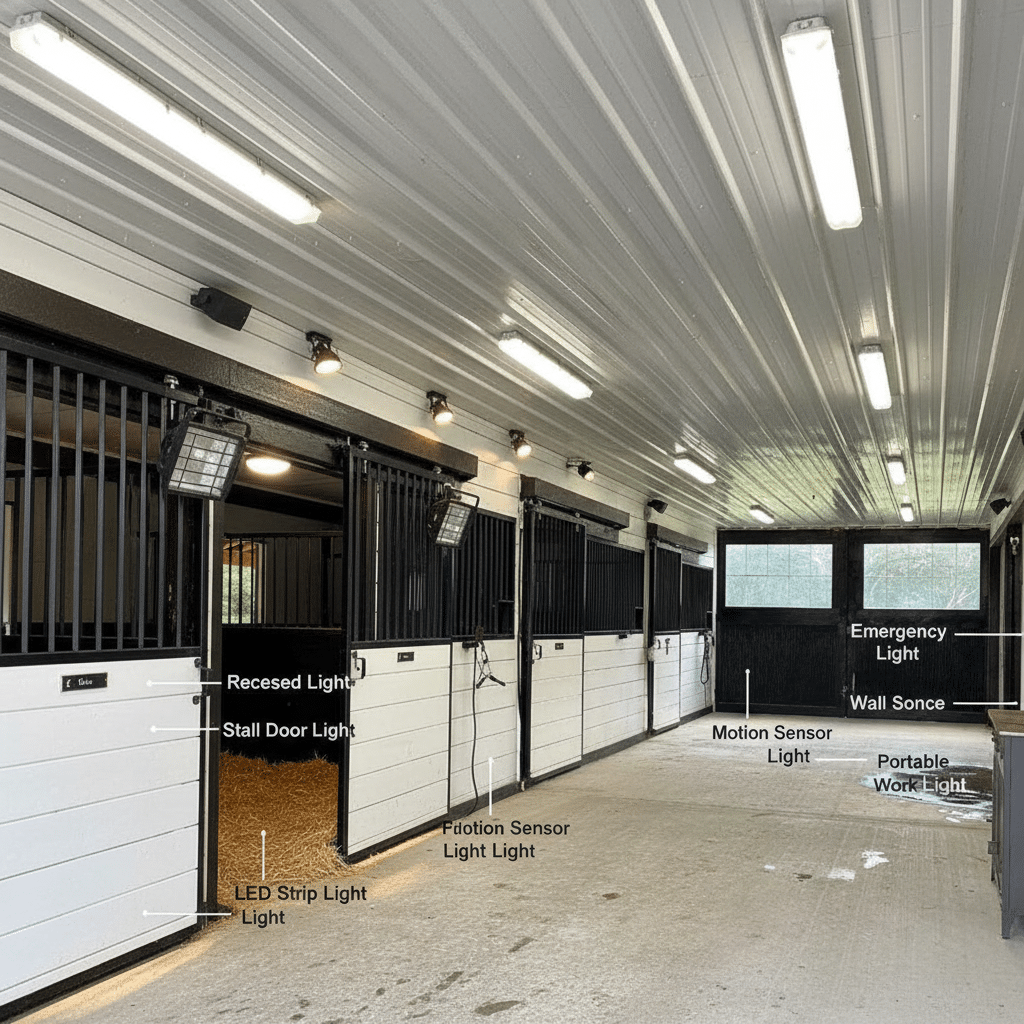
Mechanical Specifications: High-Density Strand Woven (3000+ Janka)
The “strand-woven” manufacturing method is an engineering choice, not an aesthetic one. By shredding bamboo fibers and compressing them under extreme hydraulic pressure with eco-friendly resins, we create a density profile that rivals or exceeds the hardest tropical hardwoods. This process creates a material specifically calibrated for the safety and durability requirements of DB Stable systems.
- Janka Hardness: > 3000 lbf (3x harder than Oak).
- Résistance aux chocs : Engineered to withstand direct hoof kicks and cribbing (chewing).
- Environmental Resilience: High density prevents moisture ingress, making the board rot and mold resistant.
- Board Thickness: 28mm–38mm solid core options available.
This density is critical for professional stables where moisture levels are high and animal impact is frequent. Unlike standard pine or low-density hardwoods that splinter or warp, strand-woven bamboo maintains structural integrity, reducing long-term maintenance costs for facility operators.
Acier Q235B : le cadre recyclable 100%
Q235B steel provides a 100% recyclable structural solution equivalent to ASTM A36, reducing construction waste while ensuring the high-impact durability required for global logistics hubs.
The Circular Economy of Structural Steel
Sustainability in transport infrastructure is often measured by what happens at the end of a facility’s life. Unlike concrete, which typically ends up as landfill waste after demolition, Q235B structural steel supports a true circular economy. It can be dismantled, melted down, and re-forged without losing its intrinsic structural properties. This capability is critical for temporary transport hubs and pop-up logistics centers that may need to be decommissioned or relocated after a set period.
- 100% Material Recoverability: Steel allows for complete recycling, drastically reducing the net environmental impact compared to single-use building materials.
- Decommissioning Efficiency: Temporary facilities built with steel frameworks can be unbolted and repurposed rather than demolished, preserving asset value.
- Superior to Concrete: While concrete offers permanence, it lacks the flexibility required for modern, evolving logistics networks where speed of assembly and disassembly is a financial driver.
Meeting ASTM A36 Standards for Global Compliance
For international buyers, material compliance is non-negotiable. Q235B is the standard structural carbon steel used in large-scale industrial projects and is the chemical and mechanical equivalent of **ASTM A36**. This equivalence ensures that transport hubs meet rigorous global safety standards for yield strength and tensile performance. However, the grade of steel is only half the equation; material thickness dictates actual safety in the field.
- Standard Equivalence: Q235B meets the mechanical requirements of ASTM A36, making it universally accepted for structural applications in North America and Europe.
- Strict Thickness Protocols: We enforce a strict **14-Gauge (2.0mm minimum)** wall thickness for all structural tubing. While some competitors reduce costs by using 1.5mm or 1.6mm tube, we prohibit this to ensure impact resistance.
- Environmental Resilience: The combination of correct steel grade and sufficient wall thickness provides essential resistance against wind loads and seismic activity in open transport zones.
Questions fréquemment posées
How can large-scale equestrian facilities achieve ESG compliance?
Achieving true ESG (Environmental, Social, and Governance) status in this sector moves beyond planting trees. You need a data-driven approach across three pillars:
- Environnement : Focus on Lifecycle Assessment (LCA). Switch to materials with documented longevity (like hot-dip galvanized steel) to reduce replacement waste, and implement operational efficiencies like water recycling or solar integration.
- Réseaux sociaux : Prioritize safety infrastructure. Using kick-proof materials (like 28mm+ HDPE or high-density bamboo) protects staff and animals, directly impacting your labor safety metrics.
- Gouvernance : Maintain transparent supply chains. Demand mill certificates for steel and origin documentation for timber to ensure no illegal logging or labor violations occurred upstream.
Is bamboo infill durable enough for high-traffic transit stables?
Yes, but only if you use High Density Strand Woven Bamboo. Standard hollow bamboo poles are useless in a commercial stable. Engineered strand woven bamboo, however, is compressed under extreme pressure to achieve a density that rivals tropical hardwoods.
For commercial transit hubs, we strictly recommend 28mm-38mm boards with a Janka Hardness rating > 3000 lbf. This material is 3x harder than Red Oak, naturally resistant to rot, and virtually immune to cribbing (chewing). It matures in 5 years compared to 50 for hardwood, making it a robust, carbon-negative solution that handles the abuse of high-turnover facilities.
Which material has a better environmental profile: Steel or Wood?
This depends on your timeline. Wood has lower embodied carbon upfront (production phase). Steel wins decisively in the long-term lifecycle analysis for commercial builds.
Wood in a stable environment absorbs moisture, ammonia, and bacteria, often requiring replacement every 10-15 years. Rotting treated timber ends up in landfills. Conversely, a Q235B steel frame, hot-dip galvanized to ISO 1461 standards, lasts 30-50+ years with zero structural degradation. Plus, steel is 100% recyclable at the end of its life. If you build for the long haul, steel offers a superior circular economy profile.
Are there specific green certifications for equine transport hubs?
Dedicated “Green Stable” certifications are rare. Instead, developers typically adapt broader industrial construction standards to the equestrian context.
- ISO 14001: The gold standard for Environmental Management Systems (EMS). It proves you have a process to measure and improve your environmental impact.
- LEED (Leadership in Energy and Environmental Design): While usually for commercial buildings, credits can be gained through passive ventilation designs (stack effect) and using recycled steel content.
- CalGreen (California): Useful as a reference point for mandatory water conservation and construction waste reduction, even for projects outside California.
What defines a truly eco-friendly stable system?
Two factors define true eco-friendliness in this industry: Logistics Efficiency et Extreme Durability.
First, look at the freight. Shipping fully welded frames involves moving mostly air, which spikes the carbon footprint per unit. Flat-pack systems (like ours) allow for 30-45 sets per container versus 12-15 sets, reducing transport emissions by over 60%. Second, the product must not fail. A “green” wood barn that requires total replacement in 12 years is an environmental failure. A hot-dip galvanized steel system that lasts 40 years prevents three cycles of waste, manufacturing, and transport.
Réflexions finales
Meeting 2026 ESG mandates requires infrastructure that survives decades of high-traffic use, not just the next inspection cycle. Specifying Q235B structural steel with ISO 1461 hot-dip galvanization eliminates the recurring carbon debt of replacing rusted assets every few years. This engineering approach transforms regulatory compliance into a permanent operational asset for global transport hubs.
Secure your facility’s funding eligibility by integrating materials that satisfy strict environmental auditing standards today. Contact our engineering team to align your project’s carbon requirements with our high-density bamboo and galvanized steel specifications. We provide the technical data and flat-pack logistics needed to validate your supply chain’s sustainability.

 French
  English
  Spanish
  Arabic
  German
0 commentaires