


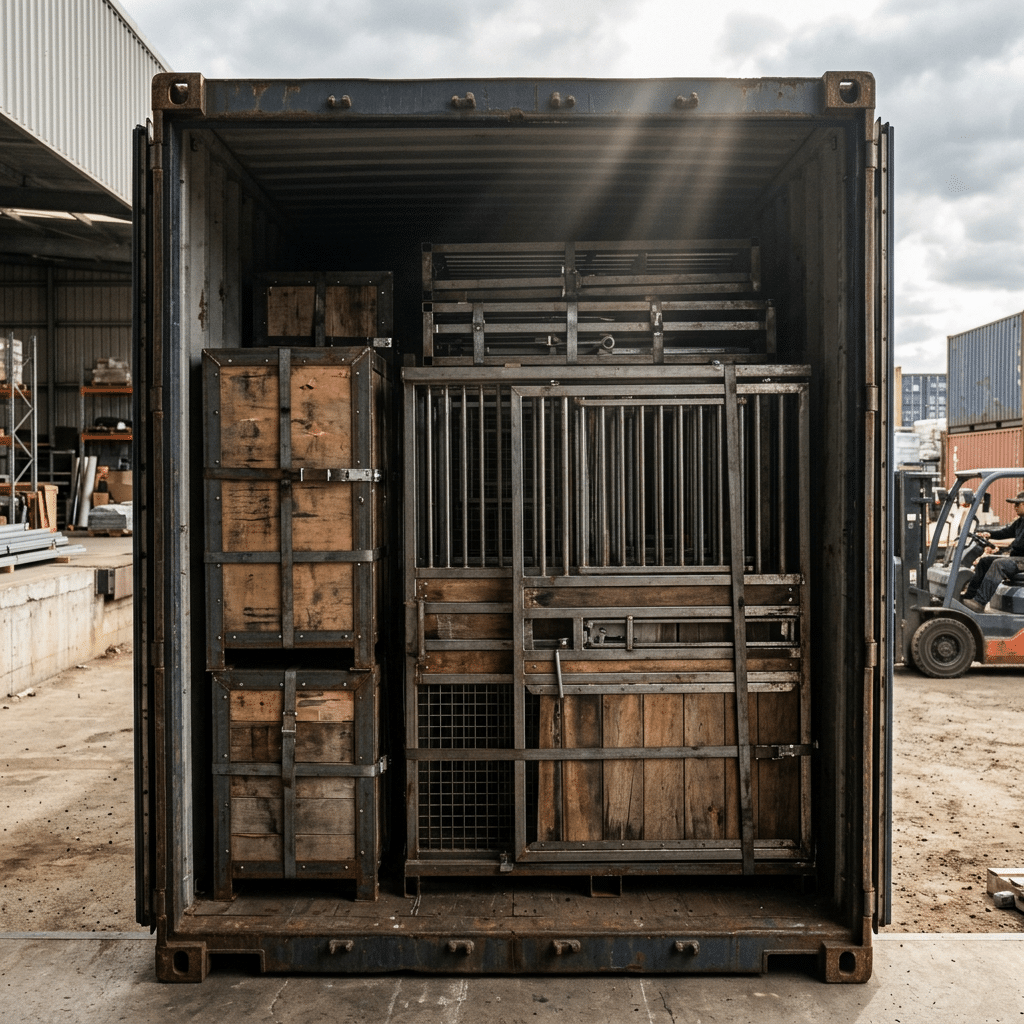
Improperly mounted Wash Booms create a false sense of security that often ends in structural failure. While keeping hoses off the floor reduces trip hazards, attaching high-torque equipment to standard pine posts guarantees stripped fasteners and collapsed fixtures. Professional facilities cannot afford the liability risks associated with under-engineered mounting substrates.
This guide examines the structural requirements for anchoring dynamic loads à Hot-Dip Galvanized steel partitions. We analyze the necessity of Q235B structural profiles with minimum 2.5mm wall thickness to withstand cantilever forces. By shifting from timber to steel mounting points compliant with ISO 1461, facility managers secure long-term operational safety.
The Danger of Tangled Hoses Around Equine Legs
Loose hoses on wash bay floors create immediate trip hazards for handlers and entanglement risks for horses, while accelerating equipment wear and bacterial cross-contamination.
Trip Hazards and Hoof Entanglement Risks
A wash bay is already a high-risk environment due to slippery surfaces and confined spaces. Introducing loose, pressurized hoses to the floor turns the area into an obstacle course. The primary danger isn’t just the fall itself, but the reaction of the animal when a handler loses their footing or control.
- Loss of Handler Control: Handlers carrying grooming kits or shampoos often trip over coiled lines. A fall usually forces them to drop the lead rope, leaving a wet, potentially spooked horse loose in the bay.
- Panic Reactions: Horses stepping on pressurized hoses can panic if the line bursts under their weight or wraps around a leg. A horse fighting a tangled hose often kicks out, endangering anyone nearby.
- Compounded Injury Severity: Panic situations in wet environments escalate quickly. A horse scrambling for footing on soapy concrete because a hose spooked them creates a high probability of catastrophic tendon or ligament injury.
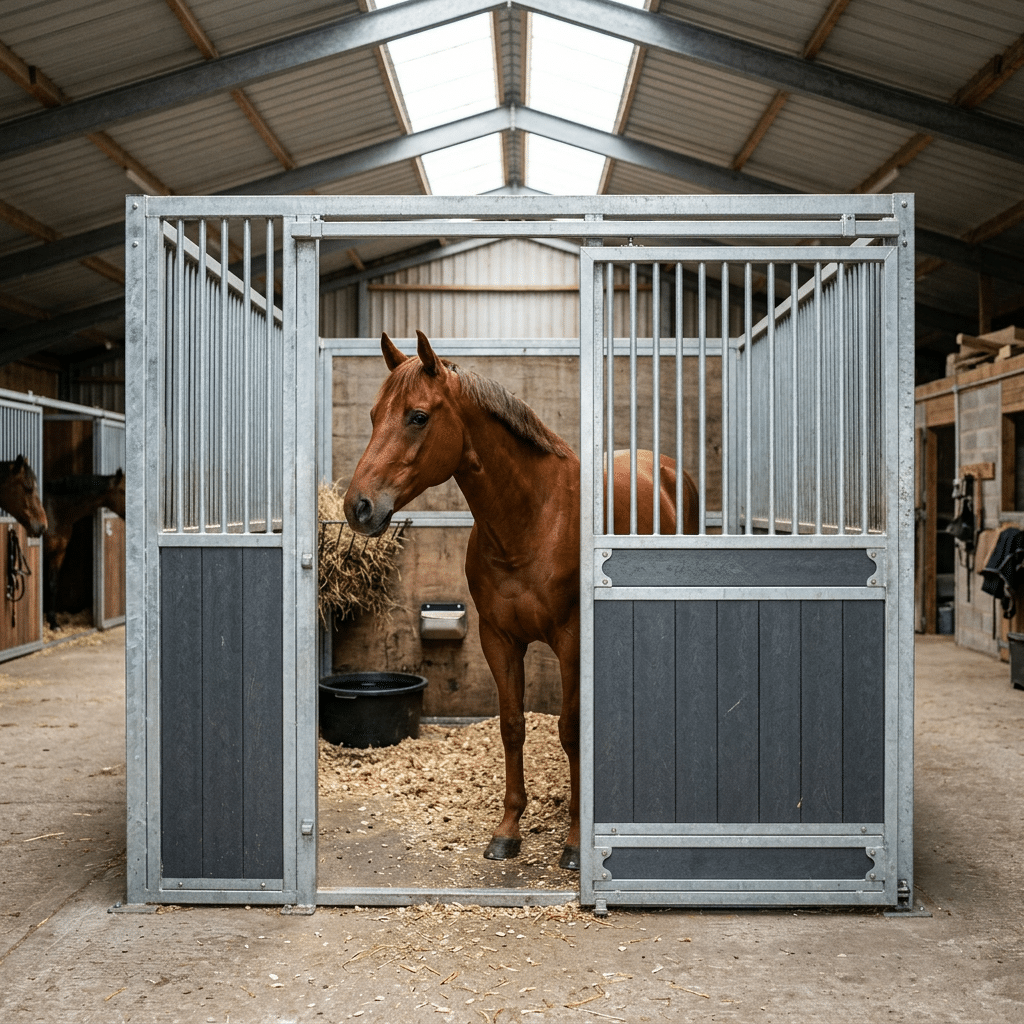
Bacterial Contamination and Equipment Degradation
Operational inefficiency often hides in plain sight. Leaving hoses on the ground is a direct drain on both facility hygiene and the maintenance budget. Professional facilities cannot afford the cross-contamination risks associated with equipment sitting in runoff water.
- Pathogen Transfer: Hoses lying in waste water absorb bacteria from manure and dirt. When the nozzle is later used to wash a horse’s face or an open wound, that bacteria is directly transferred back to the animal.
- Equipment Destruction: Constant trampling by shod hooves punctures rubber and crushes metal fittings. This forces facilities to replace hoses frequently, turning a durable asset into a disposable consumable.
- Regulatory Penalties: Water board regulations in strict jurisdictions now penalize farms for ground-contact hoses due to backflow risks that can contaminate the main water supply.
The Overhead Hose Boom Solution
Overhead booms eliminate floor clutter and trip hazards by suspending high-pressure hoses, allowing safe, 360-degree access around the horse without equipment tangling.
The 360-Degree Swivel Design
A hose left on the wash bay floor acts as a “trip wire” for both the handler and the horse. The overhead boom removes this hazard by anchoring the line above the workspace, rather than dragging it through the muck. The primary mechanical advantage lies in the swivel joi
nt supporting the boom arm. This mechanism must allow for fluid movement, enabling the handler to circle the horse completely. By utilizing a Z-boom or continuous rotation design, the system prevents the hose from kinking or looping around the horse’s legs, ensuring the equipment never dictates the pace of the work.
Stainless Steel Pressure Ratings
Material selection in a wash bay is not about aesthetics; it is about survival against ammonia, moisture, and chemical runoff. While powder-coated steel is common in dry areas, it degrades quickly in wet stalls, leading to rust and seized joints. Professional installations require components that handle both environmental corrosion and the internal stress of high-pressure water systems.
- Material Composition: We specify 304-grade stainless steel to resist rust and maintain structural integrity in high-humidity environments.
- Pressure Tolerance: The swivel and arm must be rated to handle outputs up to 4000 PSI, accommodating heavy-duty cleaning equipment.
- Durabilité : Stainless steel withstands ammonia exposure significantly better than coated alternatives, preventing the mechanism from seizing over time.
Custom Horse Stables Built For Extreme Climates
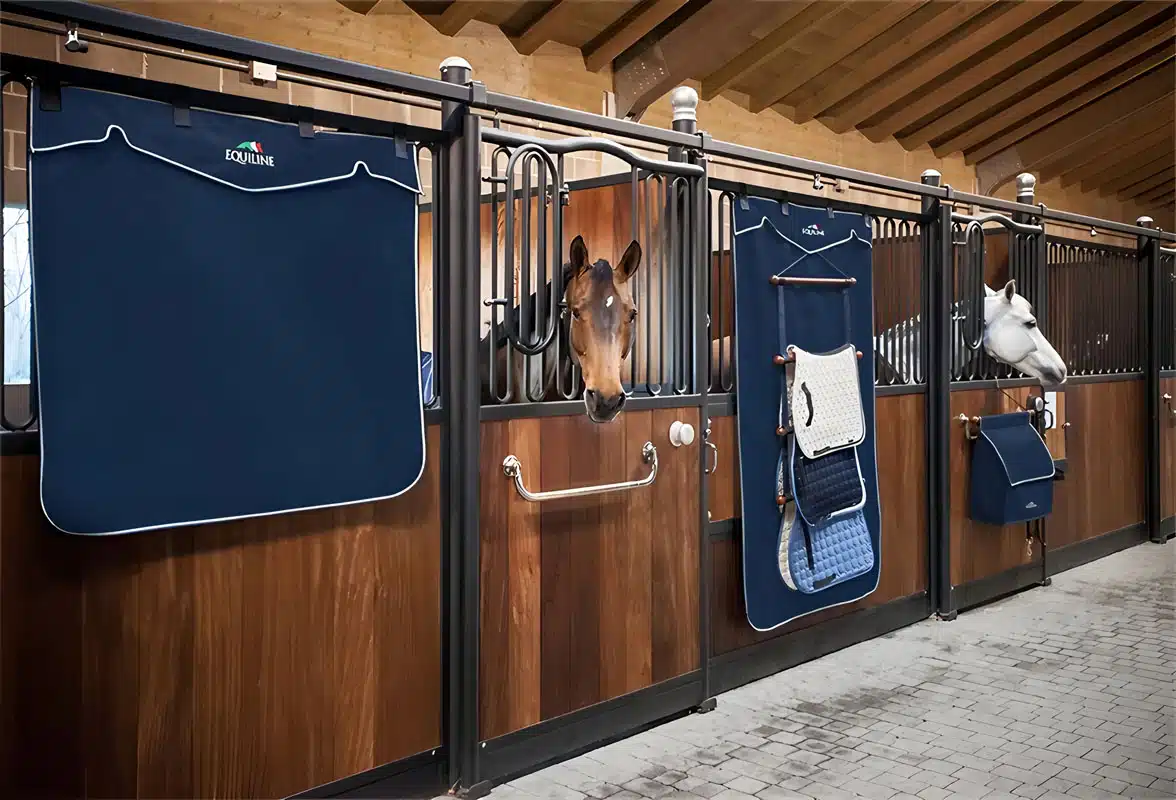
The Torque Problem: Ripping Booms Out of Pine Posts
Wash booms act as levers that generate torque loads exceeding the crush strength of pine fibers. Structural steel posts are required to prevent fasteners from stripping out under dynamic stress.
Understanding the Cantilever Effect
A wash boom is mechanically a cantilever beam. While the equipment itself might only weigh 15-20kg, the physics of leverage multiplies the force applied at the mounting point. Every time a handler extends the hose or a horse shifts while tied, the boom arm acts as a long lever, transferring significant torque back to the bracket.
This creates a dynamic stress cycle that softwood timber cannot handle. Pine posts lack the fiber density to resist this lateral compression. The metal mounting plate acts as a fulcrum, and as the boom swings, the edges of the plate dig into the wood. Simultaneously, the lag screws experience pull-out forces they were not designed for. Over a short period, the wood fibers around the screw threads crush and tear, causing the hole to widen. Once this “wallowing” effect starts, tightening the screw offers only a temporary fix before the bracket rips loose entirely.
The Structural Advantage of Q235B Steel RHS
To eliminate the risk of mechanical failure in wash bays, the mounting surface must possess higher yield strength than the torque applied to it. We engineer our stable fronts and partitions using Q235B Structural Steel (equivalent to ASTM A36), which provides a rigid, non-compressible anchoring point for heavy overhead equipment.
- Material Rigidity: 50mm x 50mm RHS posts prevent the “crushing” effect seen in timber.
- Épaisseur de la paroi : We utilize a 2.5mm wall thickness, allowing for secure threading or through-bolting without warping the tube.
- Connection Integrity: Steel profiles allow for welding or high-tensile bolting, eliminating the reliance on wood screws that strip out.
- Dimensional Stability: Unlike timber, which swells and shrinks with the high moisture levels in a wash bay, hot-dip galvanized steel maintains its dimensions, ensuring fittings never loosen due to environmental changes.
Bolting Heavy Booms Directly to HDG Stall Posts
Attaching dynamic wash booms to steel posts requires ASTM F3125 Grade A325 fasteners and minimum 2.0mm wall thickness to prevent structural buckling and hydrogen embrittlement.
| Component Spec | Norme recommandée | Engineering Rationale |
|---|---|---|
| Bolt Grade | ASTM F3125 Grade A325 | Compatible with HDG; prevents hydrogen embrittlement found in A490. |
| Steel Profile | Q345B High Strength | Higher yield strength resists bending moments from boom extension. |
| Épaisseur de la paroi | 2.0mm – 2.5mm (Prevents hollow section crushing under high bolt tension. | |
| Connection Type | Through-Bolting | Essential for handling constant dynamic vibration and torque. |
Selecting Compatible Fasteners for Galvanized Steel
You cannot grab generic hardware from a bin when mounting heavy wash booms to Hot-Dip Galvanized (HDG) posts. The metallurgical interaction between the fastener and the zinc coating defines the lifespan of the connection. Standard bolts often fail due to galvanic corrosion or internal structural weakness when exposed to the moisture of a wash bay.
- Use ASTM F3125 Grade A325 Bolts: These are the standard for structural connections. Their material composition aligns with HDG zinc layers, ensuring the coating bonds correctly without flaking.
- Avoid Grade A490 Bolts: High-strength A490 bolts are strictly prohibited in this application. They are highly susceptible to hydrogen embrittlement during the galvanizing process, which leads to sudden, catastrophic failure under load.
- Seal Drilled Holes: Drilling into a post exposes raw steel. You must immediately apply cold galvanizing spray (Touch-up Spray) to seal the breach and prevent rust from creeping under the surrounding zinc.
- Verify ASTM A153 Compliance: Ensure all fasteners meet ASTM A153 standards for zinc coating thickness. Thin coatings will dissolve rapidly in a humid wash bay environment.
Load Capacity of 2.5mm Q345B Structural Posts
A wash boom acts as a lever arm, exerting significant torque on the mounting point every time a user pulls the hose. Cheap, thin-walled posts (1.5mm or less) will deform or “ovalize” under this stress, causing the connection to loosen. DB Stable specifies materials that withstand these dynamic forces without compromising the frame’s integrity.
- Q345B Steel Advantage: We use Q345B Low Alloy High Strength Steel for these applications. It offers superior resistance to bending moments compared to standard Q235, handling the leverage of an extended boom arm without warping.
- Wall Thickness Criticality: A minimum 14-Gauge (2.0mm – 2.5mm) wall thickness is non-negotiable. This thickness provides the necessary rigidity to support through-bolts, preventing the hollow section from crushing as you tighten the nuts.
- Flat Mounting Surface: Our 50mm x 50mm RHS profiles provide a flat, stable contact area for the boom’s mounting plate. Round pipes often require clumsy adapters or U-bolts that can slip under rotation.
- Through-Bolting Necessity: Self-tapping screws will back out due to the constant vibration of wash bay use. Through-bolting creates a mechanical lock that remains secure despite daily oscillation.
Réflexions finales
Attempting to anchor dynamic wash booms to timber or thin-gauge tubing invites structural failure and costly liability claims. Upgrading to DB Stable’s Q235B structural steel posts provides the necessary yield strength to withstand daily torque loads without deformation. This investment in ISO 1461 Hot-Dip Galvanized infrastructure secures your facility against corrosion and ensures equipment stays mounted safely.
Do not compromise on safety in high-risk wet zones. Contact our engineering team today to review your wash bay layout and select the correct 50mm RHS or 114mm Round Post profiles for your equipment. Request our “Professional Series” specification sheet to lock in a solution that eliminates maintenance headaches.

 French
  English
  Spanish
  Arabic
  German
0 commentaires