


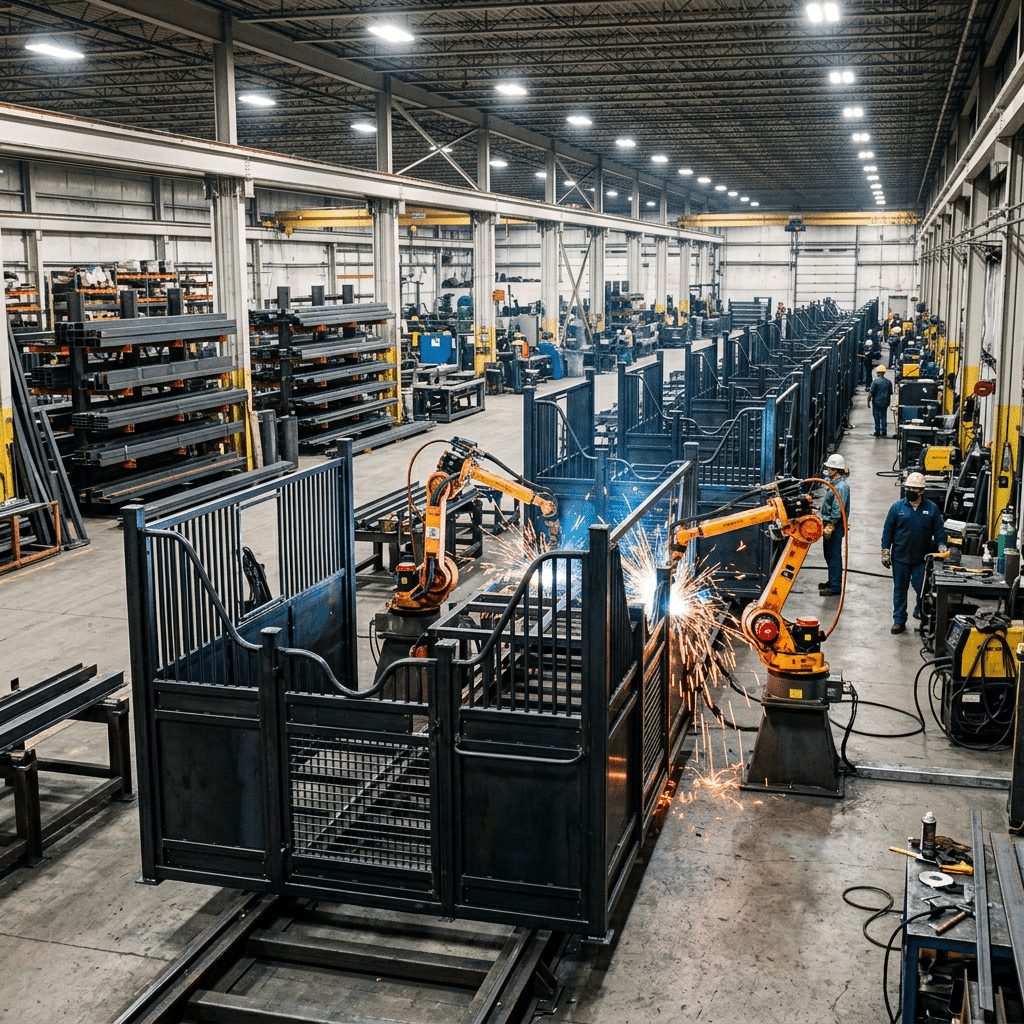
Polo Club Stabling infrastructure directly impacts the profitability of high-volume string management. Poorly designed wood facilities inevitably succumb to moisture and impact damage, forcing owners into a cycle of costly repairs that drains operational budgets.
We examine layouts engineered with Q235B structural steel et ISO 1461 hot-dip galvanization to eliminate these failure points. This analysis focuses on maximizing durability through high-density bamboo infills and optimizing capital expenditure via efficient flat-pack logistics.
L'essor des critères ESG (environnementaux, sociaux et de gouvernance) dans le secteur de la construction
The built environment generates 34% of global CO₂. By 2026, mandates prioritize circular economy models, utilizing renewable bamboo and ISO 1461 galvanized steel to extend asset lifecycles and minimize waste.
Decarbonization and the Circular Economy Protocol
Regulatory bodies now impose strict carbon budgets, directly targeting the 34% of global emissions attributed to the built environment. We see a definitive shift where sustainability is no longer an optional “green” badge but a core requirement for permitting and funding.
The circular economy model drives this change by demanding materials with extended lifecycles. If a product fails early and requires replacement, it contributes to landfill waste and new manufacturing emissions. As a result, project approvals increasingly depend on integrating low-carbon construction techniques and proving transparent, sustainable supply chains.

Meeting ESG Criteria: Bamboo and Galvanized Steel Specs
To align with these mandates, specific technical specifications must replace traditional material choices. We map our production standards directly to ESG requirements:
- High-Density Bamboo Infill: Standard hardwood takes decades to regenerate. Our High-Density Strand Woven Bamboo matures in 3-5 years, providing a rapidly renewable, carbon-sequestering alternative. It supports environmental targets while delivering a Janka hardness > 3000 lbf, outperforming traditional oak.
- Hot-Dip Galvanization (ISO 1461): Durability effectively satisfies governance criteria. We adhere to ISO 1461 standards, applying 85+ micron zinc coatings to structural steel. This ensures a 30-50 year lifespan, significantly reducing the replacement frequency and operational waste associated with painted or pre-galvanized alternatives.
- Logistique des meubles en kit: Transport efficiency directly impacts Scope 3 emissions. Our flat-pack system allows 30-45 sets per 40HQ container, compared to just 12-15 sets for bulky welded systems. This logistics density dramatically lowers freight-related carbon output per installed unit.
Abandonner les peuplements de vieux bois (chêne/pin)
Modern facilities are ditching rot-prone chêne et pin for High-Density Bamboo (3x harder than oak) and UV-stabilized HDPE, delivering a true “zero-maintenance” lifespan.
The Maintenance Burden of Natural Timber
While traditional oak and pine offer a classic
aesthetic, they become a financial and operational liability in active commercial stables. The primary failure point is moisture absorption. In wash bays, humid climates, or even from daily cleaning, natural timber acts like a sponge. This absorption leads to warping, swelling, and eventual rot, creating a breeding ground for bacteria and insects that threatens animal health.
Beyond biological decay, softwoods like pine are structurally vulnerable to “cribbing” (horses chewing on edges). A bored or anxious horse can shred a pine board in days, creating sharp splinters that pose gut health risks if ingested and necessitating frequent board replacement. This fragility forces facility owners into a cycle of perpetual maintenance—sanding, re-staining, and sealing wood annually to maintain its integrity. For a professional facility, this recurring labor cost destroys the initial savings of choosing cheaper timber.
Engineered Durability: High-Density Bamboo and HDPE Infills
We engineered our systems to eliminate the maintenance cycle entirely by replacing soft timber with materials designed for abuse. For the classic wood look, we use **Strand Woven Bamboo**, and for wet zones, we utilize **HDPE (High-Density Polyethylene)**. These materials are encased in our hot-dip galvanized steel profiles to prevent edge chewing, but their core properties stand on their own.
- Dureté extrême : Our bamboo infill (28mm-38mm thick) boasts a Janka Hardness rating of > 3000 lbf. This is approximately 3x harder than Red Oak, making it virtually impossible for horses to dent or chew.
- Zero-Maintenance HDPE: Our UV-stabilized, impact-absorbing plastic lumber (28mm-32mm) is impervious to water. It cannot rot, mold, or splinter. It requires no chemical treatments—simply hose it down to clean.
- Eco-Friendly Durability: Unlike pressure-treated lumber laden with chemicals, our bamboo is a rapidly renewable grass that resists mold naturally due to its density, ensuring a safe environment for high-value horses.
Premium Galvanized Stables Direct From Manufacturer
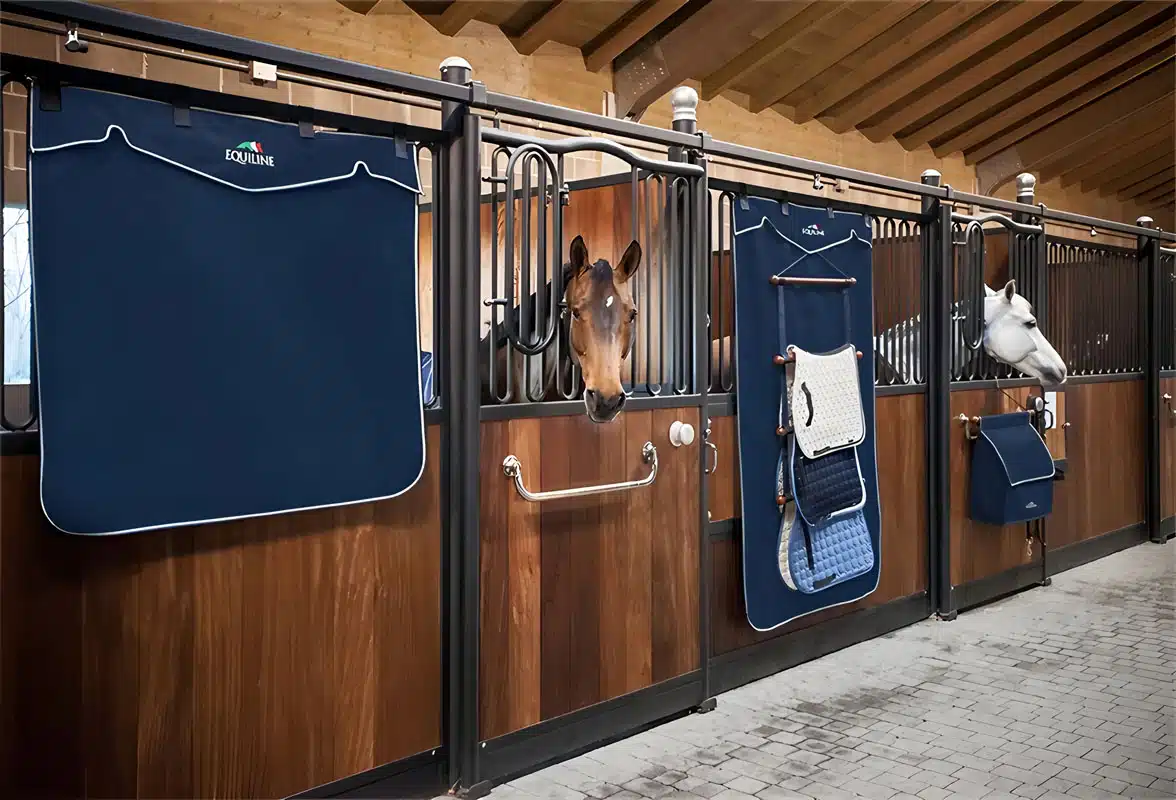
Les principales usines qui adoptent des matériaux durables
Global leaders like Siemens and First Solar are proving that sustainability drives efficiency. In the equestrian sector, this translates to high-density bamboo and recyclable steel replacing resource-heavy timber.
The manufacturing landscape is shifting. Giants like Arkema, Siemens, and First Solar are no longer treating Environmental, Social, and Governance (ESG) criteria as optional boxes to check. They are fundamentally altering their supply chains to prioritize circular economies and bio-based materials. First Solar, for example, has achieved a 90% recovery rate for semiconductor materials, proving that industrial scale and environmental responsibility can coexist profitably.
This global momentum influences how we engineer equestrian infrastructure. At DB Stable, we apply these same principles to horse stable manufacturing. The goal isn’t just “green” branding; it is about extending product lifecycles. True sustainability in our industry means building stables that last 20 years instead of five, significantly reducing the demand for raw materials and the carbon footprint associated with replacement parts.
The Material Revolution in Stables
We have moved away from old-growth timber and single-use plastics, aligning our production with the standards set by global manufacturing leaders. Our factory focuses on three core material technologies that balance durability with environmental impact:
- Strand-Woven Bamboo (The Carbon Sink): Unlike traditional Oak or Pine which takes decades to mature, our bamboo reaches maturity in just 3-5 years. It sequesters massive amounts of carbon during growth. Physically, it is superior for stables—boasting a Janka Hardness rating > 3000 lbf, making it 3x harder than Oak and resistant to rot, mold, and horse kicks.
- Q235B Structural Steel (The Circular Frame): We utilize Q235B steel which is 100% recyclable. To ensure the material stays in use and out of landfills, we protect it with Galvanisation à chaud (ISO 1461). This process bonds zinc to the steel at 450°C, preventing rust for decades and eliminating the need for toxic paints or ongoing chemical maintenance.
- HDPE Infill (Zero-Waste Lifecycle): Our High-Density Polyethylene planks are UV stabilized and impact-absorbing. They are produced with a focus on longevity and are fully recyclable at the end of their life. For facility managers, this means “Zero Maintenance”—no staining, no varnishing, and no chemical runoff entering the soil.
Comparative Performance: Traditional vs. Sustainable Materials
The table below illustrates why modern factories are pivoting to these materials. The data highlights the operational difference between traditional choices and the engineered solutions used by DB Stable.
| Type de matériau | Primary Sustainability Advantage | Durability Metric | Lifecycle Impact |
|---|---|---|---|
| Bambou tressé | Rapid Renewal (3-5 years) & Carbon Sequestration | >3000 lbf Hardness (Kick-Proof) | High. Reduces pressure on old-growth forests. |
| Traditional Oak/Hardwood | Natural Material | Moderate (Prone to chewing/rot) | Low. 50+ year regeneration cycle. |
| Q235B Galvanized Steel | 100% Recyclable Infinite Lifecycle | 20+ Years Rust Protection (ISO 1461) | High. Scrap creates new steel; no landfill waste. |
| Painted/Black Steel | Lower Initial Energy Use | Low (Rusts in 3-5 years) | Negative. Requires frequent replacement & repainting. |
Le bambou tressé : un puits de carbone à haut rendement
Strand-woven bamboo acts as a massive carbon locker, sequestering 50–60kg of CO2 per culm and sealing it within a high-density matrix that resists decay for decades.
Lifecycle Carbon Storage: From Forest to Stable
Bamboo biology offers a distinct advantage over traditional timber regarding carbon sequestration. Moso bamboo forests store approximately 12 tons of carbon per hectare annually, a rate that significantly outperforms standard hardwood forests. This efficiency stems from the plant’s rapid growth cycle, where a single culm captures between 50kg and 60kg of CO2 before harvest.
The critical step for industrial application is the strand-woven manufacturing process. Rather than using the hollow stem directly, manufacturers crush the bamboo into fibers and compress them into a dense matrix. This process effectively locks the captured carbon into the finished product for its entire service life, preventing the re-release of CO2 that occurs when plant matter decays naturally on the forest floor.

3000+ Janka Ha
rdness: Extending Service Life
Carbon storage is only effective if the material stays in service. Soft woods like Pine often rot or splinter within a few years in a stable environment, forcing replacement and new emissions. DB Stable specifies 28mm-38mm High Density Strand Woven Bamboo specifically to mitigate this cycle of waste.
- Janka Hardness > 3000 lbf: This density is 3x harder than Oak, making the boards impervious to common equine damage like cribbing or kicks.
- Decay Resistance: The high resin content and density prevent moisture intrusion. This prevents the premature decay common in pine, ensuring the carbon remains sequestered in the board rather than released back into the atmosphere through decomposition.
Questions fréquemment posées
Comment créer un centre équestre conforme aux critères ESG ?
Building an ESG-compliant facility requires a structured approach across three specific dimensions rather than just buying “green” products.
Environmental Sustainability
Focus on energy and emissions first. Leading facilities like Equitom Equine Hospital generate nearly 80% of their electricity via solar panels. For water, aim for closed-loop cycles; collecting rainwater and purifying groundwater can lead to 100% self-sufficiency. Biodiversity also matters—convert unused meadows into nectar-producing plant zones rather than manicured lawns.
Social Responsibility
This sector often suffers from poor work-life balance. An ESG-compliant center must implement team-based work models to reduce burnout. Safety is non-negotiable; invest in documented risk assessments and provide on-site wellness facilities for staff who handle heavy machinery and unpredictable animals.
Governance
You need a formal strategy. As of 2023, leading organizations prioritize horse welfare alongside business ethics. Establish board-level oversight for these metrics and plan to publish formal ESG reports to demonstrate verified progress, rather than relying on vague marketing claims.
Le bambou est-il un matériau de construction durable ?
Yes, but with caveats regarding processing.
The biological argument is strong: Bamboo matures in 3-5 years, whereas hardwoods like oak require 30-50 years. It self-regenerates from the root system after harvest, eliminating the need for replanting and soil disruption. It also absorbs up to four times more CO2 than many tree species.
The structural reality: Natural bamboo has poor durability and attracts insects. To be a viable, sustainable construction material, it must be engineered (strand-woven) and treated. When processed correctly to high-density standards (like our 28mm+ boards), it becomes a carbon-negative building product that rivals steel in tensile strength and concrete in compression.
Quel est l'impact environnemental des granges en acier par rapport à celles en bois ?
This is a trade-off between production emissions et lifecycle longevity.
Wood: Wins on embodied carbon. Manufacturing wood products creates significantly fewer emissions than smelting steel. However, wood barns are susceptible to rot, warping, and cribbing damage, leading to a shorter lifespan and frequent material replacement.
Acier : Wins on circularity and operations. While initial production is energy-intensive, steel is 100% recyclable without loss of strength. Steel components do not warp or decay, offering a lifespan of 30–50 years with minimal maintenance. Over a long timeline, the durability of steel often offsets its higher initial carbon cost compared to wood structures that require demolition and rebuilding.
Des certifications écologiques pour les écuries ?
There is no dedicated “Green Barn” certification. However, facilities often adapt LEED (Leadership in Energy & Environmental Design) principles. While LEED is designed for commercial buildings, equestrian centers can apply for credits by focusing on natural ventilation, stormwater mitigation (green roofs/bioswales), and sustainable material selection.
In specific regions like California, the Code CalGreen mandates green standards even for agricultural structures, enforcing water conservation and construction waste recycling. Most facilities achieve sustainability not through a plaque, but through site planning—managing manure composting, graywater systems, and pasture rotation effectively.
Des fabricants d'écuries respectueux de l'environnement ?
Several manufacturers have integrated sustainable practices into their production:
DC Structures emphasizes responsibly sourced heavy timbers from the Pacific Northwest.
MD Barnmaster utilizes modular, prefab designs that reduce construction waste.
WYO Custom Builders focuses on metal barns for durability and recyclability.
Sustainable Stables offers master planning services that prioritize land and resource efficiency.
Coffman Barns provides modular solutions with US-based manufacturing.
The industry is also seeing a shift toward mass timber construction (CLT) and recycled steel components to meet rising environmental standards.
Acier Q235B : le cadre recyclable 100%
Q235B offers ASTM A36 equivalent strength and 100% recyclability. Its high ductility absorbs heavy impacts, making it the superior choice for sustainable, safety-focused equestrian construction.
Comparing Q235B to ASTM A36 Standards
Q235B is the manufacturing standard for heavy-duty structural applications in the Asian market, but its relevance extends globally. Metallurgically, this low-carbon structural steel is the direct equivalent to American ASTM A36. We specify this grade for horse stables because it delivers the exact mechanical properties required for safety: high yield strength combined with necessary flexibility.
The critical differentiator between Q235B and lower-grade steels is ductility. In an equestrian environment, a rigid, brittle material is a liability. If a horse kicks a brittle post, it snaps, creating sharp edges that cause catastrophic injury. Q235B possesses superior elongation properties, allowing it to absorb the kinetic energy of a kick and deform slightly rather than fracturing.
- Mechanical Equivalence: Matches ASTM A36 yield and tensile strength standards.
- Absorption des chocs : High ductility prevents snapping under sudden heavy loads (kicks).
- Weldability: Low carbon content ensures consistent, strong welds during fabrication.
Enhancing Durability with ISO 1461 Galvanization
Raw steel requires aggressive protection to maintain its structural integrity and recyclability over a 30-year lifecycle. Without proper treatment, steel degrades into rust (iron oxide), rendering it useless and difficult to recycle. We solve this through Hot-Dip Galvanization After Fabrication, a process where the fully welded steel components are submerged in molten zinc.
This process forms a metallurgical bond that is far superior to pre-galvanized tubing or spray-on paints used by budget competitors. We strictly adhere to BS EN ISO 1461 standards, ensuring the zinc coating creates a physical barrier against ammonia, moisture, and physical abrasion. By preventing corrosion, we ensure the steel remains clean and 100% recyclable at the end of its service life.
- Procédure : Hot-Dip Galvanization After Fabrication (no exposed weld seams).
- Standard: Compliance with BS EN ISO 1461.
- Épaisseur du revêtement : Exceeds 85 microns for structural components (>6mm).
Questions fréquemment posées
Why is hot-dip galvanized steel recommended over traditional wood for polo stables?
Wood often appeals to buyers for its lower initial embodied carbon, but it fails in high-traffic commercial environments like polo yards due to maintenance costs and bio-security risks. Horses chew wood, creating bacterial traps, and the material rots when exposed to ammonia.
Steel offers superior long-term performance. It is 100% recyclable and, when processed to ISO 1461 standards with our >85 micron zinc coating, it becomes a “kick-proof” barrier. This ensures the facility withstands the high impact of active ponies without the constant replacement cycle required by timber.
Is bamboo infill durable enough for professional equestrian use?
Yes. We utilize High-Density Strand Woven Bamboo, which is engineered specifically for impact resistance. This material boasts a Janka Hardness rating greater than 3,000 lbf—making it three times harder than Oak. It resists hoof impact, mold, and rot.
Bamboo combines the aesthetic warmth of traditional wood with structural tensile strength comparable to steel. It is also a rapidly renewable resource, maturing in 3-5 years compared to decades for hardwoods, aligning with sustainable building practices.
How does the flat-pack system impact shipping costs for large projects?
Logistics often destroy margins on large-scale export projects. Traditional fully welded frames limit a 40HQ container’s capacity to just 12-15 sets because you are effectively shipping air.
Our DB Flat-Pack System solves this by densifying the load. We can stack 30-45 sets into a single 40HQ container. This efficiency reduces ocean freight costs by over 60% per unit, serving as a critical “Profit Protection” mechanism for distributors and large facility developers.
What is the difference between ‘Pre-Galvanized’ and ‘Hot-Dip Galvanized After Fabrication’?
“Pre-galvanized” means the manufacturer buys steel sheets already coated with zinc, cuts them, and welds them together. The welding heat burns the zinc off at the seams, leaving the most critical structural points vulnerable to rust immediately.
“Hot-Dip After Fabrication” is the only method we use. We weld the black steel frame first, then submerge the entire structure into a molten zinc bath. This guarantees 360-degree protection, coating both the exterior welds and the inside of the tubes. This process is non-negotiable for achieving a lifetime standard of rust protection.
Can DB Stable facilities contribute to Green/LEED certification?
Yes. Our materials and design principles directly support circular economy goals. We use 100% recyclable steel and sustainable bamboo infill, which reduces the reliance on old-growth timber.
Functionally, our open-grill designs promote “Stack Effect Ventilation,” reducing the need for mechanical cooling systems. Furthermore, our flat-pack logistics significantly lower the carbon footprint associated with transportation per unit, aligning with environmental efficiency metrics required for modern green building standards.
Réflexions finales
Investing in high-density bamboo and ISO 1461 galvanized steel transforms your facility from a maintenance liability into a permanent asset. While traditional timber lowers initial spend, it demands constant repair cycles that drain operational budgets and fail modern environmental standards. Choosing materials engineered for a 20-year lifecycle is the only decisive way to secure both regulatory compliance and long-term commercial viability.
Stop estimating logistics and start optimizing your landed cost with our high-density flat-pack system. We invite you to request a layout consultation to see how our container density maximizes freight efficiency for large-scale polo projects. Contact our engineering team today to configure a durable solution that aligns with your specific ESG mandates.

 French
  English
  Spanish
  Arabic
  German
0 commentaires