


For equestrian auction houses, temporary stabling specifications directly control biosecurity and turnover speed. Traditional stalls built from wood or standard steel absorb contaminants, making rapid sterilization impossible and leading to structural rot. This material failure creates operational drag and introduces the constant financial risk of disease transmission between high-value assets.
This analysis benchmarks materials against the demands of a high-volume sales complex. We evaluate how non-porous HDPE infill enables complete sterilization and how galvanisation à chaud to ISO 1461 eliminates rust. These engineered systems are specified to reduce labor costs and protect against the biosecurity risks inherent in rapid turnover.
The Rot Cycle in High-Humidity Environments
High humidity creates a rot cycle for wood and steel. The fix is engineered materials: hot-dip galvanized steel to stop rust and rot-proof infill like HDPE.
How Moisture Accelerates Material Decay
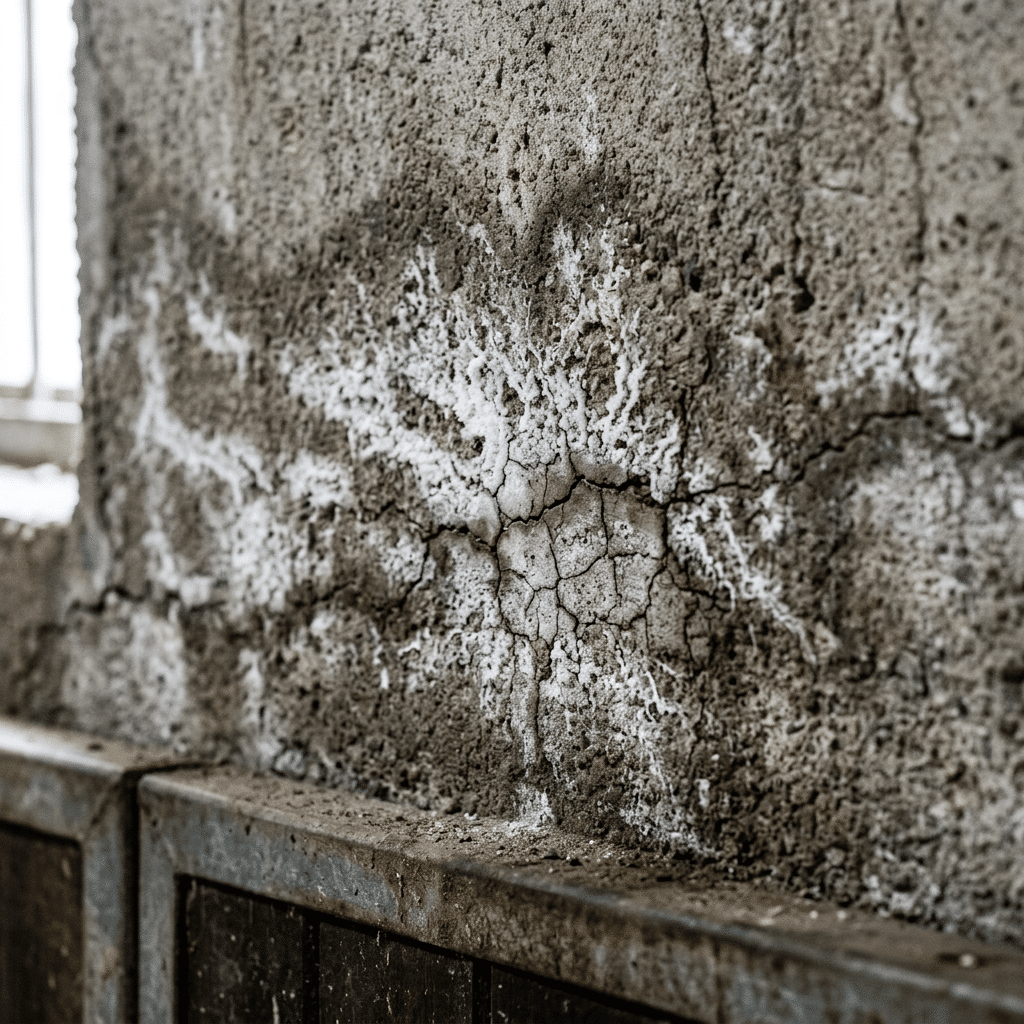
In environments with high relative humidity, particularly above 70%, materials begin to break down fast. This isn’t just a slow process of aging; it’s an active cycle of degradation fueled by constant moisture.
For organic materials like traditional wood, these conditions are a perfect incubator for mold. Fungal spores land on damp surfaces, multiply, and feed on the wood itself. This causes the material to swell, warp, and lose its l'intégrité structurelle. For unprotected steel, moisture is a catalyst for oxidation. The resulting corrosion eats away at the metal, weakening frames and compromising safety.
Engineered Defense: Galvanization and Rot-Resistant Infill
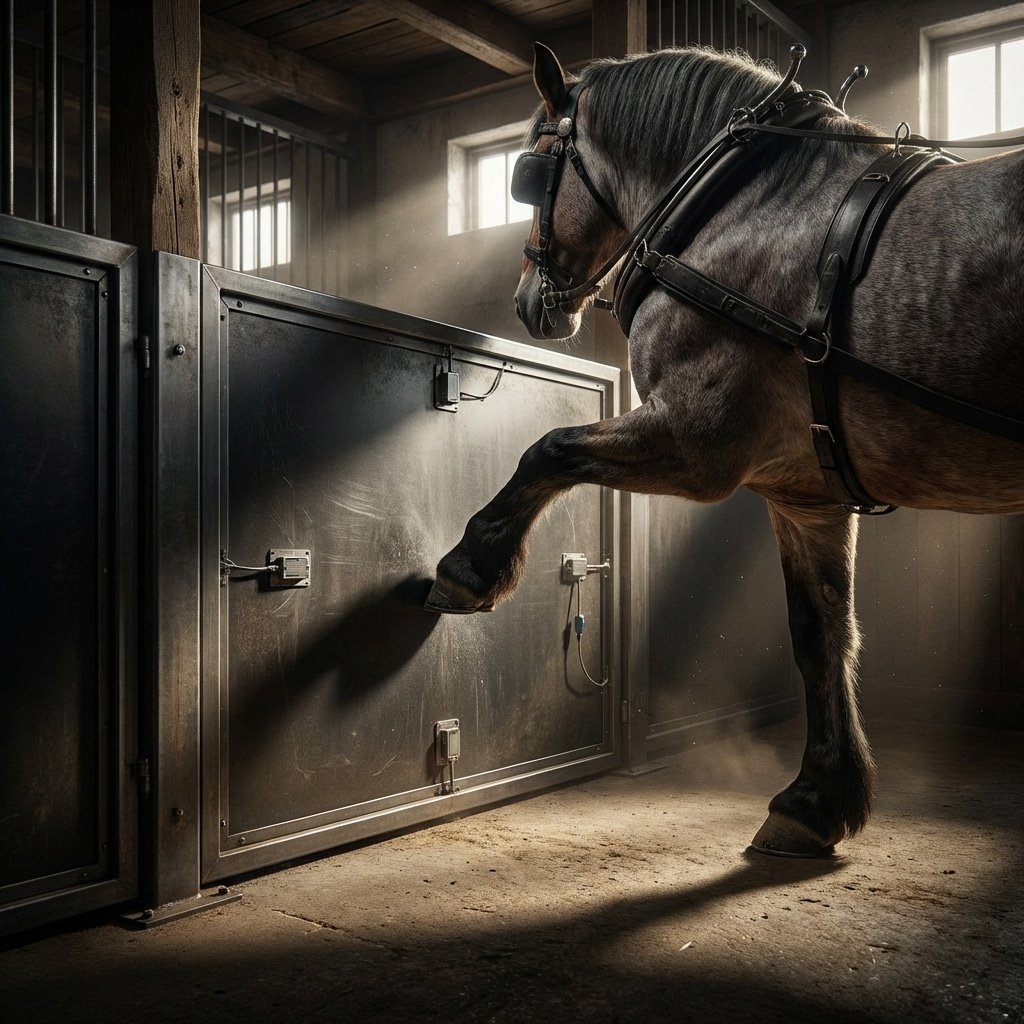
The only reliable way to stop the rot cycle is to use materials specifically engineered for damp conditions. This approach designs the problem out from the start, rather than relying on constant maintenance.
- Hot-Dip Galvanization: We use a hot-dip galvanizing process after all welding and fabrication is complete. This conforms to the ISO 1461 standard and seals the entire steel structure in a protective zinc coating over 70 microns thick, preventing rust from ever taking hold.
- Bambou haute densité: High-density strand-woven bamboo is specified for its natural resistance to mold and rot. With a Janka hardness over 3000 lbf, it is significantly tougher than oak and doesn’t absorb moisture like traditional timber, making it ideal for damp climates.
- HDPE Infill: For a zero-maintenance solution, High-Density Polyethylene (HDPE) provides a completely non-porous barrier. It is impervious to moisture and biological decay, ensuring it will not rot, swell, or delaminate, no matter the humidity level.
Material Comparison for Tropical Climates
In tropical zones, humidity is the primary driver of material failure. Engineered materials outperform traditional wood by eliminating moisture absorption, the root cause of mold and structural rot.
Choosing the right infill material for a tropical climate isn’t about aesthetics; it’s a stru
ctural and financial decision. High humidity (often above 70%) and constant moisture create an aggressive environment where many standard building materials degrade quickly. Below is a direct comparison of the most common options we evaluate for equestrian facilities.
| Attribute | Pin traité | Bambou tressé | PEHD |
|---|---|---|---|
| Absorption d'eau | High (18-22% by weight) | Extremely Low (Approx. 0.4%) | Zero (Effectively waterproof) |
| Mold & Rot Resistance | Low. Requires constant ventilation and maintenance. | Very High. Thermal treatment removes sugars, preventing fungal growth. | Absolute. Non-organic material does not support mold growth. |
| Maintenance Requirement | High. Needs regular sealing and inspection. | Low. Resistant to environmental degradation. | Zero. Does not require painting, sealing, or treating. |
| Durability (Impact) | Moderate. Can dent and splinter under heavy impact. | Exceptional. Janka hardness over 3000 lbf, 3x harder than oak. | High. Designed to absorb and dissipate kicks without cracking. |
Treated Pine: A Losing Battle
Treated pine is often considered a budget-friendly option, but it becomes a liability in the tropics. Its porous nature allows it to absorb significant moisture, creating the perfect breeding ground for mold, even with chemical treatments. Preventing rot requires perfect and continuous ventilation, something that’s difficult to guarantee in a barn. For project owners, this translates to higher long-term maintenance costs and potential health risks for the animals.
Strand-Woven Bamboo: Density as a Defense
Not all bamboo is the same. Natural bamboo will rot quickly. Our strand-woven bamboo, however, undergoes a thermal modification process that removes all organic sugars and starches. This eliminates the food source for mold and fungi. The process also compresses the fibers to an extreme density, making the boards nearly impervious to water penetration. This material offers the look of wood with the performance of an engineered composite.
- DB Stable Spec: 28mm-38mm High-Density Strand Woven Boards
- Dureté Janka : > 3000 lbf
- Key Feature: Naturally mold and rot resistant due to thermal treatment.
HDPE: The Zero-Absorption Solution
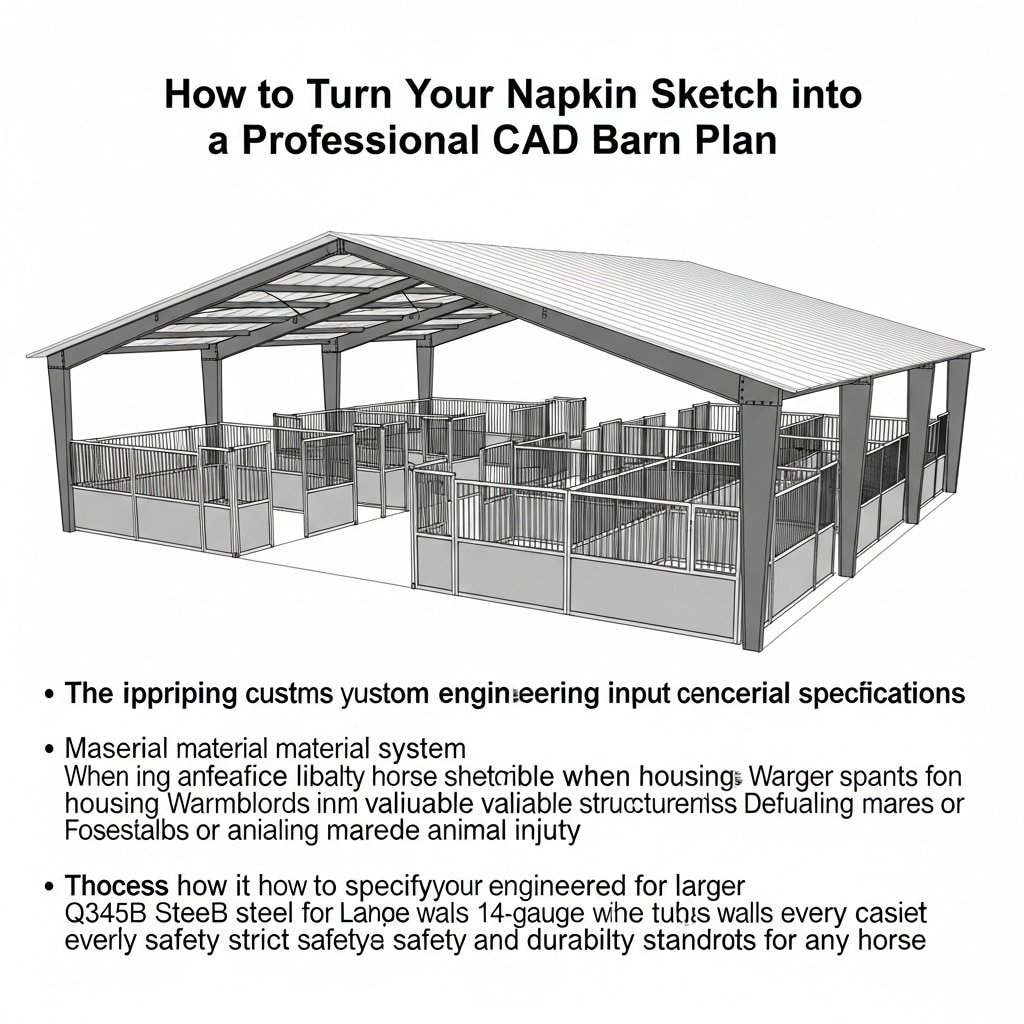
For clients demanding the lowest possible maintenance and absolute certainty against mold, High-Density Polyethylene (HDPE) is the only answer. As a non-porous plastic, it is 100% waterproof. It cannot absorb moisture, swell, or delaminate. This makes it structurally immune to the threats of a tropical climate. Our HDPE panels are UV-stabilized to prevent degradation from sun exposure, ensuring long-term color stability and structural integrity.
- DB Stable Spec: 28mm-32mm UV-Stabilized Panels
- Water Absorption: 0%
- Key Feature: Zero Maintenance. The material is inert and does not support any biological growth.
Les écuries Global Horse : conçues pour durer

Airflow Design to Prevent Tropical Fungal Infections
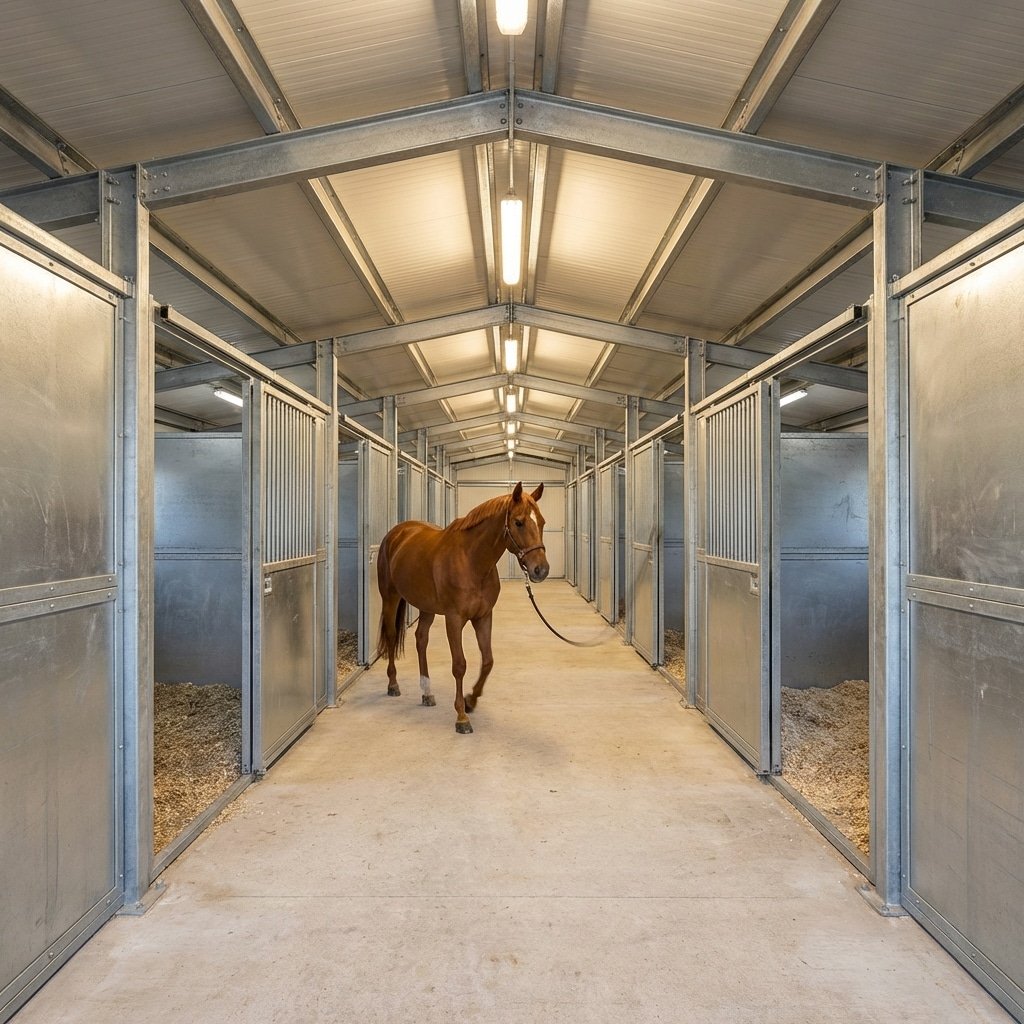
In tropical regions, stable design must maximize natural air exchange. Open-grill fronts create a ‘stack effect,’ promoting vertical airflow that removes humid air and airborne fungal spores.
The Challenge of Air Exchange in Humid Climates
Tropical climates are a perfect storm of high heat and high humidity. These conditions create an ideal breeding ground for mold and fungi inside any structure with poor ventilation. To disrupt this environment, a stable needs consistent air exchanges every hour. This process is essential for removing moisture-heavy air and diluting the concentration of harmful airborne spores that cause respiratory issues and rot materials.
Using Open-Grill Fronts to Create Ventilation par effet de cheminée
DB Stable systems directly address this challenge with an open-top grill design. This isn’t just for aesthetics; it’s a core engineering feature that promotes natural airflow without mechanical systems. The design creates what is known as ‘Stack Effect Ventilation.’ The horse’s own body heat warms the surrounding air, causing it to rise. This warm, moist air then escapes through the upper grills, which in turn pulls cooler, drier air into the stall from below. This continuous, passive cycle is a simple and effective way to manage humidity and air quality in the most demanding climates.
Réflexions finales
Standard stabling creates a cycle of replacement costs from rot and rust, especially in high-turnover facilities. Our system uses Hot-Dip Galvanization After Fabrication and zero-maintenance HDPE infill to engineer these failures out. This is a capital investment in operational uptime, not a recurring maintenance expense.
Verify the engineering before committing to a full container. We recommend a small trial order to test the material durability and our flat-pack system firsthand. Contact our team to configure your initial sets and review shipping logistics.

 French
  English
  Spanish
  Arabic
  German
0 commentaires