


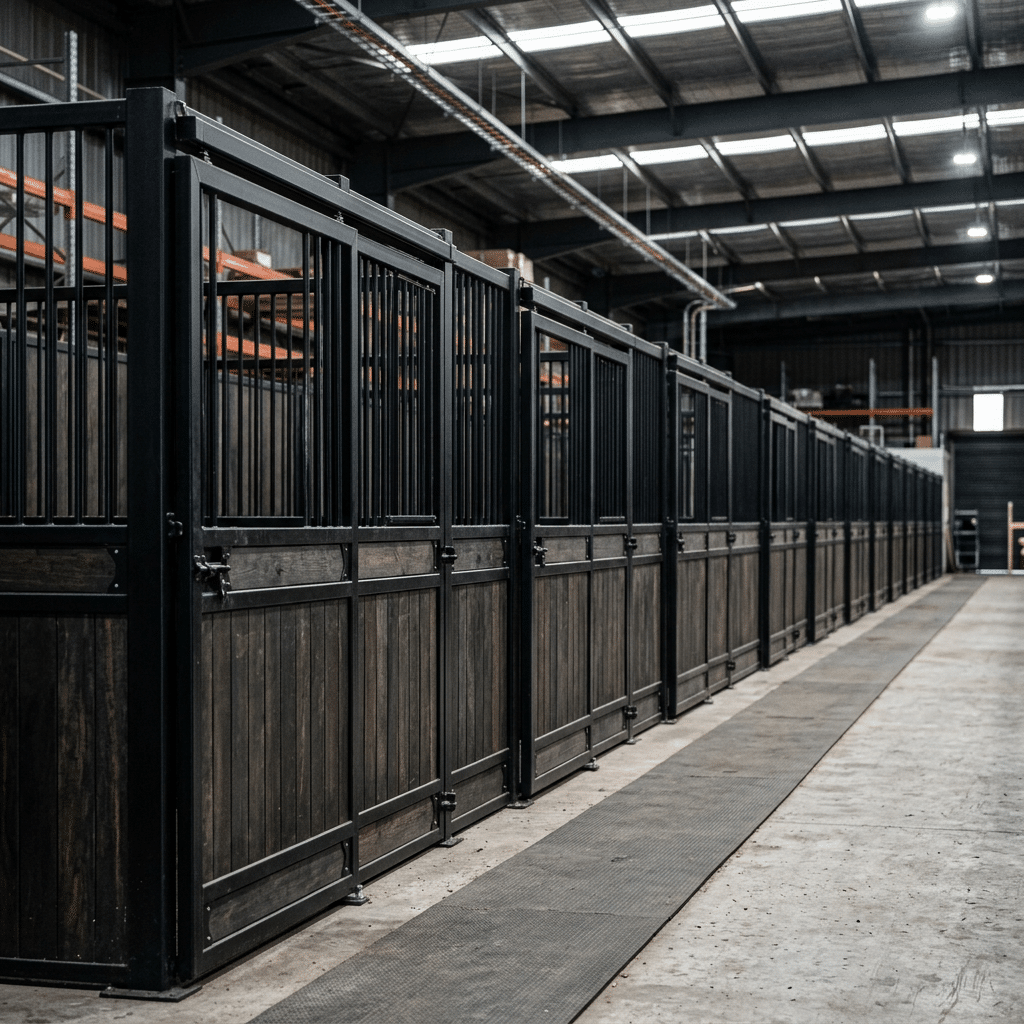
Commercial insurance premiums for equestrian facilities are driven by two primary risks: catastrophic fire spread and high-cost veterinary claims. A barn built with traditional combustible materials is automatically classified as a high-risk asset, leading to unsustainable annual costs that directly impact your operational budget.
This analysis shows how to lower these rates by presenting underwriters with verifiable data. We focus on documenting non-combustible Q235B steel frames that halt fire contagion and engineered ‘cast-proof’ clearances that reduce injury claims, providing the evidence needed for more favorable terms.
The Insurance Actuary’s View on Barn Fires
Insurance actuaries see barn fires as a “contagion” problem—the risk of fire spreading. They model frequency and severity, heavily favoring non-combustible steel frames that reduce catastrophic loss.
Modeling Fire Contagion and Severity
When an insurance actuary looks at a farm, they don’t just see a single barn. They see a collection of structures in close proximity, and their primary concern is “fire contagion”—the probability that one fire will spread and cause a catastrophic multi-structure loss.
They break this risk down into two core metrics: frequency (how often a fire might start) and severity (the total financial damage if it does). This distinction is critical. Even a building with a very low probability of being the fire’s origin point can still face a high risk of total loss if it’s located near a more combustible structure.
How Non-Combustible Steel Frames Reduce Modeled Risk
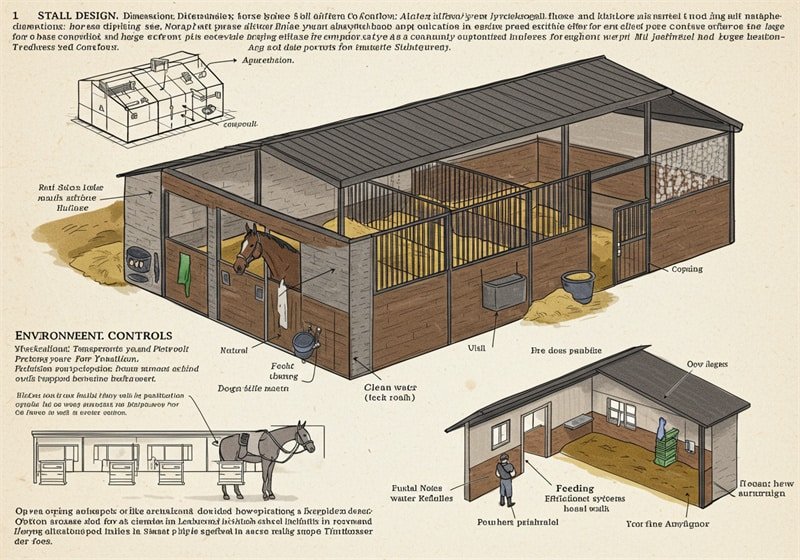
This is where construction material becomes a hard financial factor. Using a non-combustible material like Q235B or Q345B structural steel for the stable’s frame introduces a physical barrier. This barrier helps contain a fire to its point of origin rather than letting it consume the entire structure and jump to the next.
In an actuary’s model, this containment directly lowers the “severity” and “propagation” variables. A fire that is contained is less severe and less likely to propagate. A facility built with a hot-dip galvanized steel framework provides documented, verifiable proof that the primary risk of fire spread has been structurally mitigated. This kind of hard data can lead directly to more favorable insurance terms.
Combustible vs. Non-Combustible Liability
Insurance providers view non-combustible materials like steel as lower risk. This classification can lead to more favorable terms and lower premiums compared to combustible wood structures.
How Insurance Classifies Building Materials
From an insurer’s perspective, building materials fall into two simple
categories: those that burn and those that don’t. Non-combustible materials like steel, concrete, and masonry will not ignite or add fuel to a fire, making them a fundamentally lower risk. Insurance bodies, such as the ISO, formalize this with specific construction codes that directly impact risk assessment.
A building’s classification dictates its perceived fire susceptibility. Structures built primarily with combustible materials, like traditional all-wood barns, are placed in higher-risk categories. This increased susceptibility to fire damage almost always translates into higher insurance premiums.
The Role of a Galvanized Steel Framework
DB Stables are engineered with a Q235B structural steel framework, a non-combustible material designed to maintain structural integrity in a fire. This hot-dip galvanized steel frame provides the primary fire-resistant structure, which is a critical detail for insurance assessments. The strength of the system comes from its steel skeleton, not its infill panels.
Even when paired with combustible infills like bamboo or HDPE, the core structure won’t burn. This stands in sharp contrast to wood-frame barns where the entire load-bearing system is fuel for a fire. For an underwriter, the steel construction offers a significant advantage by reducing the risk of a catastrophic structural collapse.
Engineer Your Stables for 20-Year Durability

“Cast-Proof” Clearances and Reduced Veterinary Claims
A “cast-proof” stall uses a minimal floor gap, around 50mm, to stop a horse from trapping its legs when rolling, preventing serious injury and costly vet claims.
Understanding the Danger of a ‘Cast’ Horse
A horse is ‘cast’ when it lies down or rolls too close to a stall wall and gets stuck. Its legs are trapped against the partition, making it impossible to get the footing needed to stand back up.
The horse’s instinct is to struggle violently. This panic can lead to severe injuries like exhaustion, muscle damage, colic, or even fractures. These situations almost always demand emergency veterinary care and result in expensive insurance claims.
The 50mm Gap: An Engineered Solution to a Costly Problem
DB Stable systems directly address this risk. Our partitions are engineered with a ‘Cast-Proof Design’ that leaves a minimal bottom clearance of approximately 50mm from the floor.
This precise gap is too small for a horse’s hoof or leg to get trapped underneath the panel during a roll. It’s a simple, engineered solution that mitigates a primary cause of casting, helping facility owners lower the frequency of accident-related veterinary bills.
Documenting Your Safety Upgrades (ISO 1461 & Tempered Glass)
Documenting upgrades means providing compliance certificates for key standards like ISO 1461 (steel corrosion) and ANSI Z97.1 (impact glass) to validate them for insurance.
Establishing Compliance with Material Standards
Insurance carriers don’t take your word for it. They require formal certificates of compliance from galvanizers and glass manufacturers to validate that your facility upgrades meet recognized safety standards.
For any glazed areas, documentation needs to show compliance with federal and local codes, like ANSI Z97.1. This isn’t just a formality; it directly minimizes your liability from potential impact injuries.
Your responsibility doesn’t end after installation. Maintaining clear records of any after-treatments, repairs, or inspections shows an ongoing commitment to safety requirements for both the structural steel and the glazing.

Verif
ying Your Rust Protection with ISO 1461
DB Stable’s entire steel framework undergoes Hot-Dip Galvanization After Fabrication, a process that strictly conforms to BS EN ISO 1461. This isn’t a vague claim; it’s a verifiable standard.
We can provide official certificates of compliance that specify the zinc coating thickness. You’ll see averages over 70-85 microns (μm), which is the physical proof of long-term corrosion resistance.
This level of documentation directly supports your insurance position. It helps reduce long-term corrosion claims and validates the extended asset life of your stable, making it a much safer investment in the eyes of an underwriter.
How to Present DB Specs to Your Insurance Broker
Prepare a spec sheet for your insurance broker highlighting key risk-reduction features. Focus on certified materials and specific safety designs that reduce claims.
Organizing Key Information for Your Broker
Insurance underwriters assess risk based on verifiable data. Don’t give them a sales pitch; give them an organized specification sheet. Your goal is to make it easy for them to see how your facility is a lower-than-average risk. Structure your document to answer their unasked questions about material durability, structural failure, and animal safety.
- Core Construction Materials: List the primary materials used. For DB Stable systems, this is structural steel and your choice of infill (HDPE or Bamboo).
- Intégrité structurelle : Document the specifications that prove longevity and resistance to failure. This includes the exact galvanization standard (ISO 1461) and steel thickness.
- Animal Safety Features: Itemize the design elements that prevent common injuries. Features like ‘cast-proof’ clearances directly address the likelihood of costly veterinary claims.
Highlighting Certified Anti-Rust and Safety Specifications
This is the most critical part of your presentation. Use a simple table to clearly present the technical data that proves your stables are a safe, long-term asset. Each specification directly ties to a risk category an insurer evaluates.
| Fonctionnalité | Specification & Insurance Relevance |
|---|---|
| Frame Material | Q235B/Q345B structural steel. This is classified as a non-combustible material, significantly reducing fire risk compared to wood-frame barns. |
| Rust Protection | Hot-Dip Galvanization to BS EN ISO 1461. This certification proves long-term corrosion resistance, reducing the risk of structural failure and property damage claims. |
| Animal Safety Design | ‘Cast-Proof’ clearances at the bottom of all panels. This design minimizes the gap to prevent a horse’s leg from getting trapped, directly lowering the probability of veterinary injury claims. |
| Matériaux des composants matériels | 304 Stainless Steel connectors and bolts. Using stainless steel prevents corrosion at critical connection points, ensuring the long-term integrity of the entire structure. |
Questions fréquemment posées
Are steel horse barns cheaper to insure?
Yes, facilities built with non-combustible steel often qualify for lower insurance premiums compared to traditional wood barns. Steel’s superior fire resistance reduces risk for the insurer. While the initial construction cost might be higher, the long-term savings on insurance and maintenance can make it a more economical choice over the building’s life.
How can I lower my equestrian facility’s insurance premium?
You can reduce premiums by implementing and documenting safety measures. This includes investing in property safety like updated electrical systems and fire protection, maintaining accurate records, establishing clear safety protocols like waivers and emergency plans, and practicing good fire prevention, such as storing hay separately.
Do my barn’s construction materials really affect insurance rates?
Yes, significantly. The materials used are a primary factor in premium calculations. Structures made from durable, fire-resistant materials like steel are viewed as lower risk by insurance carriers and typically qualify for more favorable rates than structures made from combustible materials like wood.
What insurance is essential for a horse boarding business?
A horse boarding operation requires specialized commercial insurance, as a homeowner’s policy is insufficient. The two most critical policies are Commercial Equine General Liability, which covers third-party injury or property damage claims, and Care, Custody, or Control (CCC) insurance, which covers injury or death to the non-owned horses in your care.
Réflexions finales
Choosing stalls on price alone is a direct trade-off against insurable safety. Our documented ISO 1461 galvanization and non-combustible steel framework are what underwriters require to lower your premiums. This isn’t just a stable; it’s a verifiable, lower-risk asset for your facility.
Provide your insurance broker with our technical specifications to model your potential savings. We can supply the full data sheets and ISO compliance certificates for your review. Request our dealer catalog to begin your project planning.

 French
  English
  Spanish
  Arabic
  German
0 commentaires